







 Legend
Fox Trap Canoe Campsite
Canoe Trek to Fox Trap
This is both a campsite review and a Dyrt Ranger product review.
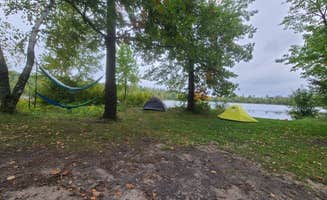
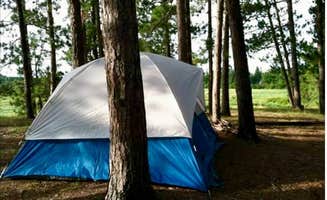
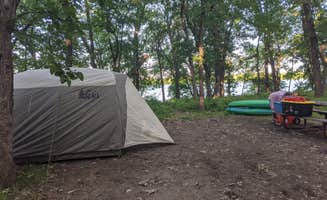
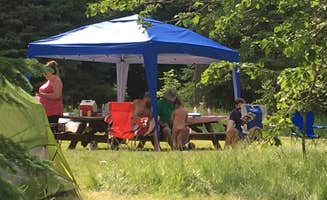
Campsite Review: This a canoe-in campsite on the Mississippi River Headwaters Water Trail. It is located 31 miles from Itasca State Park which is the source of the mighty Mississippi and where the canoeable Water Trail begins. Fox Trap would be a couple days paddle downstream from Itasca. You can access this campsite only by paddling, either 15 miles from the campsite at Coffee Pot Landing, or after driving into Bear Den Landing which is a mile away, then paddling a mile downstream from there. You could in theory hike in as well, but this would involve traversing unmarked logging trails in the nearby state forest and then bushwhacking a bit! Could be done, but more fun to paddle in. This campsite has a nice three-sided log Adirondack shelter you can use, along with a steel fire grill and a picnic table. The canoe landing access is easy to use, and then you will need to portage your gear up a small bluff. There is no potable water here, so bring your own or use a good filter—though the water is basically pristine here, there are a lot if beavers and risk of giardia. There is no privy either, so prepare to rough it and Leave No Trace. The view is great as you are up high on a bluff, and on a point, and the marshy waterway below has a lot of bird and wildlife action as this is part of the wild and scenic section of the river. Great for a quick weekend getaway, or as a stopover when through-paddling the water trail!
Product Review:
As a Dyrt Ranger, I sometimes test and review new camping products for The Dyrt. This review is for the Rom Outdoors camouflaged convertible backpack, that serves as a sturdy waterproof tarp, a warm fleece lined poncho, and also folds up neatly to become a large and roomy portage pack. See video below to see how I used it, and what I liked about it. In sum,
Pros:
-
The pack is made from really sturdy waterproof canvas. It will last a long time and take a lot of abuse. My dog tested it trying to get into her dog food packed inside, and there is no way--too tough for claws!
-
It is a convertible pack, which can be uses as a portage pack for gear, or as a poncho, or as a warm sturdy camping tarp. All the parts used for altering the use, such as velcro, zippers, straps and buckles, are all top quality and heavy duty
-
I don't know how waterproof it is as it didnt rain while I tested it, but I used the poncho form as a camouflaged birdblind for birdwatching and photography. It is awesome for that! Very roomy, very warm, you could easily use it in 4 seasons.
-
It unfolds to a standard size tarp, you could use it under a tent to keep it dry, or inside a tent or Adirondack shelter to provide an insulating layer between you and the ground
-
As a portage pack, it straps into your canoe realy well, and while portaging it is easy to carry, as a 5'5" tall woman I found the straps to adjust perfectly at shoulders, chest and waist. The three sets of straps distribute the weight well. I portaged with gear and my 12 pound dog and it was comfortable! I know it wasnt meant to carry a dog, but it worked for a small one like ours, she fit right in. When fold up s a pack, it has two deep pockets in the main body of the bag, plus additional large pounches on the outside.
6)The pack comes with a full size removable pack liner that is also a lightweight back pack on its own, and there are two large external gear pouches that go on and off with buckles and heavy velcro.
Cons:
-
The shoulder straps and buckles are a tad bulkly if you unfold the pack to use as a tarp. You wont notice if you use a sleeping bag pad on top, but you might feel it a bit without a pad.
-
The poncho feature would be particularly good in cool to cold weather, maybe in warmish weather too, but not in real warm or hot weather because the canvas itself is so thick, plus there is a layer of insulating polarfleece. I cant imagine wearing it as a poncho for very long on hot days.


