Dispersed camping near Kuttawa, Kentucky centers around the Shawnee National Forest and Land Between the Lakes areas, with elevations ranging from 350-400 feet above sea level. Summer temperatures average 85-95°F during day and 65-75°F at night, while winter camping can see temperatures drop below freezing. Primitive sites throughout the region typically require campers to pack in essentials and pack out waste.
What to do
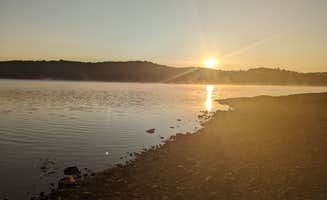
Kayaking on Kentucky Lake: Launch from Demumber's Bay where there are "zero entry areas into the water for launching" according to one camper. The bay provides "quiet areas that allow for easy kayaking or other small water craft."
Wildlife watching: Morning and evening hours offer the best opportunities to spot local wildlife. One visitor to Forest Service Rd 343 reported: "The next morning an older man on a horse stopped to talk and a couple in a Cherokee stopped to chat. Seems it's a popular road for other people looking for an off-the-beaten-path place."
Trail hiking: Several interconnected trails surround most camping areas. A visitor to Lake Glendale Recreation Area mentioned "an easy 3 mile hike around the lake" and noted that "there are several historical sites in area. Illinois Iron Forge, Garden of the Gods, and segments of the Trail of Tears."
What campers like
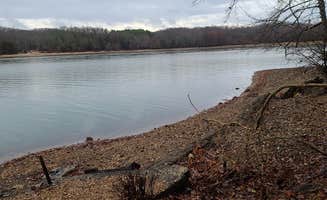
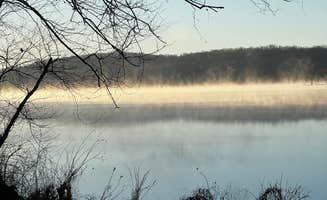
Waterside locations: Many sites offer direct water access for swimming and fishing. At LBL FS-326, a visitor described it as "a lovely, quiet spot" where "the road dead ends at Energy Lake." They added they "heard a sound during the night, possibly coyotes."
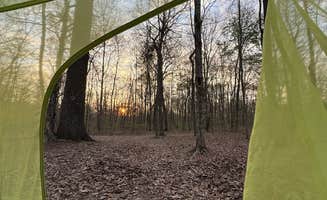
Privacy between sites: Several camping areas offer good separation between campsites. At LBL FS154 - Dispersed, a camper noted that "the campsite itself is on a small peninsula, just big enough for a large two room tent, a makeshift fire ring, and a vehicle."
Natural features: The region's rolling hills and lake views create scenic camping environments. A visitor to Jackson Falls shared that "the place is beautiful; forests and great big, moss covered boulders. It was fun climbing down to the bottom of the falls, even with small kids."
What you should know
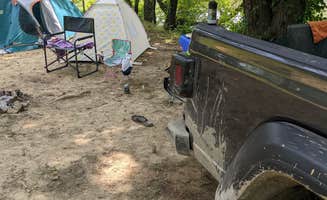
Road conditions: Access roads can be challenging, especially during wet weather. A camper at Forest Service Rd 343 advised: "The road coming in is a little washed out but not too pitted. I'd recommend AWD/4WD and 8+ inches of clearance, especially if it has rained because it's pretty steep in sections."
Permit requirements: Most dispersed camping sites require permits purchased in advance. A visitor to LBL FS154 emphasized: "Be sure to have your dispersed camping permit before coming out! They are available online, and at any of the Visitor's centers."
Limited facilities: Most sites offer minimal or no amenities. A camper at LBL FS154 explained that "you need to know and understand sanitation ('cat holes') as there are no port-a-johns or vault toilets, there is also NO POTABLE water, so you either pack it in or bring your filter and drink lake water."
Tips for camping with families
Choose sites with space for play: Some dispersed sites offer more room than others. A visitor to Neville Bay reported it was "mostly flat near the water and lots of sites to camp. We really enjoyed our spot in the shade on a hot summer weekend."
Plan for water activities: Swimming and wading opportunities can entertain children. At Jackson Falls, a camper mentioned: "We went during a dry spell and there was no running water at the falls! Still had a blast there though!"
Be prepared for insects: Bug activity varies by season and can be intense in summer months. A recent visitor to Demumber's Bay wrote: "Pulled in around dusk and there was a deserted camper there, about 4 pull in sites for rooftop campers. The bugs were insane and 40 must've flown into my car when i opened the door for a split second."
Tips from RVers
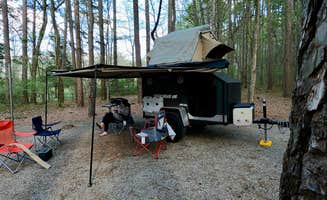
Site selection for larger vehicles: Not all dispersed sites accommodate RVs. At Neville Bay, a camper advised: "Nice little area to camp at. Well suited for tents. Most of the area isn't very level. The road going back there is gravel. We went with our 30 ft travel trailer. There is no hook ups. Can run generator until 11pm."
Resource management: With no hookups available, conservation is essential. A visitor to Lake Glendale Recreation Area noted: "Electric and non electric sites with plenty of room for the bigger rigs. If you pick a water side site it is a short walk to the lake trail and I saw several personal watercraft sitting on the shore for use."
Road navigation: Some access roads present challenges for larger vehicles. A camper visiting Barge Island Public Use Area shared that it "is boat-ramp and that is all. At the end of Barge Island Rd, to the left, next to Birmingham Point Campground (privately owned) it is functional, has a porta pot, parking and a small dock."








 Ranger


