Primitive camping opportunities around Barkley Lake provide direct lake access for fishing and paddling in this 58,000-acre reservoir. The surrounding Land Between the Lakes National Recreation Area spans 170,000 acres across western Kentucky and Tennessee with shorelines fluctuating seasonally. Water levels typically drop 5-6 feet during winter drawdown, exposing additional camping areas along peninsulas from December through March.
What to do
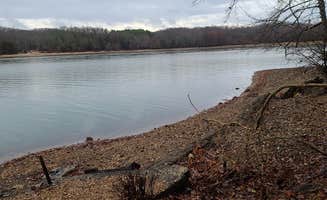
Fishing from shore: At LBL FS154, the winter drawdown creates unique fishing opportunities. "When leaving, I attempted to continue traveling down the unnumbered road toward FS-134, but both directions in the fork were blocked by trees," notes one camper who visited during lower lake levels, creating better shoreline fishing access.
Kayaking in protected coves: Demumber's Bay offers protected waters ideal for paddling. "This is a quiet area that allows for easy kayaking or other small water craft. There is a boat ramp, and zero entry areas into the water for launching," according to a camper who enjoyed the calm waters.
Wildlife viewing: The area around FS-326 provides opportunities to see local wildlife. "Also heard a sound during the night, possibly coyotes. Otherwise, I felt safe and had a great time here," mentions one visitor who camped near Energy Lake.
Swimming access: Forest Service Road 343 provides excellent swimming opportunities. "I was able to swim and had a great night to myself," shares a camper who enjoyed the water access directly from their campsite.
What campers like
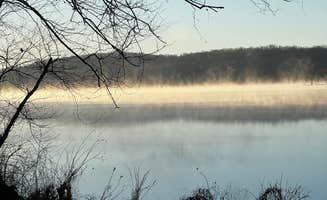
Lakefront solitude: Many campers appreciate the remote waterfront access at Forest Service Rd 343. "This is one of the best spots I've found on this app. I had one other person show up to cook, but they left shortly after. Beautiful view with a nice fire pit," writes a camper who enjoyed the privacy.
Cell service availability: Unlike many remote areas, some sites maintain connectivity. At Demumber's Bay, one camper noted "Beautiful great signal peace and quiet" which allows for staying connected while enjoying the primitive camping experience.
Peninsula camping: The FS154 dispersed site offers a unique camping experience. "The campsite itself is on a small peninsula, just big enough for a large two room tent, a makeshift fire ring, and a vehicle," writes one camper who appreciated this distinctive lakefront setting.
Flat terrain: Finding level ground for tents can be crucial. "The ground was flat and there was a lot of room," reports a camper who stayed at FS-326, noting this practical advantage for setting up camp.
What you should know
Permits required: Most dispersed sites in the area require advance permits. "A Dispersed Camping (Basic Camping) permit is required to camp here and you must purchase these at any of the three Visitor's Centers PRIOR to coming out," explains a Demumber's Bay camper.
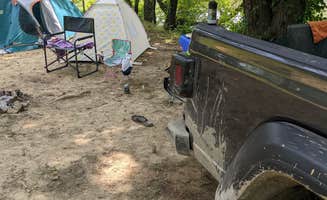
Road conditions vary: Access roads range from paved to rough gravel. "I stayed at two different spots in March 2024. You might need 4wd; it had rained all day before I got here and there were some rough/sloppy patches in the road," notes a visitor to FS154.
Seasonal differences: Summer brings higher insect activity. "Pulled in around dusk and there was a deserted camper there, about 4 pull in sites for rooftop campers. The bugs were insane and 40 must've flown into my car when i opened the door for a split second," reports an August visitor to Demumber's Bay.
Limited amenities: Most sites have minimal facilities. "The views of the lake are amazing, and this is a quiet area that allows for easy kayaking or other small water craft," explains a camper who visited Demumber's Bay, highlighting the tradeoff of scenic beauty for fewer conveniences.
Tips for camping with families
Site selection strategy: Not all waterfront sites are family-friendly. At Neville Bay, "Most of the area isn't very level. The road going back there is gravel," notes one camper, suggesting families should arrive early to secure the flatter sites.
Swimming safety: Some lakefront sites offer gradual water entry. "Mostly flat near the water and lots of sites to camp. We really enjoyed our spot in the shade on a hot summer weekend," shares a Neville Bay camper, indicating good spots for supervised water play.
Pack additional water: No potable water exists at these sites. "There is also NO POTABLE water, so you either pack it in or bring your filter and drink lake water," advises a camper at FS154, emphasizing the importance of water planning for family outings.
Plan for weather changes: Spring conditions can be unpredictable. "Secluded but visited...The site is right on the lake an doesn't get any curious cars just driving by. The road in is rough, but a 2wd truck could make it in dry weather," notes a Forest Service Rd 343 camper, highlighting how access changes with weather.
Tips from RVers
Generator allowance: Neville Bay allows generator use during specific hours. "We went with our 30 ft travel trailer. There is no hook ups. Can run generator until 11pm," reports one RVer who successfully camped with a larger rig.
Site leveling needs: Prepare for uneven terrain at most sites. "Several groups there when we went. Very clean, well maintained primitive campground on the south end of LBL. If there was electric and water it would be a solid 5," shares a Neville Bay visitor who found the primitive setup workable despite limitations.
Road clearance requirements: Forest roads require appropriate vehicles. "The road coming in is a little washed out but not too pitted. I'd recommend AWD/4WD and 8+ inches of clearance, especially if it has rained because it's pretty steep in sections," advises a visitor to Forest Service Rd 343.
Cost considerations: Dispersed camping fees are modest. "Dispersed camping is a $10 fee. If you have the National Park pass you can go to a self check in campground for $5," notes a Forest Service Rd 343 camper, offering a budget-friendly tip for RVers.






 Traveler


