Lake Allatoona serves as the centerpiece for most camping options near Smyrna, Georgia, located just 22 miles northwest of Atlanta. The 12,000-acre reservoir features 270 miles of shoreline with multiple campgrounds at varying elevations between 840-850 feet. Summer temperatures average 85-90°F with high humidity, while spring and fall offer milder conditions between 65-75°F, making seasonal considerations important for pet friendly camping near Smyrna.
What to do
Historical exploration: Hike to Manchester Mill ruins at Sweetwater Creek State Park, where trails meander through wooded areas along the river. "Make sure you go see Manchester Mill Ruins," suggests Mike K., who also mentions "good fishing on three lakes" within the park. The ruins provide educational opportunities about the area's industrial past.
Kayaking and paddle sports: Access no-wake zones at Payne Campground for calm water conditions. "We had a secluded, beautiful primitive site with rocky lake access that we managed to get our kayak onto the water on," reports Asia and Jalen B., who stopped at Payne Campground during their travels to Dahlonega. Multiple coves around Lake Allatoona provide sheltered paddling areas.
Fishing opportunities: Target multiple species in Lake Allatoona's coves. "We always catch several kinds but the crappie are so delicious," shares Robin M. about fishing at McKinney Campground. Access points exist at most campgrounds, with deeper fishing areas near dam structures.
What campers like
Secluded waterfront sites: Private camping along lake edges where trees create natural boundaries between sites. At Clark Creek North Campground, "every spot has water access. Most spots provide complete privacy from your neighbors because of all the trees," explains Kathy B. The campground's design maximizes privacy despite its smaller 24-site footprint.
Clean, secure facilities: Well-maintained bathhouses with unexpected amenities. "The bathhouse was an uphill hike probably 300 ft away but was modern and clean with hot showers and good water pressure," notes Jeff E. about his stay at Red Top Mountain State Park Campground. Many campgrounds feature coded or keyed bathroom access.
Tent camping spots: Dedicated pads at walk-in sites that provide stable foundations. "Beautiful campground with great hiking. I wish there were more tent sites," remarks Virginia W. about Sweetwater Creek. Though limited in quantity, available tent sites typically include level, gravel pads.
What you should know
Seasonal noise levels: Proximity to major roadways creates background sounds at certain campgrounds. "You will hear I-75 traffic all night so keep in mind, that while it looks like country, you are not deep in nature," warns Jeff E. about Red Top Mountain. He also mentions "a train that blows its whistle that will wake you up 3 times each night."
Security considerations: Remote access points at some campgrounds require vigilance. At Clark Creek North, one camper reported theft issues: "After discussing the issue with the campground staff, we were informed that locals often come through the woods and even wade through the edge of the lake to steal from the campground," shares Chris C.
Terrain challenges: Narrow roads and uneven sites require careful navigation. "Heavily wooded sites that are not well maintained. Very narrow roads in the campground with lots of pot holes," notes Brock D. about Red Top Mountain, adding it's "not the easiest state park to pull a travel trailer in."
Tips for camping with families
Beach access: Dedicated swimming areas with shallow entry points for children. At Clark Creek North, one camper mentioned, "My daughter and I went camping here for 2 nights right on the beach it was like having the beach all to ourselves." Swimming beaches typically lack lifeguards but offer sandy entries to the lake.
Junior Ranger programs: Educational activities continue despite pandemic restrictions. "Friendly staff, with the Jr ranger program still going with the help of adult campers during covid," reports Cheryl C. about Red Top Mountain State Park. These programs typically involve nature scavenger hunts and educational worksheets.
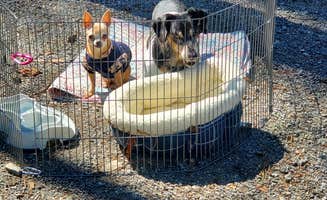
Pet exercise areas: Designated spaces beyond campground boundaries. While most sites enforce strict leash policies, nearby parks provide space for dogs to run. "An amazing park right across the way with huge grounds to run your dogs," mentions Brittney C. about the area near Sweetwater Creek RV Reserve.
Tips from RVers
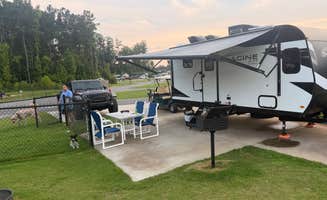
Leveling requirements: Prepare for uneven terrain at many campgrounds. At Stone Mountain Park, Susan K. noted: "The only downfall was that the trailer needed a lot of leveling. But it was totally worth it. Our site was on the lake." Bringing extra leveling blocks is recommended for most area campgrounds.
Urban amenities: Convenient access to Atlanta attractions while maintaining camping environment. "I use Atlanta-Marietta RV Park strictly for sporting events as it's close by and is relatively quiet considering how close it is to the highway," explains Mike N., highlighting the balance between access and atmosphere.
Dump station configurations: Challenging approach angles at some facilities. One experienced RVer at Clark Creek North described: "They have an interesting dump station set up where you climb a fairly steep hill. This station would be good for shorter rigs." Larger RVs may need to plan for alternative dumping locations.











 Legend


