Cumberland Island National Seashore spans over 36,000 acres of protected wilderness, making it Georgia's largest barrier island. The maritime forest provides significant shade for campers, with average summer temperatures reaching into the 90s with high humidity. Wilderness camping on the island requires preparation for sandy trails and limited facilities, while mainland options offer more amenities within a 30-minute drive of the ferry terminal.
What to do
Bike the island trails: Bring appropriate tires for Cumberland Island's sandy paths or rent bikes at the ranger station. "I highly recommend taking or renting bicycles or e-bikes. There are great biking trails to get pretty much anywhere on the island," notes a visitor at Jekyll Island Campground. Another camper suggests preparing for the terrain: "If you have bikes, BRING 'EM – and even better, if you can outfit your bikes with attachments that will allow you to haul your own wagon or trollies by bike, then you'll be completely set."
Fish at multiple locations: Set up at Crooked River State Park's fishing pier or try the numerous water access points. "The people in the bait shop were very helpful at helping us plan our route with the tide," shares a visitor at Crooked River State Park Campground. The park maintains a bait shop near the boat launch, eliminating the need to dig up your own bait before arriving.
Explore historic sites: Visit the Dungeness Ruins and learn about Carnegie family history. A camper notes, "The ruins of an old mansion look like a much older archeological site." Tours of the south side of the island and the Dungeness Ruins (remains of Lucy Carnegie's island mansion) are available from park rangers during designated hours.
What campers like
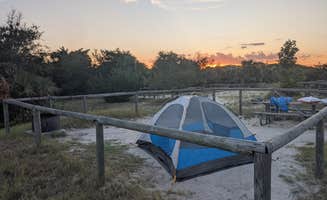
Beach solitude: Cumberland's 18 miles of undeveloped beaches offer rare privacy for campers. "Walking out on beach from tent every morning just to watch the sun rise over the Atlantic ocean while crab boats chug along being part of the scenery as the sun rises, you are first and only person on an 18 mile long beach until around 10 a.m.," writes a visitor at Sea Camp Campground.
Wildlife encounters: Wild horses, armadillos, deer and shore birds frequently visit campsites and beaches. "We saw wild horses as well. Since it was turtle egg-laying season we did try to spend time late at night at low tide and high tide to see loggerheads on the beach," shares someone who stayed at Stafford Beach Campground. Another visitor adds: "A harmless armadillo visited our campsite one day."
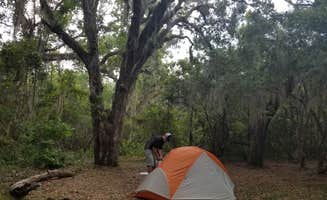
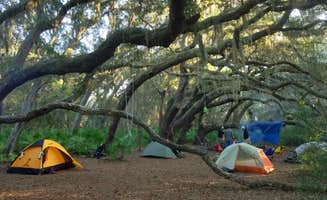
Temperature relief in forest campsites: The thick canopy provides welcome cooling. "It was a hot time of year but under the canopy of the live oak trees where the tent sites are located was easily 10+ degrees cooler than elsewhere." This natural air conditioning makes summer camping more bearable despite high humidity levels.
What you should know
Advance planning required: Ferry reservations fill months ahead, especially for spring and fall visits. "You need to make a reservation in advance online. You will need to reserve the campsite well in advance (they fill up quickly) and pay online," explains a camper. The national park entrance fee ($20) can be paid either online or at the park station in St. Marys before boarding.
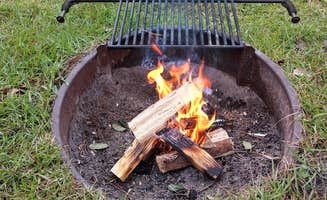
Food storage challenges: All campsites require careful food management. "Each site has a fire ring (and grill on top), picnic table, and food cage. Keep all your food and scented items in the racoon proof cages or make sure your coolers/food boxes are locked! Raccoons will pry open just about everything!" warns a camper. Raccoons at Jacksonville North-St. Marys KOA and other mainland campgrounds are equally opportunistic.
Communication limitations: Expect limited or no cell service on the island. "My cell carrier is AT&T and I had next to zero connectivity – which was great! But the real point here is to prepare not to be able to communicate with the outside world during your entire stay here." Power outlets are only available at the Ranger's Station, so USB chargers or small generators are essential for longer stays.
Tips for camping with families
Consider water access locations: Some mainland campgrounds offer easier water recreation for kids. "We love this State Park with lots to do, wish we could have stayed long to enjoy everything - hiking, boating fishing, etc," shares a visitor at Fort Clinch State Park. Their Atlantic Beach campsites provide easier beach access for families with small children.
Pack for insects: Bug protection is essential, especially for children. "Bring your insect repellant, citronella and mosquito foggers! Although you are somewhat near the ocean and would expect a decent breeze to keep the bugs from biting, trust me, every camping site at Sea Camp Beach Campground is in the thick of the island jungle and without proper repellant, you will have a miserable experience."
Plan transportation for gear: Carts are available but limited at Sea Camp dock. "You can borrow a cart to take your tent and supplies from the boat to the campsite (Seacamp only - the more distant campsites are hike & carry only). You can also bring your own wagon/cart on the boat (we did)." Some campers recommend bringing your own collapsible cart if staying at more distant sites.
Tips from RVers
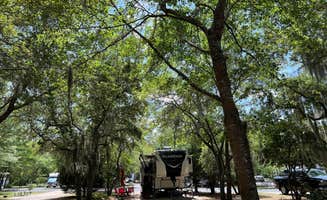
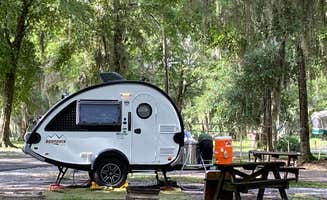
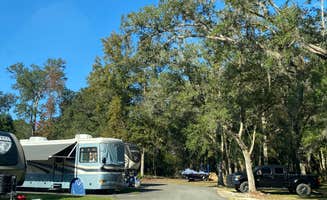
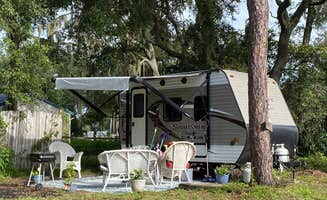
Choose mainland sites for longer stays: RVers find Blythe Island Regional Park offers good proximity to Cumberland. "We had a site across from the lake. Nice shady site. Our 33 foot fit with room to spare. Has full hook ups," reports a visitor at Blythe Island Regional Park. Many sites have concrete pads and are well-spaced with trees providing privacy between neighbors.
Leverage mainland amenities: Some regional parks provide unexpected perks for RVers. "From an amenities standpoint, there's a recreational office in the middle of the camp, decent hook ups (water, electrical, toiletry, etc.), decent slab concrete to park on, solid picnic tables." Mainland sites typically offer full hookups with 30 or 50 amp service, unlike the primitive options on Cumberland Island.
Prepare for limited site availability: RV sites at state and regional parks fill quickly during peak seasons. "I tried to make reservations on line, kept saying full and unsuccessful. Called directly and got a site." Many RVers recommend calling campgrounds directly when online systems show no availability, as cancellations may not immediately appear in reservation systems.









 Scout
Scout


