Monongahela National Forest spans over 919,000 acres across the Allegheny Mountains in eastern West Virginia, with elevations ranging from 1,000 to 4,863 feet at Spruce Knob. Tent camping options throughout the forest vary significantly in accessibility, with some sites requiring high-clearance vehicles to navigate 7+ miles of dirt roads with potholes. The region receives substantial rainfall even during summer months, making water management a key consideration for all tent sites.
What to do
Hike the Span Oak trail: Located at the beginning of the Little River Dispersed Campsites area, this trail leads along a beautiful ridge with minimal elevation gain. One camper noted, "We hiked the Span Oak trail, at the beginning of the camping area, which led us along a beautiful ridge."
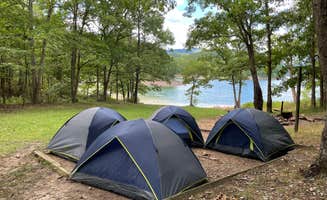
Swim in natural pools: Many forest campsites offer swimming opportunities in the Greenbrier River and smaller tributaries. At McClintic Point Primitive Campground, "There is access to the lake for canoes/kayaks" and the sites near the water provide excellent cooling options during summer months.
Visit the Green Bank Observatory: Located near several camping areas, this scientific facility offers a unique attraction. According to one camper at Greenbrier River Trail MP 49.3, nearby highlights include "Green Bank Observatory," making it an interesting side trip during your camping stay.
Ride the historic Cass Railroad: This vintage steam locomotive offers scenic rides through the mountains. A camper mentioned it's one of the "NEARBY HIGHLIGHTS" from Greenbrier River Trail camping areas, providing a family-friendly alternative activity during longer camping trips.
What campers like
Wildlife viewing opportunities: The forest hosts abundant wildlife viewing beyond what's mentioned at established sites. At Little River Dispersed Campsites, one camper warned, "Not even 2 minutes from our dispersed camp site we were charged by an extremely aggressive black bear," highlighting the importance of proper food storage throughout the forest.
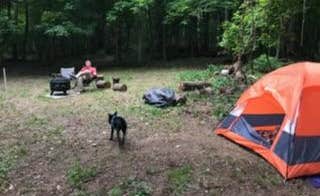
Quiet, secluded camping spots: Many forest campsites provide significant privacy. A camper at Poor Farm Dispersed Recreation Area noted, "Really enjoyed this place. Maybe 5-10 min off of highway 220. There are maybe 5 ish spots to camp next to a river in this mountain valley."
Natural water features: Streams and rivers add ambiance to many forest campsites. One visitor described their Little River site: "The site was breathtaking, with a small stream pool running along one edge, and the rushing river on another. Soft dirt padded the entire area, and great trees filled the space."
Dark night skies for astronomy: The forest offers exceptional stargazing opportunities at higher elevations. A visitor to Meadow Creek Camping Area shared, "There are very few places in the Eastern United States that get dark enough to view the Milky Way. If you're in the Monongahela area and you've never seen it before, definitely head up to Spruce Knob on a clear night."
What you should know
Road conditions vary significantly: Access to some campsites requires navigating rough forest roads. At Little River Dispersed Campsites, a camper warned, "The road is narrow and you'll need to pull off to the side to let cars pass coming in, and the road is riddled with pot holes and is entirely gravel."
Limited cell service throughout forest: Most camping areas lack connectivity. A visitor to Seven Mile Campground noted the campground "initially feels odd from a security standpoint as there is no formal gate or entrance and no cell service...phones are useless (unless at the park office area a mile south)."
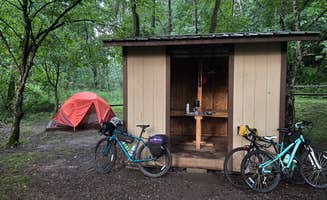
Toilet facilities vary widely: Some sites offer maintained vault toilets while others have no facilities. At Poor Farm Dispersed Recreation Area, a camper observed that the "only convenience is a toilet house," making it suitable for those comfortable with minimal amenities.
Weather preparedness essential: West Virginia's mountain climate can change rapidly. One camper at Greenbrier River Trail MP 49.3 advised, "This is West Virginia, so even in populated areas cell service can be spotty...for safety purposes, I do carry a Garmin InReach Explorer + in case of emergencies."
Tips for camping with families
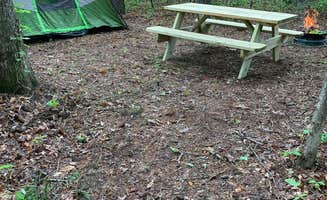
Choose established campgrounds for amenities: Families may prefer sites with reliable facilities. At Seven Mile Campground, "Each site has a picnic table (nicely shellacked to prevent soggy wood and easily wiped dry), a lantern pole, a fire pit (or in our case a fireplace, a raised tent pad and a wooden sump stand (where you can wash your dishes)."
Plan for wet conditions: Rain gear is essential for family camping in this area. One camper stated, "This is called 'Wet Virginia' for good reason...pack a rain jacket" when describing their experience on the Greenbrier River Trail.
Consider campsite layout for safety: Look for sites with natural boundaries for children. At Little River Dispersed Campsites, "When you park and walk down to the river, if you turn right, there's a beach area about 50 yards down that offers a great spot to take a dip!"
Pack extra toilet supplies: Even established facilities may run out during busy periods. One visitor to Day Run Campground advised, "Take your own toilet paper if campground isn't busy because it doesn't get maintained daily and we ran out."
Tips from RVers
High-clearance vehicles recommended: Many forest roads present challenges for larger vehicles. A visitor to Little River noted, "We drove in from the south, through Durbin, which is almost 7 miles on a pothole ridden dirt road. Dangerous for RVs, great for those looking for an escape."
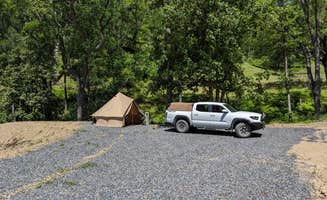
Limited turnaround space at dispersed sites: Many forest camping areas lack designated parking. At Poor Farm Dispersed Recreation Area, one RVer appreciated that "I pulled in while passing through the area, it was a short ride off the highway and the road in was nice. Quiet spot with a nice grassy level area."
Consider smaller rigs for better site options: Standard-sized RVs access only a fraction of available camping areas. One camper at McClintic Point observed, "There is access to the lake for canoes/kayaks" but noted the site constraints make it best for "car camping. It wasn't too glamorous. It is primitive."










 Legend


