The Washington coast near Aberdeen offers RV and tent camping along with yurt accommodations across several state parks and private facilities. The area receives approximately 70-80 inches of rainfall annually, with summer months typically providing the driest camping conditions. Coastal campgrounds in this region sit on relatively flat terrain with elevation gains of less than 200 feet above sea level.
What to do
Beach driving access points: Several campgrounds provide convenient access to beaches where vehicles can drive directly on the sand. "The beach is just a short drive to Grayland where we set off fireworks for the 4th of July," notes a visitor at Twin Harbors State Park Campground, which offers both beach access and camping accommodations.
Clamming opportunities: Bay Center-Willapa Bay provides designated clam beds for campers to harvest their own seafood. "They have clam beds just for campers, or a day fee for those wanting to rake without camping," according to a camper at Bay Center-Willapa Bay KOA, where visitors can enjoy fresh catch while staying in one of their accommodation options.
Waterfall viewing: The Wynoochee lakeshore trail near Coho Campground passes multiple waterfalls. A visitor notes, "The campground is next to Wynoochee Lake, which offers swimming, boating and fishing... it was always possible to find a quiet place along a trail to enjoy nature."
What campers like
Oceanside sounds: The rhythm of waves creates natural sleep aid for many campers. At Grayland Beach State Park Campground, campers appreciate how close accommodations are to the ocean. "Going to sleep with the sound of the ocean at night was priceless," shares one tent camper who found themselves among mostly RVs.
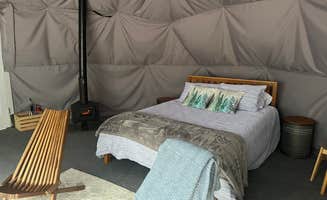
Privacy between sites: Unlike the canvas accommodations described in some parks, certain campgrounds offer more separation between campsites. "Large, paved, level, private campsites. Walk through the dunes to the beach to put your feet in the ocean," writes a visitor about site #89 at Grayland Beach State Park Campground.
Off-peak tranquility: Visiting during non-summer months provides a different experience for yurt camping near Aberdeen, Washington. "We stay here in the winter often. The campground is clean, quiet and right next to the beach," mentions a reviewer at Pacific Beach State Park Campground, where yurt accommodations provide year-round options.
What you should know
Weather preparation: The coastal climate means rainfall can occur even during peak seasons. "It rained on us, but we made the best of it," shares a camper at Coho Campground, highlighting the need for weather contingency plans when visiting the Aberdeen area.
Campsite density varies: Some campgrounds offer much more space than others. "The RV sites are super close to one another, but the tent sites were a little more wooded and secluded," explains a visitor to Twin Harbors State Park Campground, providing insight into site selection.
Access considerations: Many campgrounds require significant travel from major highways. "It is a 35 miles off of the highway. If you go, pack everything you need. There are no stores or gas stations once you hit the paved road to the campground," advises a visitor to Hoquiam River RV Park.
Tips for camping with families
Wildlife viewing opportunities: Coastal camping provides chances to spot local wildlife. "Excellent wildlife (especially birds) and endless beach and dunes to explore," mentions a camper at Grayland Beach State Park Campground who recommends bringing "kites, surfboards, kayaks, and binoculars."
Sand play areas: Kids can enjoy both beach and designated play spaces at some campgrounds. "Propane grill next to sand play area," notes a visitor to Pacific Dunes Resort, describing amenities beyond the campsite itself.
Off-season family visits: Many families find shoulder season camping preferable. "We wanted a relaxing pre-Labor Day get away so we booked a tent campsite for the weekend at Twin Harbors," shares a camper who appreciated the well-maintained trails and "gorgeous empty long stretch of beach."
Tips from RVers
RV site locations: Strategic site selection can improve your stay. At Bruceport County Park, "Pull thru/hook up sites all in a row," making site selection straightforward but potentially limiting privacy options.
Utility access challenges: Hook-up locations can present challenges at some parks. "We had to run to town because the water and power hookups are ridiculously far away from where they sit on anyone's trailer or RV," cautions a visitor to Twin Harbors, suggesting campers bring extension cords and longer hoses.
Campsite backing considerations: Site selection and backing angles matter for larger RVs. "Felt really bad for the guy trying to back into site 38 beside us. He tried for 30+ minutes... before they found the camp host and to move to site 40," reports a visitor at Coho Campground, noting that despite site descriptions, "the roads are narrow and there are random boulders here and there which may impede your maneuvering."











 Legend


