


Braelyn V. Scout
Scout
ScoutCrow's Nest Campground
Entire Trip
We brought the kids and they found plenty to do. Between the pool, river and recreation area, they were pretty much entertained the entire trip.
245 campgrounds · Check availability for any dates.
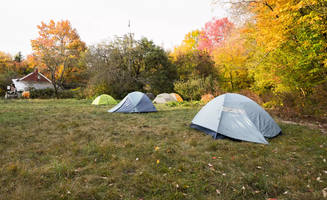
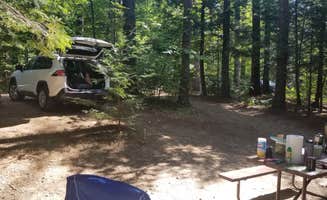
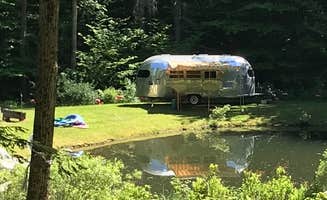
The Thetford, Vermont area features multiple established campgrounds offering a mix of accommodation types within a 15-mile radius. Rest N Nest Campground in East Thetford provides tent and RV sites with full hookups, while nearby Quechee-Pine Valley KOA in White River Junction offers cabins and glamping options in addition to traditional sites. Campgrounds on both sides of the Connecticut River serve this region, with facilities in neighboring New Hampshire towns like Orford and Hanover providing similar camping experiences. Primitive camping can be found at backcountry shelters along the Appalachian Trail, which passes through the area.
Most developed campgrounds near Thetford operate seasonally from late April through mid-October, with limited year-round options. "The bathrooms were cleaner than mine at home. Nostalgic feel with playground, pool, and rec hall," noted one camper at Rest N Nest Campground. Reservation requirements vary by facility, with most private campgrounds accepting advance bookings while backcountry sites typically require permits but not reservations. Weather conditions factor significantly into camping plans, with spring bringing potential flooding along riverfront sites. Cell service can be spotty in more remote locations, particularly at Appalachian Trail shelters and in areas with steep terrain. Facilities range from full-service campgrounds with electric hookups, water, and dump stations to primitive sites with only basic toilets.
Riverside camping represents a distinctive feature in the Thetford region, with several campgrounds situated along the Connecticut River. According to reviews on The Dyrt, the Pastures Campground in Orford offers "spacious lots with tables and fire rings" directly on the river, providing water views and recreational opportunities. Family-friendly amenities appear frequently in campground reviews, with playgrounds, swimming pools, and recreation halls mentioned at multiple facilities. Smaller, family-owned campgrounds tend to receive particularly positive feedback regarding cleanliness and owner hospitality. For those seeking a more rustic experience, backcountry shelters along the Appalachian Trail provide opportunities for solitude, though water sources may be unreliable during dry periods and visitors must pack in all supplies.
"The Quechee Gorge, best accessed from the back of the lawn behind the bathhouse, is the deepest in Vermont.. which is kind of like saying the best bagel or most populous city in Vermont."
"Got there close to the time the rangers left for the night, Nick was really kind to make sure I got situated before he left."
from $38 / night
Check Availability"Nice rustic ,small all amenities park.Great place to explore Vermont ,hundreds of things to do and see in the area. Really like this park."
"While staying here I could enjoy some fishing, taking the dog for a nice walk, enjoy the evening with a nice fire, camp side, and go swimming on those hot summer days."
"Only one of the sites is located along the brook (45), but there's an easy path down a hill. "
"Off the beaten path so its peaceful. Sites are a little small but great if you're camping with a group so your close together. Plenty of sites/types to choose from."
from $30 - $50 / night
Check Availability"Both times were very different experiences, but overall very positive. Just because there are a few, I will mention the cons first."
"Plenty of walking for dogs with a natural pool for them to swim in and the large pool with pirate ship is perfect for little kids with the beach entry. easy location to get to with a travel trailer too"
from $49 - $129 / night
Check Availability"In New Hampshire; Vermont is across the river on the north side of the property. Nice bathroom, showers, laundry room, library. Spacious lots with tables and fire rings."
from $25 - $35 / night
Check Availability"I had site 1 which is near office but away from all other sites so it was very quiet. It's a large site with a nearby brook on 2 sides."
from $30 - $40 / night
Check Availabilityfrom $15 - $75 / night
Check Availability"Nice campground located in the valley of mountains. Wooded sites but close to your neighbors."
"On our walk our daughter found a lost “moose” who got away from the camp store. Once returned she was able to pick a prize. They also had a tinker bell walk and other activities."
from $62 - $209 / night
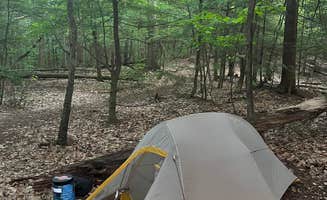
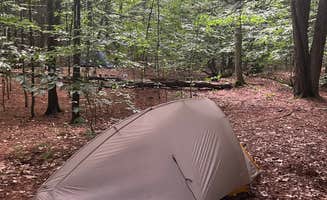
Check Availability"I set up my tent in one of the tent areas outside the shelter. There were a few spots for tenting but not a lot. There was a standard back country privacy here as well."


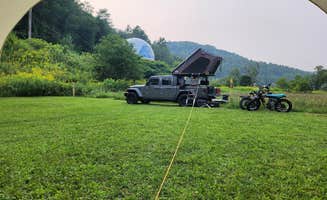

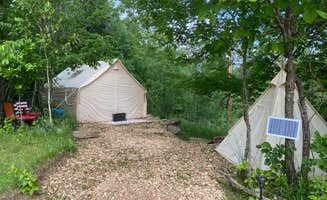
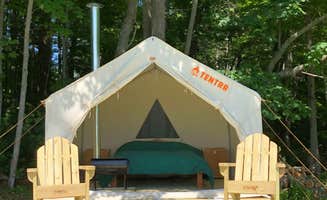

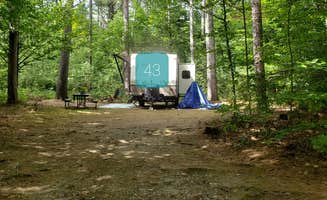


 Scout
ScoutWe brought the kids and they found plenty to do. Between the pool, river and recreation area, they were pretty much entertained the entire trip.


 Legend
This is our favorite campground on the Kanc. Lots of great hiking and scenic views. Close to Conway as well. Leaf peeping season will find you stuck in traffic. Recommend going afterwards. JJ closes for the season on October 12th.
ScoutWe rented a cabin and honestly it was perfect for what we needed. Spent the days exploring around Lake Sunapee and came back here to relax at night.
 Guide
GuideNice campground near Killington, VT. Water and dump station. Not for big rigs we have a 21 ft TT. Things were tight but doable. One of the few Vermont state campgrounds that is still open. Most close from second Monday in October until Memorial Day.
ScoutWe arrived on a Wednesday in early October with intentions of enjoying the foliage, which we did. We found the campsites easily and the access road is in good condition so the local speed through all day long.
I am not sure how many sites there are, we took the first one we would fit into. We travel with a Lance camper mounted on a Silverado.
My travel companions are cats and they are accustomed to the typical noises of RV life; truck stops, rest stops, neighboring campers and the occasional disrespectful loud jerks. At this spot we were serenaded by gun fire. I served in the military and grew up on a farm; guns don’t bother me in the least. I think of range fire as the sound of freedom, however, this started at dawn and did not stop until after the sun went down. The gunfire was so loud and consistent that the cats got spooked and took to hiding inside the camper.
We were going to stay for the weekend but left after our second night.
Not a bad spot (there is a small stream across the access road, not deep enough for true swimming but good enough for paddling around), surrounded by beautiful woods and no true neighbors, but between the never ending line of fast moving cars and the gun fire we decided to leave.
ScoutFirst time camping in this area and we really liked it. The pool kept the kids busy and we spent the evenings around the fire.
ScoutWe come to this campground every year to hike a few 4000+ mountains. Typically we come in the fall. There are several full hook up rv sites, some without sewer and several spots for RVs near the river. While the pizza shop (Celli's) is closed for renovations right now, we love their pizza and fries. The bathrooms are decent and there is hot water!
ScoutThe Sugar River was our favorite part. We spent a good amount of time down by the water and the kids loved cooling off there.

 Traveler
Quiet campground experience. Very cheerful staff member. Ice Cream shop is a bonus. We found a secluded spot without reservations. Monday evening. Some sites are tight for larger RVs but our Class B Camper Van fit fine.
The Connecticut River Valley bordering eastern Vermont and western New Hampshire defines the camping landscape near Thetford, Vermont. Situated at approximately 600 feet elevation with rolling hills and riverside terrain, this area receives moderate rainfall even during summer months. Campgrounds in this region typically offer more secluded wooded sites rather than open field camping, with several riverside options providing direct water access.
Explore Quechee Gorge: Vermont's deepest gorge offers hiking trails accessible from Quechee State Park Campground. "We were able to walk to the gorge as well as to the Antique mall. It is right next to the road. We were at sight #3," notes William P.
Visit local attractions: Many camping areas serve as convenient bases for regional exploration. "It's a beautiful part of the state... The park is close to good shopping, and also the Billings-Rockefeller National Historic Park in Woodstock, which is an awesome destination for families," shares Tara S. about Quechee State Park.
Enjoy river activities: The Connecticut River provides fishing and water recreation opportunities. At Pastures Campground in Orford, NH, campers appreciate "spacious lots with tables and fire rings" directly on the river, according to Kathy S.
Clean facilities: Bathroom cleanliness stands out as important to campers in this area. At Quechee State Park, one camper noted, "Might be the nicest bathrooms I've seen in decades of camping," while Douglas L. mentioned, "Bathroom were clean and the grounds were quite at night."
Wooded privacy: Jacobs Brook Campground offers "clean, quiet wooded sites," according to Rick G. The campground features a brook running through the property, "providing a shady respite and swimming hole" during summer.
Family-owned hospitality: Smaller campgrounds receive positive reviews for their personal service. At Rest N Nest Campground, Jeff D. appreciated that "the owners are nice and friendly," contributing to the "beautiful campground and peaceful place" experience.
Limited connectivity: Cell service varies significantly throughout the region. At Lost River Valley Campground, Dawn D. reported "No cell service on the south side of campground," a common situation in the area's more remote locations.
Seasonal operations: Most campgrounds operate from late April/early May through mid-October. Quechee State Park specifically operates "from May 19 to October 16," requiring advance planning for shoulder season visits.
Site variability: Some campgrounds have significant terrain differences between sites. At Jacobs Brook, sites in the 50s have "a sloped approach," while "the lower numbers offer pull-through access," according to Jean C.
Look for dedicated play areas: Family-friendly amenities make a significant difference. At Quechee State Park, Jen B. noted, "Rangers also run fun programs for children- my children churned butter and made popcorn over the campfire one night, and made tie dyed T-shirts the next (for no fee)."
Consider riverside sites: Several campgrounds feature water access that children enjoy. Michele S. shared that at Lost River Valley Campground, "You can't really swim much in the river, but the kids had a blast playing in it and fishing for little trout."
Choose campgrounds with organized activities: Quechee-Pine Valley KOA offers structured entertainment for families. "Saturday you can go for a Hay Ride which is so much fun!" reported Donna C., highlighting one of the scheduled activities available.
Assess hookup options: Different campgrounds offer varying levels of service. In Rest N Nest Campground, campers appreciate the "primitive, woodsy full hookups" that combine natural settings with conveniences RVers need.
Check site dimensions: Sites vary considerably in size and layout. At Lost River Valley Campground, Heather O. warned about site 41: "Unfortunately we were unable to use the fire pit due to being so close to our 19 foot camper."
Consider access and terrain: Some campgrounds present challenges for larger rigs. Trapper John Backcountry Campground is "entirely hike in" according to Justin P., making it unsuitable for RVs, while Jacobs Brook Campground notes some sites accommodate RVs while others don't.
Frequently Asked Questions
What camping is available near Thetford, VT?
According to TheDyrt.com, Thetford, VT offers a wide range of camping options, with 245 campgrounds and RV parks near Thetford, VT and 24 free dispersed camping spots.
Which is the most popular campground near Thetford, VT?
According to TheDyrt.com, the most popular campground near Thetford, VT is Quechee State Park Campground with a 4.6-star rating from 24 reviews.
Where can I find free dispersed camping near Thetford, VT?
According to TheDyrt.com, there are 24 free dispersed camping spots near Thetford, VT.
What parks are near Thetford, VT?
According to TheDyrt.com, there are 13 parks near Thetford, VT that allow camping, notably Union Village Dam and North Hartland Lake.
Keep Exploring