Dispersed camping options near Peoa, Utah range from 7,000 to 10,000 feet in elevation throughout the Uinta-Wasatch-Cache National Forest. Seasonal access varies dramatically with lower sites generally accessible May through October, while higher elevation areas often remain snow-covered until late June. Most primitive sites require visitors to bring all supplies including water, as natural sources require treatment.
What to do
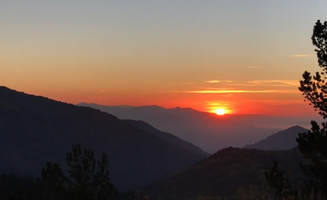
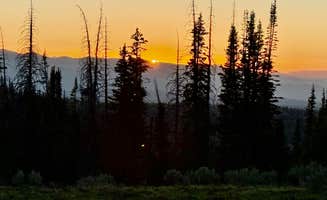
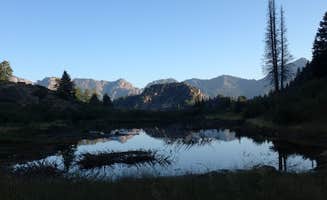
Hiking to alpine lakes: Several primitive camping areas provide access to high-mountain lakes. At Millcreek Canyon Dispersed Camping, campers can take advantage of trails leading to panoramic views. "Hiking up Millcreek Canyon is always a treat, but seeing the sun set over the mountains to the west, and waking up to it rising over Park City is spectacular!" For more ambitious hikers, continuing to Murdock Peak offers established tent sites in natural saddles.
Wildlife observation: Early morning and evening hours provide the best wildlife viewing opportunities. At Mill Hollow Dispersed Camping, visitors report regular elk sightings. "I've hiked and it's been great. I've seen plenty of chipmunks and even had two elk run past my campsite." The area features diverse ecosystems supporting deer, small mammals, and numerous bird species.
Stream fishing: Small creeks throughout the region offer fishing opportunities. Primitive camping areas near water sources provide convenient access for anglers. "If you drive further up, you'll find a nice variety of camping spots. My favorites are up towards the top. From what I've seen and experienced, most if not all spots are accessible by truck/suv/towing a trailer."
What campers like
Solitude and quiet: Campers consistently mention the peace found in more remote camping areas. At Cascade Springs Dispersed Site, visitors appreciate the isolation. "We seen 2 other people in spots and that was it. Very quiet, awesome spot overall. Will definitely go back." The undeveloped nature of these sites means minimal light pollution for exceptional stargazing.
Temperature relief: The higher elevation camping areas provide natural cooling during summer months. "Great escape from the SLC Valley heat…a short 1.5 hour drive and temp drops 20 degrees from the valley. We were here in late May and there was still snow in places and some roads impassable."
Natural features: The combination of mountain views, streams, and forest setting creates memorable camping experiences. "The hike is moderately difficult, especially carrying overnight gear, but it's super worth it. There are dozens of locations along the trail you can just venture off into to camp." Most primitive sites feature natural clearings surrounded by aspen or pine forests.
What you should know
Road conditions: Access to many dispersed camping areas requires navigating unmaintained forest roads. At Mineral Basin Dispersed, visitors note seasonal challenges. "We couldn't access early June road still closed past the ski resort." Other locations have year-round access issues: "The road is atrocious. Dont come unless you have some serious high clearance 4wd vehicle or you will bottom out and destroy your vehicle."
Permit requirements: All primitive camping in the Uinta-Wasatch-Cache National Forest requires permits, available at entrance stations or ranger offices. "However, you have to make sure to self-pay at the little turnout before the campsite for a US pass, I think the fee was about $6 but our annual pass was an acceptable form of payment."
ATV traffic: Many forest roads double as ATV routes, creating potential noise during daytime hours. "Not a terrible place for a quick get away. Came up for 2 days and had a solid time. Lots of traffic going up and down the mountain roads. Kind of loud." Most ATV activity diminishes after sunset, allowing for quieter evenings.
Tips for camping with families
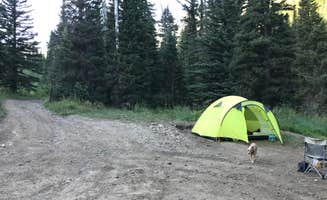
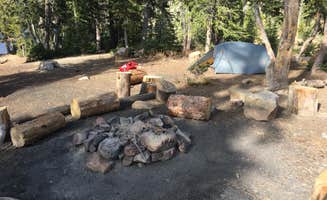
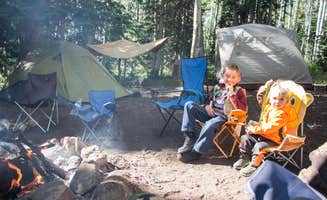
Choose established fire rings: When primitive camping with children, selecting sites with existing fire rings provides safety and reduces environmental impact. At Soapstone Basin Dispersed Camping, sites include established fire features. "Nearly every few hundred yards there are different pull-offs where you can just set up camp. There are obviously no water hookups or vault toilets, so pack-in, pack-out."
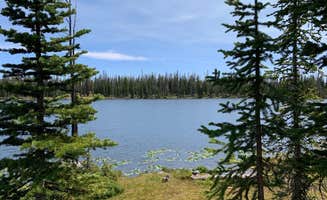
Weather preparation: Mountain weather changes rapidly and unpredictably, particularly important when camping with children. "I've camped here a couple times and I absolutely love it. You'll find the lake pretty soon after you've driven the gravel road for a few minutes where you can fish or just hang out."
Wildlife awareness: Educate children about appropriate wildlife interaction. "You'll also likely see deer and even moose wandering around your campground in the early morning and late evening." Storing food properly reduces wildlife encounters at camping sites.
Tips from RVers
Site selection for larger vehicles: RVers should scout potential camping areas before committing to a spot. At Uinta-Wasatch-Cache National Forest Dispersed Camping, visitors note varied access. "The road gets pretty rough/there's a decent sized dip after the first few sites, which we were able to make with a 4WD high clearance car, with a small trailer. But I wouldn't have attempted it in my sedan."
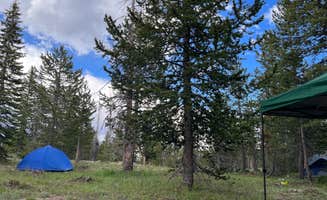
Resource planning: Without hookups, RVers must carefully plan water, power, and waste management. "There are lots of different site options, like mentioned in other reviews. Some of them are fairly close together, but there's a good amount of visual privacy from trees."
Arrival timing strategy: Earlier arrivals provide more options for suitable RV sites. "If you go early enough in the day to scope out sites, you get a lot of freedom with what experience you will have. You can take some dispersed sites that are fairly grouped together which makes noise from other sites an issue but has lots of visual privacy."










 Guide
Guide


