The Catskill Mountain region surrounding Parksville, New York sits at elevations ranging from 1,200 to 4,200 feet, creating diverse microclimates across camping areas. Tent camping options in this area often require advance planning, particularly during summer months when sites at popular locations like Peekamoose Valley fill quickly. Winter camping remains available at several locations but requires appropriate cold-weather gear as temperatures frequently drop below freezing.
What to do
Hiking to viewpoints: Several trails near Alder Lake offer scenic viewpoints with minimal elevation gain. "We hiked the balsam lake fire tower which had nice views of the area. Overall a great little spot to camp. Would definitely return," notes Erik C. The hike around the lake provides an easy walking option suitable for most ability levels.
Creek exploration: The Rondout Creek at The Peekamoose Valley offers water access for cooling off during summer months. One camper mentions, "The area was pretty big and we walked down the river to watch the sunset which was beautiful." Winter visitors appreciate the solitude near water features, with Kelsey noting, "Camped out at one of the sites by the river and it was amazing, no one was around except a man far from our site."
Mountain climbing: For experienced hikers, Giant Ledge Primitive Camp provides access to challenging ascents. "It is a near vertical hike the first mile with 90% or more being over rock gardens. Not some rocks littering the trail," warns Caleb J. Those prepared for the effort find the views worth it, with Ryan commenting, "Yes you can star gaze by the views near the camp. Yes it's amazing."
What campers like
Privacy levels: Many sites at Peekamoose Valley offer good separation between campers. Ali B. explains, "There is plenty of privacy between spots. It is not remote though (road is right next to you so you hear cars/can see 1 house with lights, although I had no service)." Some campers prefer the seclusion of walk-in sites despite the additional effort required.
Natural water features: Campers consistently rate creek and lake access highly across multiple sites. At Slide Mountain Wilderness Roadside Campsite, Tommy S. reports, "Both sites have access to the creek, which showed active signs of beavers in the area." The natural surroundings create opportunities for wildlife viewing while maintaining access to essential amenities.
Stargazing opportunities: Clear mountain air and minimal light pollution create excellent conditions for night sky observation. At Giant Ledge, several reviewers mentioned exceptional star visibility, with one camper stating, "Yes you can camp on top of the mountain. Yes you can make a camp fire. Yes you can star gaze by the views near the camp."
What you should know
Walk-in distances: Many prime tent spots require carrying gear from parking areas. At Peekamoose Valley, "We walked down the hill, across the bridge, and looked at a few sites in each direction. It was walk-in only and about a 5-10 minute walk to the first site," notes Tamar W. Consider your gear weight when selecting sites.
Site availability fluctuations: Summer weekends often see complete occupancy by mid-day. "We arrived around 11:00 am and the parking lot was already packed and cars were lined up along the road," reports Colleen J. about Alder Lake. Early arrival or weekday camping improves site selection opportunities.
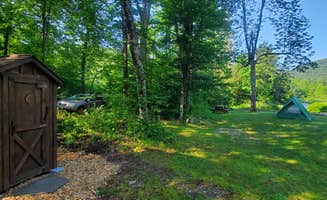
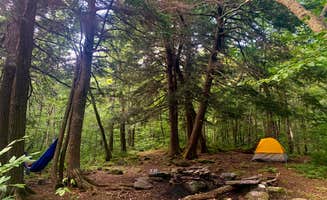
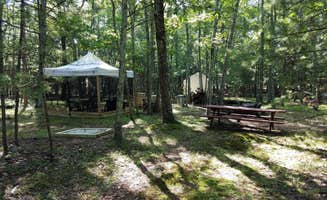
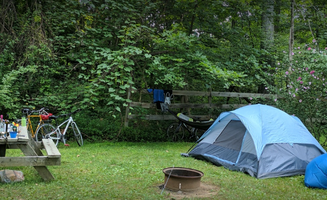
Limited amenities: Most tent sites offer minimal facilities beyond fire rings. Cameron describes Peekamoose Valley: "Campsites in middle field are just clearings with fire pits and nothing else. Soft ground for staking a tent." Vault toilets or portable facilities may be available in parking areas but often require significant walks from remote sites.
Road noise levels: Some campgrounds experience traffic noise despite wilderness settings. Ali B. notes about Peekamoose Valley, "It is not remote though (road is right next to you so you hear cars)." Sites farther from main roads provide quieter environments.
Tips for camping with families
Trail difficulty assessment: When planning hikes with children, carefully evaluate trail reports. At Samuel F. Pryor III Shawangunk Gateway Campground, Emily M. advises, "If you're contemplating paying to do any of the Mohonk Preserve hikes DO IT. Especially any of them that include the labyrinth. Coolest hike of my life."
Site selection strategy: For families, drive-up sites minimize gear transportation challenges. Erik C. recommends Alder Lake: "Grabbed one of the two vehicle accessible campsites along the road which had some very light traffic. There are several beautiful, secluded hike-in sites along the lake which I would love to return to someday."
Seasonal considerations: Bug activity varies significantly by season and location. Guy M. cautions about Peekamoose Valley, "Oh, did I mention the Ticks!??" Early spring and late fall camping reduces insect concerns but requires additional warm clothing layers.
Water safety planning: Creeks and lakes provide recreation opportunities but require supervision. Cameron notes about Peekamoose: "Good water access with the river," but parents should consider flow rates and depth when planning water activities.
Tips from RVers
Access road conditions: Upper Esopus Creekside Camp offers limited RV access with some challenging approach roads. "This property is the closest private property to Slide Mountain," notes Ashley F., making it worth consideration despite access limitations.
Van camping options: For smaller recreational vehicles, Alder Lake provides limited but viable options. SJ W. reports, "Was not the easiest for my RV van to get up the hill with the ruts, but I have a small lift so it helps, lower clearance vans might not make it."
Site leveling requirements: Many tent-focused campgrounds have uneven parking areas requiring leveling blocks. "The small parking area can accommodate several cars," notes Tommy S. about Slide Mountain Wilderness Roadside Campsite, but larger vehicles may struggle with positioning on the available terrain.









 Guide
Guide


