Dispersed camping near Green Brook, New Jersey requires traveling to nearby Pennsylvania or the Delaware Water Gap region, with most primitive options located 60-75 miles from town. The closest dispersed camping areas sit in higher elevation zones ranging from 900-1300 feet above sea level, creating cooler overnight temperatures even in summer months. Winter access to these sites becomes challenging due to snow and ice conditions on forest roads and trails.
What to do
Hiking the Thunder Swamp Trail System: This network near Thunder Swamp Trailhead offers over 45 miles of interconnected paths through dense forest. "Tons of hiking. Went down Saw Creek trail to a marsh," notes camper Jason R. The terrain varies from moderate to difficult with several stream crossings.
Wildlife viewing at Worthington State Forest: Early mornings provide opportunities to observe deer, black bears, and diverse bird species. The forest contains old-growth trees and seasonal wildflowers. Camping restrictions apply throughout most of the forest, with designated sites only.
Photography at Sunfish Pond: This glacial lake near Appalachian Trail- Designated Backpacker Campsite 2 offers scenic landscape photography opportunities. Located approximately half a mile from the campsite, the pond features rocky outcroppings and changing seasonal colors.
What campers like
Natural isolation: The remote locations provide genuine wilderness experiences without crowds. Most sites require significant travel from Green Brook but reward with authentic backcountry conditions. "We camped nearer to others but there are secluded spots too," reports Katharine T. about the Appalachian Trail campsite.
Minimal regulations: While permits may be required at certain locations, these primitive sites generally have fewer restrictions than developed campgrounds. Thunder Swamp campers report straightforward overnight stays. "Trailhead parking was chill for a night. No trouble," shares one visitor.
Cost-effective camping: Most dispersed camping options near Green Brook operate on free or low-cost permit systems, making them budget-friendly alternatives to developed campgrounds. Some sites request voluntary donations for maintenance.
What you should know
Water planning is essential: None of these dispersed sites provide drinking water. Campers must carry all needed water or have purification systems for natural sources. Sunfish Pond serves as a water source for Appalachian Trail campers but requires filtration.
Seasonal considerations: Spring camping brings mud and higher water levels at stream crossings. Summer typically sees more hikers on trails, reducing privacy. Fall offers optimal conditions but requires warm sleeping gear as temperatures drop significantly at night.
Bear safety protocols: The Delaware Water Gap region has an active black bear population. Food storage precautions are mandatory at all sites. Floyd Bennett Field offers a unique urban dispersed camping alternative, though it requires significant travel from Green Brook.
Tips for camping with families
Start with shorter hikes: For families with younger children, the terrain around dispersed sites can be challenging. Plan shorter day hikes before attempting overnight trips. The difficulty level increases with elevation changes.
Emergency planning: Cell reception is inconsistent or nonexistent at most dispersed sites near Green Brook. Families should bring detailed maps and establish clear emergency protocols before trips.
Weather awareness: Mountain weather patterns can change rapidly in the Delaware Water Gap region. Families should pack additional layers regardless of season and rain protection even during dry forecasts.
Tips from RVers
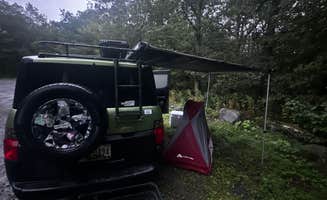
Limited options for larger vehicles: True dispersed RV camping near Green Brook is extremely limited. The Thunder Swamp Trailhead accommodates smaller vehicles but lacks amenities. "It's a gravel parking lot. Plenty of shade. No one bothered me," reports benjamin H., indicating the basic nature of this option.
Alternative recommendations: Most RV campers seeking dispersed camping near Green Brook must consider either commercial campgrounds or traveling further to Pennsylvania state forests with primitive road access. Winter RV access becomes nearly impossible due to road conditions.



 Scout
Scout


