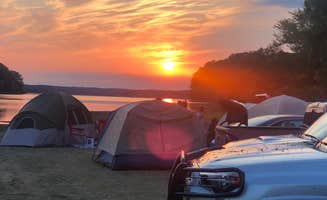
Tent camping options within Land Between the Lakes National Recreation Area span across 170,000 acres between Kentucky Lake and Lake Barkley. Winter lake levels typically drop 4-5 feet below summer pool, creating expanded shoreline camping opportunities from November through March. Most primitive sites lack amenities but provide direct water access across the peninsula's varied terrain.
What to do
Kayaking access points: The peninsula offers multiple launch sites for paddlers. At Ginger Bay Basic Camping Area, campers find "right on the water with a gravel opening beside it. We fished, we hiked, we kayaked!! We all enjoyed the peaceful exclusivity this site offers." Some sites require preparation as "you will need a four-wheel drive vehicle to get down the steep gravel road to the dispersed camping area."
Swimming options: Several beaches accommodate families seeking water activities. Sugar Bay Campground allows swimming with no lifeguard supervision. A camper noted, "Swimming allowed in Sugar Bay and in late September the water was warm." The shoreline varies with "nice pebbly beaches" at some locations while others feature sandy areas accessible by short paddles.
Hiking trails: The North-South Trail connects to several campgrounds. At Cravens Bay - LBL Lake Access, "the campground is also right off the North South hiking trail, so bikers and hikers also find Craven's Bay a welcome rest stop." The trail system provides connections between camping areas and recreation sites throughout the peninsula.
What campers like
Wildlife viewing: Many sites offer opportunities to spot native species. One camper at Cravens Bay mentioned there's "nothing like seeing a Bald Eagle hunting fish while drinking coffee first thing in the morning." The peninsula houses numerous wildlife viewing areas accessible from camping locations.
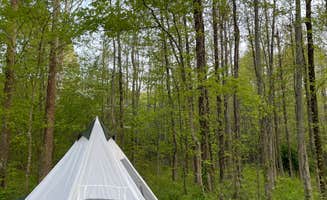
Solitude at dispersed sites: Remote locations provide quiet camping experiences. At Forest Service Rd 343, a visitor found "a secluded lakeside spot with a fire pit. We saw three other spots on the way in which looked nice as well." Another camper reported, "I had one other person show up to cook, but they left shortly after. Beautiful view with a nice fire pit."
Seasonal experiences: Different times of year offer unique camping conditions. At LBL FS154 - Dispersed, "I was there during the lake's winter pool, so the water was very low, leaving a lot of easy walkable entry areas into the bay or inlet area." Winter camping provides expanded shoreline access when water levels drop.
What you should know
Road conditions: Many sites require careful navigation on unpaved roads. At Forest Service Rd 343, "The road coming in is a little washed out but not too pitted. I'd recommend AWD/4WD and 8+ inches of clearance, especially if it has rained because it's pretty steep in sections." Ginger Bay access requires similar preparation as "the gravel road back can be rough especially right after a big rain."
Permit requirements: All dispersed camping requires permits available online or at visitor centers. "Be sure to have your dispersed camping permit before coming out! They are available online, and at any of the Visitor's centers." Some areas offer self-registration: "At Self Service areas, I drive through, find my site, then walk back to the entrance and complete the registration card."
Amenities vary significantly: Each area provides different facility levels. At Smith Bay Campground, visitors find "a central pit toilet that is cleaned regularly but can still get smelly during the heat of the day. There's also a dumpster that tends to be overflowing after the weekend." Most dispersed sites lack any facilities, requiring complete self-sufficiency.
Tips for camping with families
Wildlife precautions: Secure food supplies from nocturnal visitors. At Smith Bay, "Raccoons and skunks visit the campsites nightly, so you must keep everything put away or risk a big mess like some we saw who had left there food out on a screened gazebo/tent." Food storage in secure containers prevents unwanted encounters.
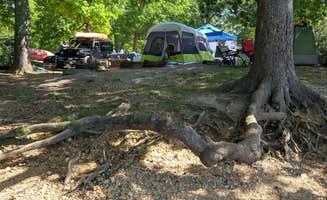
Site selection for groups: Some areas accommodate larger family gatherings. At Old Boy Scout Campground, "this is a primitive site, and is considered back country camping. This place used to be used for Boy Scout Summer camps. It's a nice little finger of land that has water all around. There is space for several tents."
Water safety planning: Swimming locations vary in accessibility and conditions. Sugar Bay offers swimming access where "the water was warm" in late September. Other locations feature "pebbly beaches" or require short paddles to reach "sandy beaches" that "can get quite busy on weekends."
Tips from RVers
Generator restrictions: Noise regulations limit power generation hours. At Smith Bay, "generators are only allowed during the day. However, there is no one to enforce this." One camper's stay "was cut short by a rude RVer who fired up his extremely loud generator at 11 pm and left it sputtering away until 8 am."
Site leveling challenges: Many areas lack level parking for larger vehicles. Smith Bay receives mostly tent campers because "the sites are not very level. Birmingham Ferry has much more level sites for RVs." Some areas require careful site selection for RV camping.
Turn-around space limitations: Navigation within campgrounds requires planning. At Cravens Bay, one RVer with a "36' travel trailer we had to actually drive all the way to the end of the campground to turn around so we could back into the site." Smaller vehicles generally access sites more easily than larger rigs.







 Legend


