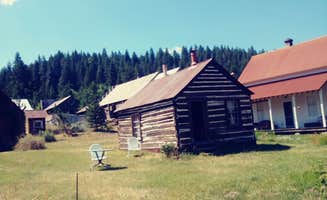
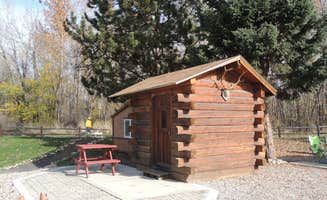
Cabin accommodations in Boise National Forest operate primarily on a reservation system through Recreation.gov or the Forest Service. Most cabins remain open from late spring through fall, though winter access varies significantly by location and snow conditions. Several cabins maintain historical significance from their original purpose as ranger stations, fire lookouts, or mining-era structures.
What to do
Hiking from cabins: Cowboy Campground serves as an excellent base for exploring nearby trail systems. "Miles of forest for hiking, exploring and fishing. Right off Highway 21, it's easy to find with ample space between campsites. A great base camp for exploring the area," notes Amy S. about the Cowboy Campground.
Mountain biking trails: The area around Atlanta Cabin offers extensive mountain biking options. "Atlanta Idaho was once a huge gold mining booming town! It is now a small town with miles of hiking trails, hot springs just outside of town, and a cute burger and bar joint," shares Stephanie L. Many trails follow former mining routes with moderate to difficult terrain.
Stargazing opportunities: The Sawtooth region contains part of the Central Idaho Dark Sky Reserve. Jeremy A. explains this makes Glacier View Campground "a top pick to do some star gazing or meteor watching" as it sits within "the first Gold Tier site in the United States" for dark sky viewing.
What campers like
Lake access: Locations near Redfish Lake provide shoreline recreation. "With a short walk, you are on the North shore or Dog Beach and a little further is Redfish Lodge, beach and restaurants," writes Carrie B. about the cabins and campsites at Glacier View Campground, adding that "the water in the lake is the cleanest you'll ever see."
Wildlife viewing: The Sawtooth region supports diverse wildlife populations. "Fauna is abundant in the surrounding area. Deer, elk, bear, marten, moose, and pronghorn antelope all made appearances during my last trip to the area," reports Jeremy A. Many cabins provide wildlife viewing from porches or nearby meadows.
Hot springs: Several cabins sit near natural hot springs. Kay notes that near Atlanta Cabin, "there are lots of spots to camp, fish, swim, and soak in the hot springs. There are bathrooms as well. Town is about 10 min from camp."
What you should know
Limited amenities: Most forest cabins require extensive self-sufficiency. Betsy A. reports of her experience near Redfish Lake that "there is a tent pad that's big enough for two 4 person tents as well as a fire ring and picnic table," but visitors should expect minimal facilities at most locations.
Water considerations: Ryan L. notes that at cabins with running water, "there is running water and bathrooms available. The sites have fire pit, picnic table and area to place tent." However, many cabins lack water hookups entirely, requiring visitors to bring their own supply.
Reservation planning: Secure bookings well in advance, especially for summer months. "Reserve early, but it's worth it!" advises Kate S. about popular cabins like those at Redfish Lake, where peak season dates fill quickly.
Tips for camping with families
Quiet environment: J L. appreciates that Deadwood Lookout features "Quiet, nicely spaced sites" which creates an ideal setting for families needing space and privacy between neighboring cabins.
Trail difficulty awareness: When planning hikes from cabins, consider terrain challenges. Stephanie L. cautions that near Atlanta, "if you are hiking this trail there are obsticals to go over and under along the way. I'd rate this trail for experts, there are different routs you can take though."
Bathroom facilities: Norma Y. notes that at developed sites, "Bathrooms are clean, with flush toilets. No showers here, but they are available within the Redfish Lake area. The drinking water was cool and tasty."
Tips from RVers
Generator restrictions: Most cabin areas have restrictions on generator use. Mike W. explains that at Glacier View, "it is really tough on battery power without running the generator constantly," since hookups are unavailable.
Water fill methods: When facilities lack direct hookups, campers adapt. "There are water spigots about every 3 sites, so filling your tank via 5 gallon bucket is possible if you don't mind the labor," suggests Mike W., though this requires additional work.
Dump station locations: For extended stays, plan for waste management. "There is an RV dump nearby on the main road, so if your Black or Grey tanks get full you can make a dump trip," advises one visitor about managing longer stays.








 Guide
Guide


