The Tennessee-Tombigbee Waterway stretches 234 miles through Alabama and Mississippi, connecting the Tennessee River with the Tombigbee River. At its widest points, the waterway spans 300 feet, with water depths maintained at a minimum of 9 feet for barge traffic. Summer temperatures often exceed 90°F with high humidity, while spring and fall camping seasons offer more moderate conditions in the 70s with less precipitation.
What to do
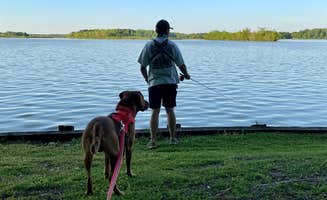
Fishing opportunities: Blue Bluff Campground offers excellent fishing access directly from waterfront sites. "We stayed one night (4/25/21) at site 78. Our site was on the water and we were able to catch quite a few bream directly in front of us," notes Allie T. at Blue Bluff Campground.
Nature trails: Explore the cypress slough trail at Dewayne Hayes Campground. "There is a trail in the campground that leads to a cypress slough and it is beautiful," reports Mary from Dewayne Hayes. The trail offers a 30-minute easy walk through wetland ecology.
Barge watching: Many campsites provide front-row views of commercial traffic. "Site 129 is directly on the water with a front row seat for watching the boats and barges," shares Cyndi H. from Pickensville Campground. The larger vessels typically pass every 2-3 hours during daylight.
What campers like
Spacious sites: Most Tennessee-Tombigbee campgrounds feature generous spacing between campsites. "Peaceful campground but enough space so it doesn't feel like your neighbors are right on top of you," writes Will G. about Dewayne Hayes Campground.
Clean facilities: Maintenance standards remain high across Corps of Engineers campgrounds. "The bathhouses were dated but serviceable," reports Neil T. about Pickensville. "Clean campground with fairly level concrete pads with awesome shade. Bath house stayed clean," adds Eric H. about Deerlick Creek.
Wildlife viewing: Many campers report excellent wildlife watching opportunities. "The owls were loud - which was great. Pretty sure we heard barge traffic foghorns, but they didn't bother our sleep," mentions Neil T. At Forkland Campground, one camper noted "Early in the morning you can see some huge paddlefish jumping in the water."
What you should know
Cell service variations: Connectivity varies significantly between campgrounds. "Verizon service was flaky and bounced between no service to slow," reports Neil T. about Pickensville, while at Blue Bluff Campground, Allie T. found "We have Verizon and had at least 3 bars the entire time."
Water quality considerations: Some sites experience temporary water issues. "The water ran brown for a while. I'm guessing it just hadn't been used at our site over winter. It cleared up after a minute and I flushed it for another 5," notes Neil T.
Reservation requirements: Most campgrounds require advance booking. "Due to covid they have a limit and you now have to book online at recreation.gov, they do not take cash or card at the gate," advises Bruce F. about Pickensville.
Tips for camping with families
Playground access: Several campgrounds offer play facilities for children. "We really enjoyed the beach area and the trails. Lots of mountain bikers throughout the weekend. It did have shower houses... We stayed in the B loop and loves the proximity to the playground and beach," shares Casey L. from Lake Lurleen State Park Campground.
Swimming areas: Designated swimming zones provide safer water recreation. "We took my kids camping here and we had a great time! Paddle boarding and walking around to different playgrounds! The only downside was the snakes… when we looked for one, we saw one. Literally. They were everywhere," warns Meredith M. about Lake Lurleen.
Educational opportunities: Some campgrounds offer nature learning experiences. "We went in April with our scouting troop. Very busy even then. Lots of small hiking trails. Nothing too fancy. Dollar general 10 minutes down the road if you need anything. Several primitive sites. Our troop made friends with some other kids nearby as well. Great for families or alone," explains Marissa G.
Tips from RVers
Site selection guidance: Choose appropriate sites for your RV size. "Some sites have trees, and offer water access. The water along this stretch of the Tombigbee Waterway is very shallow and even kayaks can run aground in the mud," cautions Cyndi H. about Blue Bluff Campground.
Leveling considerations: Site grading varies by location. At Deerlick Creek, Eric H. notes "Nice level concrete pads with awesome shade," while at Forkland, Lori B. reports "Quiet park with fairly level spaces most of which are on the water."
Hookup variations: Available connections differ between campgrounds and sites. "Electric and water only with a dump station in the center of the park. One thing to be aware of is that the 4" sewer plug is NOT a sewer connection," clarifies Lori B. about Forkland Campground.









 Legend


