Camping options surrounding Smiths Station, Alabama center around Lake Harding and the Chattahoochee River area with sites at elevations between 200-600 feet above sea level. The region experiences mild winters with daytime temperatures rarely below 50°F and hot summers where temperatures often exceed 90°F from June through September. Most campsites in this area are within hardwood forests that provide natural shade during summer months.
What to do
Fishing opportunities year-round: At R. Shaefer Heard Campground, lakefront sites offer direct water access for fishing throughout all seasons. "Deep water camp sites. This park has lots to offer in a wide variety of camping spots from secluded sites to group sites," notes reviewer Rodney G. The adjacent West Point Lake is known for bass, crappie, and catfish.
Mountain biking adventures: Chewacla State Park Campground features multiple trail difficulty levels for mountain bikers of varying skill. "Many areas have killed mtb trails to ride, worth a sniff," reports Arthur G. The park includes technical features like jumps and berms that challenge even expert riders, with trails maintained by local cycling clubs.
Explore hiking trail systems: Trails connect most campgrounds to nearby natural attractions with varying difficulties. "The hiking was great, good hills a little hard on these novice riders... there was also a bike trail just outside the gate that was paved and paralleled a roadway... several geocaches," explains reviewer Gale H. Most trails are well-marked with distances ranging from 0.5 to 5 miles.
What campers like
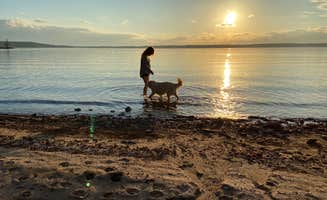
Private, well-spaced campsites: Blanton Creek Campground provides generous spacing between sites for privacy while camping with pets. "Sites are very large with good space between them. Most are shaded, level, gravel with picnic tables, large fire ring, lots of space for chairs," shares Liz H., who visited with her golden retrievers.
Clean, well-maintained facilities: Bathrooms and shower facilities receive frequent attention from staff at most area campgrounds. "The bathhouse is heated and has five toilet stalls and four nicely tiled showers with benches," reports Fran H. about Blanton Creek Park. Regular cleaning schedules ensure facilities remain usable throughout peak camping periods.
Waterfront access for boats: Multiple sites offer dedicated boat parking directly at campsites. "If you put a boat in, you can dock right at your site on some select sites (3 and 9)," notes a reviewer about Blanton Creek Park Georgia Power. These sites allow campers to keep boats accessible for daily use without returning to boat launches.
What you should know
Gate closure times vary by location: Some campgrounds implement strict access policies after hours. "Beware: the gate is locked shut from 10 PM to 8 AM, no exceptions unless the elderly host personally deems your emergency worthy," warns Denis P. about R. Shaefer Heard Campground. Always check gate policies when making reservations.
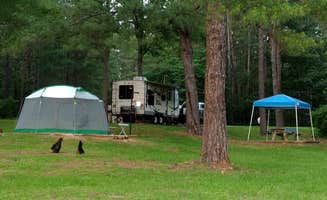
Variable site quality at older facilities: Some campgrounds show signs of age or ongoing improvements. "The sites are fairly smallish but well shaded. Site 1 has another site 15 feet behind it. (RV butts back to back)," describes Fran H. Site photos or campground maps can help identify preferred locations before booking.
Cell service limitations in wooded areas: Connectivity varies widely between campgrounds and specific campsites. "Verizon was weak over most of the property talk and text ok but data not so much," reports Ward about R. Shaefer Heard. Camp David RV Resort offers WiFi for long-term guests through Mediacom, addressing this limitation for extended stays.
Tips for camping with families
Look for designated swim areas: Swimming access varies significantly between locations. "We used the swimming area which is close to the camp ground, the lake has a swim platform which has an elevated diving board about 10 to 12 feet high," explains Tony C. about Chewacla State Park. Designated swim areas typically feature shallow entry points suitable for younger children.
Consider campground playground access: Some campgrounds offer playground equipment for children. "From where our site was we could see the playground and also let our kids ride there bikes around the circle that the camp sites where on," shares Joshua H. about Franklin D Roosevelt State Park Campground, which offers activities for various age groups.
Schedule scavenger hunts: Several campgrounds offer organized activities for children during peak seasons. "They also had a scavenger hunt that you kids loved doing," mentions Joshua H. These structured activities provide entertainment when families need a break from water-based recreation.
Tips from RVers
Select sites based on rig length carefully: Not all sites accommodate longer RVs despite campground advertising. "Larger rigs need to be sure that the site is level for the length of the rig. Some spots have a driveway that goes downhill from the camper and others go uphill from the camper which might be an issue for 5th wheels," advises Stacy H. about Blanton Creek Park.
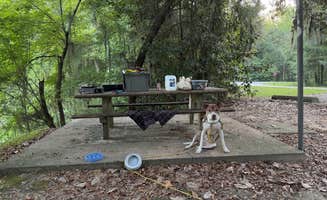
Consider concrete pad locations: Spring Villa Campground offers level concrete pads that simplify setup. "This place is sweet, not too many folks, but the comforts we like best - level concrete pads, picnic tables, showers, woods, wildlife, while not far off from our interstate journey," shares Sara H. Concrete pads reduce setup time and maintain stability during rain.
Check access road conditions: Some campgrounds have unpaved approach roads that can challenge larger rigs. "We did arrive over a section of 2-3 miles of loose unpaved roads (from Georgia) but left towards Opelika over paved ones," notes Sara H. about Spring Villa Campground. Planning arrival routes based on road surface can prevent difficulties with larger rigs.











 Scout
Scout


