


WhiteBoyChase  Scout
Scout
ScoutSandy Cove on the St. Croix River
Good spot
Back in 2020 I did about 3 months camping along here ! Good spot !
4 campgrounds · Check availability for any dates.
Dispersed camping opportunities near Ellsworth, Wisconsin include two notable areas: Zumbro Bottoms State Forest in Minnesota and Sandy Cove on the St. Croix River in Wisconsin. These primitive camping locations provide alternatives to developed campgrounds for those seeking more remote experiences. Zumbro Bottoms State Forest is accessible via low-maintenance dirt roads, while Sandy Cove is located along the Ice Age Trail. Both areas represent typical dispersed camping options in the region, requiring minimal impact camping practices and self-sufficiency.
Access to Zumbro Bottoms State Forest requires careful navigation, particularly when approaching from the north where gates near the river bridge may be closed. Visitors should plan to enter from the southern route for more reliable access. Sandy Cove features a crushed gravel path that connects to nearby Lions Park, making it somewhat more accessible. Neither location provides drinking water, and amenities are extremely limited. Sandy Cove offers basic facilities including a fire ring, picnic table with wheelchair accessibility, and an open-air vault toilet. Permits are required for camping at Sandy Cove, while alcohol is prohibited at Zumbro Bottoms.
The camping experience varies significantly between these locations. Zumbro Bottoms provides a more remote forest setting with hiking trails passing near the dispersed sites. According to a review on The Dyrt, "There is a parking spot near a known dispersed camping site with easy vehicle access next to it." Sandy Cove offers riverfront camping along the St. Croix, though site conditions can be affected by seasonal factors. As one visitor noted, "When the river is lower with the fire ring and table where they're supposed to be this would be a nice place for the night." The proximity to trails and recreation areas makes both locations convenient for outdoor activities, though campers should be prepared for varying levels of maintenance and occasional evidence of heavy use.
"This area is off a low maintenance dirt road. It is best to come in from the south as sometimes the gate on the river bridge to the north is closed."
"Good to use ATV on trails and perfect for RV camping. First come first serve."
"No one around, but it's first come first serve."
"Back in 2020 I did about 3 months camping along here ! Good spot !"
ScoutBack in 2020 I did about 3 months camping along here ! Good spot !


 Traveler
The spot is along the ice age trail. Well managed gravel trail to the south and single wide footpath to the north.
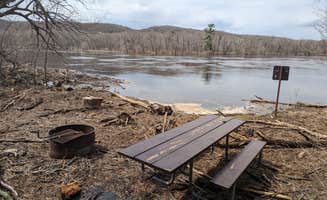
There is a pad at the bottom of the path up to the open air vault toilet, a fire ring, and a table. The table has an extra long side for those in a wheelchair. The crushed gravel path to the south makes travel to the nearby Lions park easy.
The ease of access probably makes this a hangout spot as we saw a good amount of refuse around the pad. The pictures are probably worst case scenario. We visited in April after historic snowfall and thaw causing the river to flood. I'd imagine when the river is lower with the fire ring and table where they're supposed to be this would be a nice place for the night. Right on the beautiful st.croix river.
Dispersed camping near Ellsworth, Wisconsin provides opportunities for basic outdoor experiences in natural settings without traditional campground amenities. The region offers several undeveloped camping options within a 45-mile radius, typically on public lands managed by state and federal agencies. Winter temperatures in the area can drop below 0°F, while summer camping conditions generally remain mild with occasional humidity and temperatures averaging 75-85°F during peak season.
Trail exploration: At Zumbro Bottoms State Forest, outdoor enthusiasts can access numerous hiking paths through the woodland terrain. A visitor notes, "There are hiking trails that pass by this site," making it convenient for campers wanting to combine overnight stays with day hikes.
River activities: The St. Croix River provides opportunities for paddling, fishing, and swimming during warmer months. Camping at Sandy Cove on the St. Croix River gives direct access to the waterway. According to a camper, "Right on the beautiful St. Croix river," positioning campers for convenient water recreation.
Wildlife observation: The natural areas surrounding Ellsworth host diverse wildlife including white-tailed deer, wild turkeys, and various bird species. Morning and evening hours typically offer the best viewing opportunities with minimal equipment needed beyond binoculars.
Accessible primitive sites: Some rustic camping sites near Ellsworth are relatively easy to reach despite their undeveloped nature. One reviewer mentions, "The spot is along the ice age trail. Well managed gravel trail to the south and single wide footpath to the north," highlighting the accessibility of Sandy Cove.
Vehicle convenience: Though designated as dispersed camping, some locations allow for practical vehicle positioning. At Zumbro Bottoms State Forest, a camper notes, "There is a parking spot near a known dispersed camping site with easy vehicle access next to it," reducing the hauling distance for camping gear.
Basic amenities: While minimal, some sites do offer rudimentary facilities. A visitor to Sandy Cove appreciated the "pad at the bottom of the path up to the open air vault toilet, a fire ring, and a table," noting the table "has an extra long side for those in a wheelchair."
Access challenges: Road conditions and seasonal closures can impact camping plans. A Zumbro Bottoms visitor advises, "It is best to come in from the south as sometimes the gate on the river bridge to the north is closed," suggesting campers research current access information before departure.
Seasonal flooding: Water levels can significantly impact site conditions, particularly along riverfront areas. One Sandy Cove camper experienced this firsthand: "We visited in April after historic snowfall and thaw causing the river to flood," resulting in displaced amenities and suboptimal conditions.
Permit requirements: Several rustic camping areas near Ellsworth require permits for overnight stays. Campers should contact the managing agency (typically county, state, or federal offices) at least 48 hours in advance to secure necessary permissions and understand current regulations.
Accessibility options: Some rustic sites include features for diverse mobility needs. Sandy Cove offers "crushed gravel path to the south [that] makes travel to the nearby Lions park easy," creating additional activity options for families with varying physical abilities.
Site maintenance awareness: Popular accessible sites may show signs of heavy use. One visitor observed "a good amount of refuse around the pad," suggesting families should arrive prepared to conduct their own site cleanup if necessary.
Weather contingencies: The region experiences variable weather patterns throughout camping seasons. Families should pack extra clothing layers, rain gear, and shelter options appropriate for potential temperature fluctuations of 30+ degrees in a single 24-hour period.
Size limitations: Most dispersed camping areas near Ellsworth cannot accommodate large recreational vehicles. Sites typically require high-clearance vehicles or passenger cars with good ground clearance due to uneven terrain and unpaved access routes.
Self-containment necessity: With virtually no hookups or amenities available, RVers must arrive fully self-contained with adequate water supplies, waste storage capacity, and power options for their intended stay duration, typically limited to 14 days maximum.
Road conditions: Approach roads to primitive camping areas often feature dirt surfaces with seasonal maintenance. During wet periods, even smaller RVs and trailers may encounter challenging conditions requiring 4WD capability or postponement of camping plans.
Frequently Asked Questions
Which is the most popular dispersed campsite near Ellsworth, WI?
According to TheDyrt.com, the most popular dispersed campground near Ellsworth, WI is Zumbro Bottoms State Forest with a 3.5-star rating from 2 reviews.
What is the best site to find dispersed camping near Ellsworth, WI?
TheDyrt.com has all 4 dispersed camping locations near Ellsworth, WI, with real photos and reviews from campers.
Keep Exploring