Tent camping near High View, West Virginia ranges from dispersed backcountry sites to established campgrounds within the George Washington National Forest and surrounding parklands. The region sits in the eastern ridge of the Appalachians where elevations fluctuate between 500-2000 feet, creating variable temperature conditions throughout camping seasons. Winter temperatures regularly drop below freezing while summer nights can dip into the 50s even when daytime highs reach the 80s.
What to do
Explore historic tunnels: The Paw Paw Tunnel Campground provides easy access to a remarkable engineering feat. "Make sure to bring some flashlights for inside the tunnel as it is a mile long and gets very dark! Amazing to see the work that the canal builders accomplished," notes Jordan B. from Paw Paw Tunnel Campground.
Hike ridgeline trails: Veach Gap offers challenging but rewarding hiking with substantial elevation changes. "You will want to drive in and park at the Veach Gap Trailhead which is listed on Google Maps, then follow the trail and make the left when it comes to the intersection. It is about 4 miles up, so not too bad, but there is no water after the first mile," advises Jon N. from Veach Gap.
Wildlife viewing: Early mornings and evenings provide opportunities to spot white-tailed deer, particularly at quieter campgrounds. At Sky Meadows State Park, campers report regular wildlife encounters: "At night I saw white-tailed deer and heard owls and cattle! During the day I saw/heard SOOO many birds on the South Ridge Trail," shares one camper.
What campers like
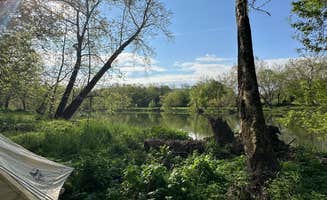
Private river camping: Stoney Creek Campground offers secluded riverfront sites. "The two large sites can accommodate up to 40 people each with plenty of parking. Two sides are separated by a dense forest, piles of drift wood and noise from the river running through boulders," notes Andrey D. from Stoney Creek Campground.
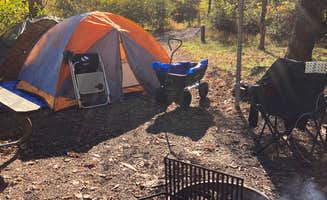
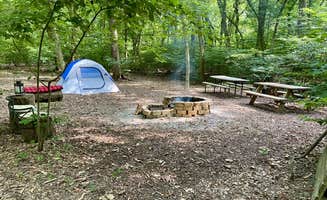
No reservation dispersed sites: Little Fort Campground uses a simple self-registration system. "You select a campsite by flipping a washer on a hook on the board from green to red. Flip it back when you leave. The campsites have a fire ring, a picnic table, and a flat area to pitch a tent," explains A Dan needs A. from Little Fort Campground.
Mountain views: Tent sites at higher elevations provide scenic overlooks. "Breathtaking views of the Shenandoah River and surrounding mountains. Very much worth the 4 mile hike up to the site. 1,200ft elevation difference from the trailhead to the site," reports TJ W. from Veach Gap.
What you should know
Limited cell service: Most camping areas have poor or nonexistent connectivity. One camper at Little Fort warns, "This page says that Verizon has limited service but I have a Verizon prepaid plan and I had no service at all starting from about 20 minutes away from the site, so I wouldn't count on having any reception."
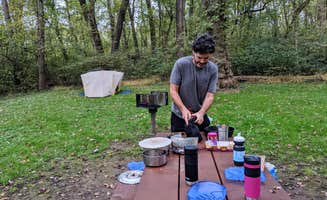
Primitive facilities: Many campgrounds feature vault toilets without running water. "Portable bathroom facilities only," notes a Paw Paw Tunnel camper, while another mentions, "Pit toilets, no showers, cell service. Make sure you bring a bear bag or box with you."
Weather preparedness: Mountain weather can change rapidly and varies by elevation. "We camped during the week and had nobody else camping on weekdays," reports Kevin C. from Squirrel Hollow Road Camping, noting the variability in crowds and conditions.
Tips for camping with families
Short hike-in options: Sky Meadows offers beginner-friendly backpacking. "It's about a mile hike in to the campground, which sits in the woods in the park. Firewood is available for sale and there are fire rings with grates and a picnic table. Sites are large enough for three one person tents," explains Amy S. from Sky Meadows State Park Campground.
Transport assistance: Some parks provide equipment to help move gear. "They have wheelbarrows you can borrow to help bring in your stuff from the car. There are pit toilets and non potable water available as well as firewood when you get to the campground," shares Katie M. about Sky Meadows.
Check accessibility: Some access roads require appropriate vehicles. "I visited this site the first week of April but I did not spend the night. When I arrived, I was the only one there and with rain expected, I did not want to get stuck there alone," reports Giselle P. from Hawk Campground, adding "The road in is a single lane dirt road with parts of it partially washed away. I would not want to drive on this in the rain."
Tips from RVers
Size limitations: Small teardrop trailers can access some dispersed sites. "Sites are located less than a mile from the paved highway. We found 5 spots just off the road. All were easily accessible by cat or with a small teardrop trailer," notes Kevin C. about Squirrel Hollow Road.
Prepare for isolation: Many sites lack RV amenities. "True boondocking, haul it in, pack it out. Evidence of a cat hole in the site we picked," continues Kevin about the Squirrel Hollow experience.
Road awareness: Forest service roads can challenge larger vehicles. "Large campsites and relatively quite. We took two vehicles and found several suitable sites. Traffic was light with one pickup overnight and a small convoy of motorcycles the next morning," reports Jon D. about the manageable road conditions at Squirrel Hollow.










 Legend


