Dispersed camping near Amherst, Virginia centers on the eastern slopes of the Blue Ridge Mountains, with elevations ranging from 700 to 3,000 feet throughout the region. The area experiences typical seasonal changes with hot, humid summers and mild winters, though mountain elevations can be significantly cooler. Most primitive sites in this region aren't reservable and operate on a first-come, first-served basis with a 14-day stay limit.
What to do
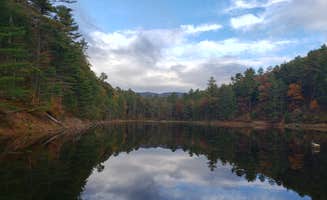
Fishing opportunities: At Braley Pond Dispersed Camping & Day Use Area, trout fishing is popular during stocking season. "The pond is stocked with trout, so small groups of fisherpeople came and went," notes one camper. Another mentions "the pond has a great little trail you can walk around and at night the stars are gorgeous. The water is also stocked with fish!"
Hike to panoramic views: The challenging trek to Spy Rock rewards hikers with exceptional vistas. "The views from atop Spy Rock are some of the best in Virginia," one visitor shares. Another camper notes, "It is a great hike with a small rock scramble at the top for an extra bit of fun. Not only that, but the top has almost 360 degree views of the Shenandoah Valley."
Creek exploration: Many sites feature small streams perfect for wading and exploration during warmer months. "We did wade the stream, which was cold and clear and beautiful," explains a Braley Pond visitor. These waterways also provide filterable water for prepared backcountry campers.
What campers like
Solitude and seclusion: Dispersed Camping Site off FR 812 offers peaceful camping away from crowds. "I was originally looking for a different camp site earlier on the road when I stumbled upon this one," writes one camper. "It is a very rocky path, about 50 feet long, to get into the campground, but then it is smooth and well laid out."
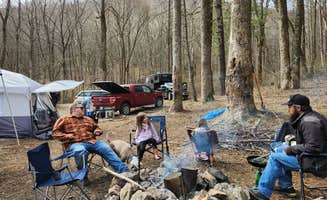
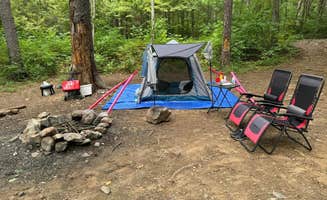
Established fire rings: Most dispersed sites feature stone fire rings built by previous campers. At George Washington National Forest off 812, one visitor found "it was clean, creek for water if you have filter. Nice fire ring and wood." Another camper at FR 812 noted their site had "a giant fire circle in the middle and enough room to fit about 10 vehicles/groups if people don't mind being next to each other."
Star gazing: The limited light pollution creates excellent night sky viewing. "The stars were amazing!" reports one Braley Pond camper. At Peters Creek Spur, a visitor enjoyed "a view of the sky and a million stars."
What you should know
Road conditions: Access roads to many sites vary significantly in quality. At Reservoir Road Dispersed Campsite, one camper reports "about 5 miles of dirt road to get to it" that was "questionable for my van." Another notes "it was very buggy" during August visits.
Limited amenities: Pack in all supplies and pack out all waste. "No cell signal here (at least with Verizon as of 3/2020)," reports a Braley Pond visitor. Another camper at FR 812 states "No cell service(T-Mobile), but if I drove towards the main road, Route 501, I could get some service."
Permits required: Some areas like James River Wildlife Management Area require permits. "You simply need to purchase either a daily or annual access pass from the DWR website and then report which days you will be staying at the WMA—it's currently $23 for the annual pass," explains a visitor.
Tips for camping with families
Choose sites with creek access: Kids enjoy exploring water features. "We spent two nights camping here and it was awesome. Nice size clearing, plenty of flat space, big stone fire ring and a great stream that runs right by the site," reports a family at Braley Pond. Another notes it's "perfect for our first dispersed campsite experience."
Bring water treatment systems: Since most sites lack potable water, families should pack appropriate water filtration. "Creek for water if you have filter," confirms one George Washington National Forest camper.
Consider vault toilet locations: While most dispersed sites lack facilities, some areas have basic pit toilets nearby. "The day use area is close enough to use the bathroom (just an open pit toilet, nothing fancy)," notes a Braley Pond visitor with children.
Tips from RVers
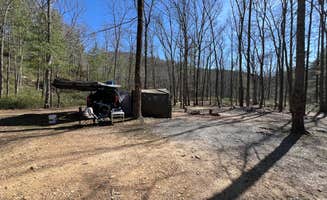
Site selection for larger vehicles: James River Wildlife Management Area accommodates bigger rigs. "After turning onto Midway Mills Lane from the northern end (route 626), there is a gravel access road about .5 miles down the road that is well-maintained. It almost immediately opens up into an open field where large rigs of any size can fit," explains one RVer.
Assess road conditions before committing: Unpaved forest roads often limit RV access. One visitor notes, "For me being in the 29 foot classy, I opted to park it in a field/parking area at the entrance." Most dispersed camping areas have limited turning space for larger vehicles.
Cell service considerations: RVers relying on connectivity should note coverage varies by carrier. "I had great T-Mobile service, but no ATT service—even with a powerful LTE antenna," reports one James River WMA camper.






 Ranger


