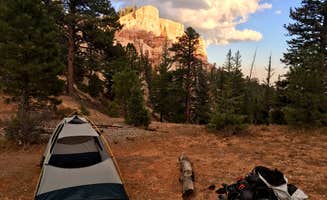
Tent campsites near Dixie National Forest offer campers quick access to southern Utah's high-elevation terrain, typically ranging from 7,000 to 9,000 feet. This elevation provides cooler summer temperatures compared to nearby desert areas, with nighttime lows that can drop into the 30s even in June. Free dispersed camping areas are accessible via numerous forest service roads, though seasonal closures sometimes restrict access to certain sections.
What to do
Stargazing opportunities: The high elevation and minimal light pollution create exceptional night sky viewing. At Candy Loop Camp, one visitor noted, "Super quiet and was outside burn restriction areas so we had a good fire. Was in the 30s at night in June so be prepared!"
Fishing nearby: Several small lakes and streams within a 30-minute drive offer trout fishing opportunities. Many campers use dispersed sites as bases for day trips to fishing spots. Some sites near Pine Lake provide direct water access within walking distance.
Day hikes to lookouts: From the Yovimpa Pass Campsite, hikers can access multiple viewpoints. As one camper reported, "The map says it is 1.6 miles to the camp site from the parking lot, but I got 2 miles after going to all the look outs. Then there is another 6 Miles plus to explore."
What campers like
Privacy between sites: The dispersed nature of camping in this area provides substantial space between campers. At Uinta Flat Dispersed Camp, visitors appreciate the "Easy access and flat sites" with one camper noting, "Sites are beautiful and in the trees."
Seasonal wildlife viewing: Morning and evening offer opportunities to spot deer, small mammals and birds. A camper at Great Western Trail Dispersed observed, "The campground is beautiful with woods surrounding our site. Lots of wildlife walking around our tent area at night."
Cell service availability: Unlike many remote camping areas, several sites maintain usable cell connectivity. At FS500, one camper confirmed, "Two bars of 5G on TMo and a sweet view."
What you should know
Fire restrictions vary throughout the year: Check with the local ranger district office before planning campfires. Seasonal bans are strictly enforced. During restricted periods, some areas remain open while others close completely.
Road conditions change seasonally: Some roads become impassable after precipitation. A camper at FS500 explained, "Because of the bad weather, the Rangers recommended we go no further than the top of this hill, even with 4 wheel drive. It's called slick clay up here when it rains."
Limited water sources: No drinking water is available at dispersed sites. The nearest reliable water sources are in towns like Panguitch or Bryce, requiring campers to bring sufficient water for their entire stay.
Tips for camping with families
Consider walk-in tent options: For families seeking more established facilities while maintaining a natural setting, look beyond fully dispersed areas. At Raven's Nest Utah Campground, "On the 93 acres, there are many dry sites to camp for the wild and adventurous. Pick your site in the trees and set up your camp... There are a few out houses so look for one close to you."
Look for level, open areas: When camping with children, sites with flat, obstacle-free areas provide safer play spaces. Many forest road campsites feature natural clearings surrounded by trees.
Weather preparedness: Temperature swings can be significant, with cold nights even in summer. Pack appropriate clothing layers and sleeping gear rated for temperatures at least 10°F below forecast lows.
Tips from RVers
Size limitations: Most dispersed sites accommodate smaller rigs better than large ones. A camper checking out FS500 reported, "Scoped this out but a bit too narrow/rutted/angled for our small 20' trailer; amazing for tent and van camping."
Established pads versus primitive sites: Some areas provide more established surfaces for parking. At Candy Loop Camp, one visitor described, "Standard dispersed camping, non designated camping. Level spots and good tree coverage."
Turnaround considerations: Forest roads often lack designated turnarounds. A camper with a longer vehicle shared, "In driving further to find a turnaround spot for my long van I found a few other spots."






 Guide
Guide


