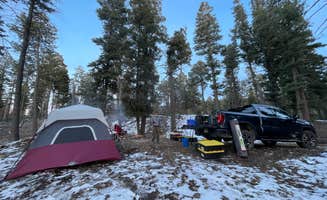
Lincoln National Forest campsites range from 7,000 to over 9,000 feet elevation, creating significant temperature differences between day and night throughout the year. Winter closures affect most higher elevation camping areas from October through April, with overnight temperatures frequently dropping below freezing even in summer months. Road access varies greatly between campgrounds, with some roads becoming impassable after rain or snow.
What to do
Hiking at lower elevations: The Bluff Springs area offers scenic waterfall views and multiple trail options. A camper noted, "We took a short 1-mile hike from the Bluff Springs trailhead to the Willie White trailhead. There are longer hikes too."
Wildlife viewing: Forest Road 568 - Dispersed Camping offers excellent elk sightings, especially at dawn and dusk. "We drove in around 10pm and the small town of Cloudcroft was beautiful for anyone needing a place to stop before heading into the forest. We saw more elk than we could count! Just glowing eyes everywhere and all in the road," reports one visitor.
Astronomy: Clear night skies make stargazing exceptional at higher elevations. At Oliver Lee Memorial State Park Campground, campers report exceptional night viewing: "The starry night skies are absolutely beautiful. Facilities are decent—nothing to complain about."
What campers like
Cooler summer temperatures: The high elevation creates a cool escape from regional heat. A camper at Cool Pines RV Park shared, "Just can from Midland Tx where it was around 98, today at Cool Pines RV Park 72° at 3pm in the afternoon."
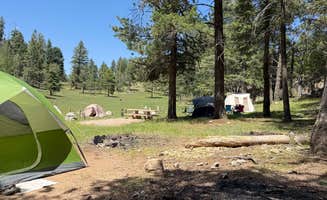
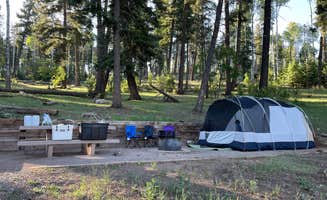
Large camping spots: Many dispersed camping areas offer spacious sites. At Deerhead Campground, "The sites are spaced nicely where we didn't feel crowded even though the campground was probably 90% capacity."
Accessibility to supplies: Cloudcroft provides convenient resupply options for extended stays. A camper mentioned, "About 5 min drive to main road and 8 minutes to cloudcroft. There was no trash, and also no amenities."
What you should know
Cell service limitations: Coverage varies dramatically by carrier and location. At Saddle Campground, visitors report good coverage, while at other locations: "Cell service barely exists, on and off 1 bar AT&T."
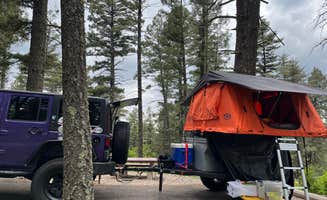
Road conditions: Forest roads can be challenging and may require high-clearance vehicles. "The road is a little rough but flattens out as you go up the hill. After the fork, sites big enough for a van or larger Class B but that's it."
Weather variability: Afternoon thunderstorms are common in summer. One camper reported, "It stormed much of the day and night but Sunday morning dawned clear and we took a short 1-mile hike."
Tips for camping with families
Noise considerations: Some campgrounds experience occasional disruptive sounds. Near Alamogordo, a camper warned, "However there is a train close by that blew the horn very loud all throughout the night. Woke me up at 1am, 3am, and 5:30 am."
Kid-friendly trails: Sleepy Grass Campground offers special accessible trails: "This campground also has a special trail that was created for blind and deaf children, so it has signs with sensory additions."
Wildlife viewing opportunities: Kids enjoy animal sightings throughout the forest. "We saw plenty of deer and even an elk," mentioned a visitor to Sleepy Grass Campground.
Tips from RVers
Size restrictions: Many forest campgrounds cannot accommodate larger rigs. "Large rigs beware...We went to the end of the road to find out that there was no way to turn our 29 ft trailer. We had to go in reverse about 1/4 mile to find a place to turn around."
Water pressure issues: Some campgrounds have unusually high water pressure. At Alamogordo/White Sands KOA, a camper warned, "water pressure is really high at around 155 psi. So definitely bring a regulator."
Limited hookup sites: Full-service RV sites are primarily available at private campgrounds. "We paid extra for a site with swing, paver patio, table and chairs. Site was very large, private, and well worth the extra $."











 Guide
Guide


