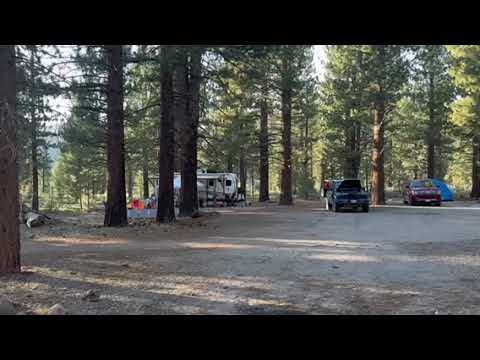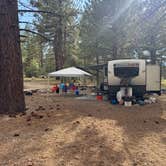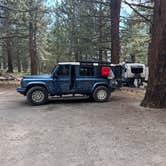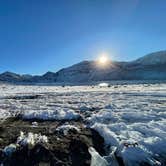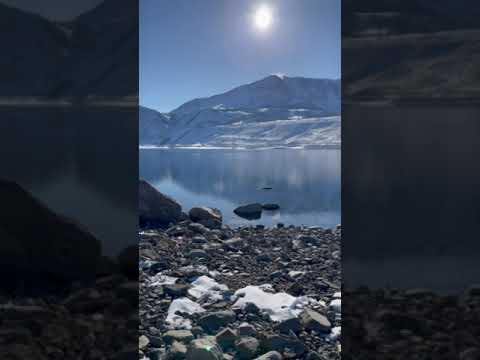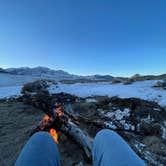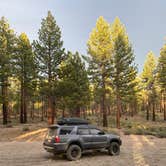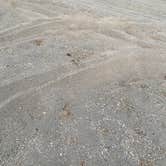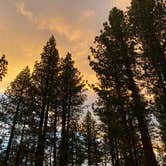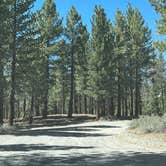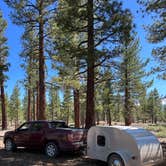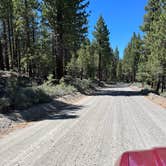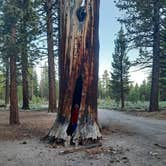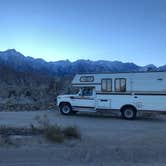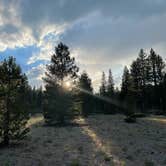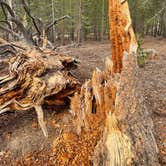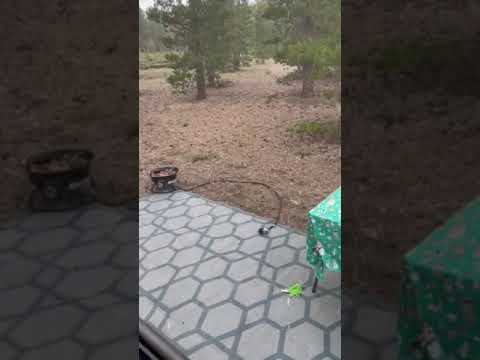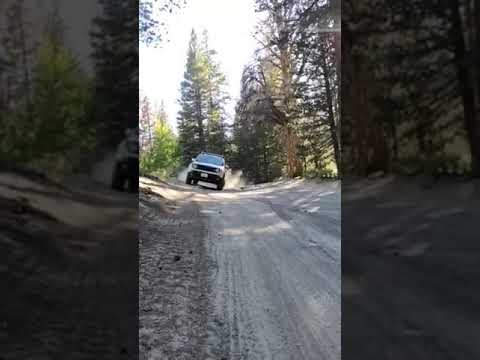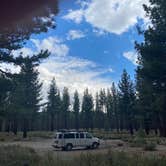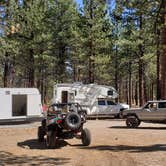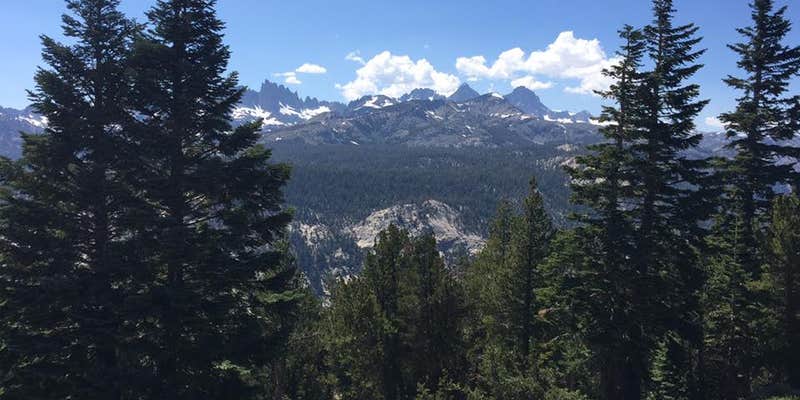
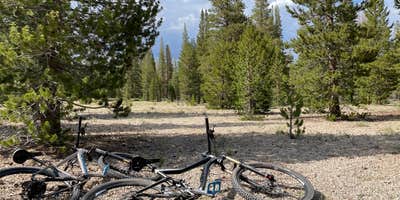
Multiple dirt roads branch through the forest here, leading to scattered camping spots that require some exploration to find. Campers navigate sandy and gravel surfaces that can challenge vehicles without four-wheel drive, particularly in areas farther from the main access points. "Once I found my spot it was really quiet," notes Jeffrey F., capturing the secluded atmosphere that draws visitors to these remote sites.
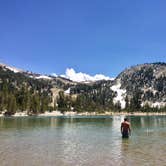
The dispersed camping areas spread across varied terrain, from open meadows to spots tucked among trees near water sources. Most established fire rings have been created by previous campers, though fire restrictions apply during dry periods. Cell service reaches two bars with Verizon in many locations. Wildlife moves freely through the area, and evening hours bring notable quiet to the forest.
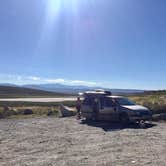
Road conditions vary significantly depending on how far campers venture from the highway. Several reviewers recommend stopping at lower elevation sites rather than pushing to the GPS coordinates, as accessible spots exist closer to the main road. Sandy sections can trap vehicles, while some routes require higher clearance. Maps available at information boards show color-coded difficulty levels for different forest roads.
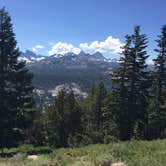
The area serves as a staging point for exploring nearby hot springs scattered throughout the forest, though locating these requires local knowledge and hiking. Deacon J. found excellent views of Mono Lake from higher elevation sites, while lower areas provide easier access for larger rigs. Campers seeking more developed options can find places to camp around June Lake within a short drive.
Pack extra water and plan for carry-in, carry-out camping with no services provided on-site.
Description
Many people enjoy the solitude and primitive experience of camping away from developed campgrounds and other campers. Dispersed camping is the term used for camping anywhere in the National Forest OUTSIDE of a designated campground. Dispersed camping means no services, such as trash removal, tables, or toilets. There are extra responsibilites and skills that are necessary for dispersed camping. Camping rules and regulations apply to make your experience safe, and to keep the natural resources scenic and unspoiled for other campers.
Most of the land in Inyo and Mono counties is publicly owned. Dispersed camping (camping outside of designated campgrounds) is allowed throughout much of the area. If you plan to backpack into a wilderness area to camp, you will need a wilderness permit, issued at Inyo National Forest visitor centers. If you wish to camp outside of developed campgrounds/sites, there are a few things you need to know:
Land Ownership: The three major land-owning agencies in the Eastern Sierra are the Forest Service, the Bureau of Land Management, and the City of Los Angeles. Dispersed camping is allowed on most Forest Service and BLM land. However, camping is prohibited on land owned by the City of Los Angeles.
Maps: Anyone planning a dispersed camping trip should invest in a copy of the Inyo National Forest map, which depicts land ownership as well as roads, streams, trails and other features. The map also shows “restricted use areas” where dispersed camping is not allowed.
Restricted Use Areas: Certain high-use recreation zones, including those along paved roads leading into the mountains, are not open to dispersed camping (see Inyo National Forest map). Dispersed camping is not allowed in the following areas: Horseshoe Meadow, Onion Valley, Big Pine Creek, Bishop Creek, Rock Creek, McGee Creek, Convict Lake, Mammoth Lakes, Reds Meadow Valley, June Lakes Loop, Lee Vining Canyon, Lundy Canyon, Ancient Bristlecone Pine Forest, and any research area.
Owens River: All land along the Owens River is owned by the City of Los Angeles, and is closed to camping.
Length of Stay: On Inyo National Forest land, you may camp up to 28 days per six months on any one ranger district (there are 4 ranger districts on the Inyo –Mt. Whitney, White Mountain, Mammoth, and Mono Lake). Always check with your local ranger station.
Locating a Dispersed Campsite: Look for an area at the end of a spur road or a pullout that is clear of vegetation and has a hard, compacted surface. These sites might have a primitive fire ring. Stay on established roadways; do not drive off-road to camp. Try to select a campsite at least 100 feet from lakes and streams.
Campfires and Fire Permits: If you plan to build a campfire or use a barbeque or camp stove, you must obtain a campfire permit from a Forest Service, BLM, or CalFire office. You must have a shovel and a container of water (for drowning the fire). Clear an area least 5 feet wide all the way around your fire ring down to mineral soil. During times of high fire danger, camp fires are prohibited; always check with the local fire office or ranger station for fire restrictions.
RV Road Trip Guides
Map & DirectionsInyo National Forest Dispersed Camping is located in California near June Lake
 Dispersed Camping
Coordinates
37.78641404 N
118.97570467 W
Connectivity
 T-Mobile5GExcellent Coverage
 VerizonLTESome Coverage
- AT&T5GExcellent Coverage
Connectivity
- T-Mobile5GExcellent Coverage
- VerizonLTESome Coverage
- AT&T5GExcellent Coverage
Access
- Drive-InPark next to your site
- Walk-InPark in a lot, walk to your site.
Site Types
- Dispersed
Features
For Campers
- ADA Access
- Phone Service
- Alcohol
- Pets
- Fires
DISPERSED CAMPING
Enjoy dispersed camping on government land and leave no trace. Pack in and pack out. No (or limited) services at this camping area. Permit may be required.
PERMIT might be REQUIRED
We curate permit requirements across the US for our PRO members. Try PRO to see if Inyo National Forest Dispersed Camping needs a permit.
Drive Time
- 2 hrs 34 min from Carson City, NV
- 5 hrs 31 min from Merced, CA
- 5 hrs 35 min from Visalia, CA
- 6 hrs 5 min from Fresno, CA