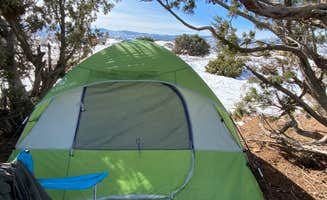
San Bernardino National Forest offers tent campsites ranging from 5,000 to 11,000 feet elevation, with dramatic temperature shifts typical of southern California mountain terrain. Summer daytime temperatures often reach the 80s, while nights drop to the 40s even in July. At higher elevation sites, snow remains on the ground well into May, requiring campers to check conditions before departure.
What to do
Fishing opportunities: Green Valley Lake Recreation Area provides a small, stocked fishing lake just a short drive from the campground. "The lake is very clean and has a lot of fish. It is privately owned so you do have to pay to fish or swim, and you pay per person, so keep that in mind if you have a large group," notes Aleena S.
Historical exploration: The Holcomb Valley area has significant historical interest for its gold mining past. "If you're into panning for gold you just might find some along Holcomb Creek. There are active claims in the area so be respectful," explains Edward W. about Holcomb Valley Climbers Camp.
Hiking access: Many tent sites provide direct access to trail networks. The tent camping areas at Yucaipa Regional Park offer "privacy from neighbors, access to Zanja Peak Trail head, 3 lakes for fishing, water park during the summer, and friendly helpful staff," according to Bryan H.
What campers like
Flat tent pads: Most backpacking sites in the forest offer surprisingly level surfaces for sleeping. At Limber Pine Bench Campground, "there are lots of established campsites and they're easy to find," reports Daniel J., who adds, "the views from this campsite are amazing and there's a fresh spring just a 1/4 mile up the trail."
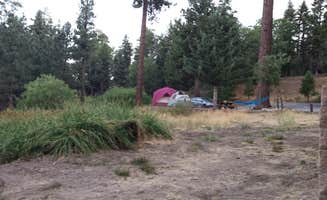
Site privacy: Many dispersed camping areas feature significant space between sites. At Thomas Hunting Grounds Yellow Post Sites, Chelsea R. found it to be "private but with cell service, tables and fire pits! Listen to great horned owls while taking in the views!"
Natural surroundings: The forest environment creates a sense of immersion. "We stayed a little further back for a little more privacy from the trail above... We hung out in quiet because there was no other campers that night. We did have a momma deer and two does in the distance," writes Brittany N. about her experience at Halfway Camp.
What you should know
Water availability: Many sites lack water sources, requiring preparation. At Dry Lake Backpacking Campground, Daniel J. advises, "If you can get out here right after a good rain/snow storm passes through, you will not regret it. It's a pleasant hike to the campground, there's tons of trees around the lake."
Permit requirements: Wilderness camping requires advance planning for permits. For Halfway Camp, Brittany N. explains, "High creek camp is always most popular and I have never had a problem obtaining a permit for Halfway. You can walk in to Mill Creek Ranger Station to get a permit or you can fax the office a few days in advance to submit for a permit."
Vehicle capabilities: Forest roads often require specific vehicles. At Mill Creek Dispersed Camping, Francisco F. warns, "The road up to the actual spot is gravel, with lots of potholes and washboard areas, which would make it difficult for an RV. But the biggest issue for RVs is an area of the road that is very steep and immediately turns into a hairpin turn."
Tips for camping with families
Playground facilities: Some established campgrounds offer family-friendly amenities. At Yucaipa Regional Park, Mary F. notes, "There's a lot to do here, including fishing, playgrounds, and even a waterpark in the summer. There's no larger wildlife, like bears, so less stressful when you have pets or kids."
Kid-friendly tent sites: Camping areas with natural features for exploration work well for families. At Lake Arrowhead - Green Valley Lake Recreation Area, Salem L. recommends, "This area is amazingly gorgeous... The area has so much to offer and can be so very well loved and enjoyed when ventured off the 'beaten path'."
Weather preparation: Mountain temperature fluctuations require extra clothing layers for children. "It's a lot of fun for the whole family. A fun place to be if you live local," reports Katarina A. about Yucaipa Regional Park, though at higher elevations families should pack cold-weather gear regardless of season.
Tips from RVers
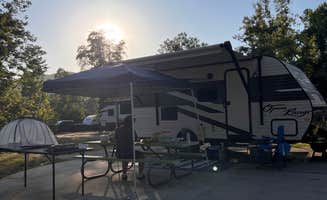
Site selection for larger vehicles: Some sites accommodate RVs better than others. Paul C. found at Yucaipa Regional Park, "Excellent campground. Well maintained. Large concrete pads that can handle any rig. So much to do all around a park. Does get very cold, was in the teens overnight when I was there in Feb."
Boondocking accessibility: For dispersed camping with RVs, road conditions are crucial. At Mill Creek Dispersed Camping, Dickie Simmons S. recommends, "Great free camping when campgrounds are booked. Easy to navigate with GPS. Many large and small sites along the road. Some spots more secluded than others. Smaller rigs, medium clearance and lite off-road capabilities recommended."
Seasonal considerations: Winter camping with RVs requires preparation. Jason O. reports about Yucaipa Regional Park, "We're usually full-time boondockers, and this was the first time we've paid for an RV park... Lots of shade, a pond, and reasonable rates. Good water pressure in the showers, which has been nice."










 Traveler


