Primitive camping near Idyllwild-Pine Cove, California offers varied terrain at elevations ranging from 5,000 to 8,000 feet, creating distinct temperature zones and vegetation patterns throughout the San Bernardino National Forest. Most dispersed sites lack potable water and established toilets, requiring campers to carry adequate supplies and observe proper waste disposal practices. Cell service varies dramatically by location, with higher ridges typically offering better connectivity than forested valleys.
What to do
Hiking with summit views: East Flats provides easy access to San Gorgonio Mountain trails, with multiple routes ranging from moderate day hikes to challenging summit attempts. "San Gorgonio Mt is right here, along with Jenks Lake and Santa Ana River Trail for mountain biking," notes a camper at East Flats.
Stargazing sessions: The minimal light pollution creates ideal conditions for astronomy enthusiasts, particularly at higher elevation sites. As one camper at San Gorgonio Summit Camp describes, "We summited right at sunset and after a quick celebration picture we hurried to set up our tent... Morning came fast and the wind never quit."
Wildlife observation: Early mornings offer the best opportunities for spotting native wildlife. "We saw multiple deer walking by our site," reports a visitor to East Flats, while another mentions the diverse ecosystem: "Wildlife includes lizards, snakes, woodpeckers, and lots of squirrels" at various forest sites.
What campers like
Natural seclusion: Many dispersed sites provide significant distance between camping spots. At Thomas Mountain Road, "Easy travel dirt roads. There are only 3 actual sites with fire rings, but there is plenty of room to camp without rings. 5g Verizon works great."
Temperature advantages: The higher elevations maintain cooler temperatures even during summer heat waves. A camper at South Ridge Yellow Post Sites noted, "Elevation is high enough that temperatures were very enjoyable (mid 80's)" even during peak summer months.
Water features: Seasonal creeks and small waterfalls create natural focal points at certain sites. "The sound of the water is the best part of this campground in my eyes. As well as it is a great place to stay as an overnight to break up a summit trip," explains a visitor to High Creek Camp.
What you should know
Fire restrictions: Regulations vary seasonally and by specific location. Most Yellow Post sites provide established fire rings, but permits are required during non-restriction periods. "Fire bans usually in effect during summer," warns a recent camper.
Access road conditions: Many forest roads require careful navigation even in dry weather. "The road was quite bumpy, but we managed with a campervan," reports a visitor to dispersed areas, while another notes, "High clearance vehicles are recommended but not always necessary during dry months."
Limited facilities: Be prepared for complete self-sufficiency at most sites. According to visitors at Chinouapin Zone, "This is a unique spot to camp, because you're met with people backpacking the summit and people going through the PCT! There is plenty of space along the trail."
Tips for camping with families
Safety planning: Establish clear boundaries for children due to potentially hazardous terrain. "East Flats stays pretty quiet for the most part but there are LOTS of ATV trails and they will come by really early in the morning or late at night."
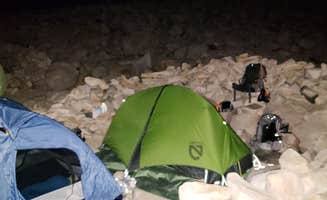
Weather preparation: Pack clothing layers for significant day-to-night temperature swings. "It was pretty cold and dark by then. There are plenty of rock barrier campsites to protect us from the wind," advises a camper who stayed at higher elevations.
Educational opportunities: Create wildlife spotting charts for common species. "We saw multiple deer walking by our site," mentions a visitor to East Flats, providing families with realistic expectations for wildlife sightings during their stay.
Tips from RVers
Site selection strategy: Arrive early to secure level spots suitable for larger vehicles. At Little Thomas Dispersed, free primitive camping accommodates both tents and RVs, with drive-in access making it convenient for self-contained units.
Leveling challenges: Bring extra stabilizing equipment for uneven terrain. "Multiple spots for a class A 34 foot motorhome. I am far enough away where I don't hear everyone talking," reports an RVer who successfully navigated the area.
Resource management: Plan water usage carefully as no hookups or dump stations exist within most primitive sites. "Great for quiet retreats, hiking, light climbing, and off-grid solitude," notes a visitor, emphasizing the need for self-sufficiency in resource management.













 Traveler


