Tent campers near Oak Harbor, Washington can access island camping locations throughout the San Juan archipelago by boat or ferry service. The region sits at low elevations with moderate temperatures ranging from 45-75°F during camping season. Winter camping remains available at some locations, though reduced ferry schedules and seasonal closures affect accessibility between October and March.
What to do
Water activities: Kayakers and canoers can explore shoreline campsites throughout the islands. Cypress Island Natural Resources Conservation Area offers paddlers multiple landing beaches and camping areas. According to one visitor, "Like so many of the island sites in the area, well maintained with newer bathroom facilities. Did a bioluminescence tour in the kayaks after midnight on the northern end of the island that was heart stopping."
Mountain biking: Forested trails wind through several campgrounds on Whidbey Island and beyond. Shaw Island County Park provides access to quiet roads with minimal traffic. "Shaw Island itself is the smallest of the ferry served islands in the area which makes it much quieter than neighboring bigger islands," notes one camper who visited by kayak.
Wildlife viewing: Bird watching opportunities exist throughout the camping areas near Oak Harbor. Obstruction Pass State Park on Orcas Island has designated hiking trails where campers regularly spot blacktail deer. One reviewer mentioned, "There are a bunch of fallen trees that are fun to walk on and see how far you can get before losing your balance."
What campers like
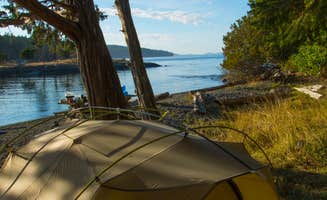
Beach access: Pebble beaches provide swimming and launching areas for small watercraft. Odlin County Park on Lopez Island features both waterfront and forested campsites. A camper reported, "Great bay with beach sites and tree lined sites. Quiet, beautiful, peaceful. We had deer in our campsite everyday."
Hiking networks: Trail systems connect many camping areas to viewpoints and beaches. Numerous trails at Mountain Lake Campground in Moran State Park lead to Mt. Constitution, the highest point in the San Juan Islands. A visitor noted, "Miles of hiking trails that lead to the highest point in the San Juans, Mt Constitution. One of the most incredible views I have ever seen in the PNW."
Historical exploration: Military installations from various eras remain accessible near camping areas. Stone structures, bunkers and gun emplacements dot the landscape near several campgrounds. One camper at Mountain Lake described, "There are old (but well maintained) battery and concrete gun emplacements from WW2 when the Fort was used to defend the West coast."
What you should know
Ferry-dependent access: Most San Juan Islands camping requires ferry transportation with limited schedules. Vehicle reservations are strongly recommended, especially during summer months. On Lopez Island, "Odlin Park is just off the ferry landing. There are plenty of beach sites, a few are 'walk-in' – which just means that you can't park your car there."
Limited facilities: Many island camping areas operate with minimal amenities. Most marine state parks have no running water or electricity. At Kinney Point State Park, a camper reported, "This is a great boat-in-only site. No running water but vault toilets. No reservations. Rack for kayaks above high tide."
Wildlife encounters: Raccoons actively seek out camper food across the islands. Proper food storage prevents problems with local wildlife. One camper at James Island noted, "Several boaters forgot to seal things up at night, and the raccoons and other varmints had made an enormous mess overnight. If you leave it out, they will go for it."
Tips for camping with families
Easy backpacking introduction: Short hiking distances to some campsites make ideal first backpacking trips for children. Obstruction Pass State Park offers walk-in sites approximately half a mile from parking. A camper shared, "My twelve year old wanted to try backpacking, but not hike too far. My wife didn't want us to get eaten by bears. The solution? Obstruction Pass!"
Swimming options: Several camping areas feature protected swimming areas with warmer water temperatures. Shaw County Park provides unusually warm swimming conditions compared to other locations. According to one visitor, "As the water comes back in over warm sand it heats up making for some of the warmest swimming you'll find in the San Juan Islands."
Off-season advantages: Visiting in spring or fall means fewer crowds and easier site availability. Weather remains mild during shoulder seasons with reduced campsite competition. A visitor in February noted, "We were soaked the entire time - granted we were fully expecting that going in February - for Valentine's Day no less. We brought all the rain gear."
Tips from RVers
Size restrictions: Most island campgrounds cannot accommodate large RVs. James Island Marine State Park and many similar locations are accessible only by boat with no RV facilities. Sites that do allow RVs typically have length limitations and few hookups.
Limited hookup availability: Electric connections exist at select campgrounds only. Fort Ebey State Park offers some electrical hookups, but water and sewer connections are less common. A camper noted, "Fort Ebey is a great place to pull up your car/trailer or RV. The campground is easy to find from the highway."
Reservation requirements: Summer camping requires advance planning, especially for RV sites. Reservations open months in advance and fill quickly for prime summer weekends. One visitor to Mountain Lake shared, "We reserved our spot 6 months ahead of time (It took us weeks of early mornings in October to get a spot)."






 Ranger


