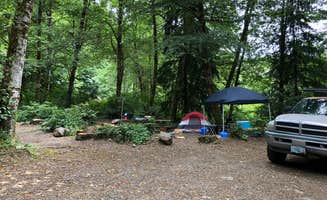
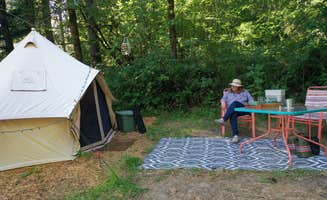
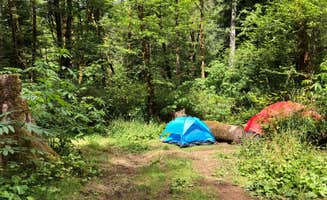
Tent camping near Grays River, Washington primarily occurs on forested public lands with varying levels of accessibility. The Grays River area sits within the Willapa Hills region between 400-1000 feet elevation, with a temperate maritime climate averaging 70-80 inches of rain annually. Many primitive campsites remain accessible throughout the year, though winter camping requires preparation for frequent precipitation and muddy conditions.
What to do
Fishing opportunities: Head to Gnat Creek Campground to access excellent fishing spots. "Near the Lewis and Clark National Historic Park" with a trail that "led to a fish hatchery," making it perfect for anglers.
Wildlife viewing: Road to Snag Lake offers excellent wildlife spotting. "Tons of rabbits and wildflowers" populate the area, according to one camper. Another mentions seeing "a porcupine for the first time while wandering one of the side roads!"
Hiking forest roads: The expansive network of gravel roads creates numerous hiking opportunities. "There's a small trail behind this spot that leads to the creek, which is nice. Other than that, you can hike along the dirt roads, but there aren't any actual hiking trails that I found," notes a Road to Snag Lake visitor.
What campers like
Unexpected amenities: The concrete pads near communication towers at Road to Snag Lake provide surprising benefits. "Concrete pad makes a flat tent site," and "there is a concrete pad from an old structure you can park on," explain reviewers. One camper appreciates that "at least I have great T-Mobile signal" due to the nearby cell towers.
Private creek access: Some campgrounds offer personal water access. At Cook Creek, "there is a short walk (2-3min) down to your very own private part of the river. There was a very clear beautiful pool of water in the center and rapids/rocks on both sides for exploring."
Solitude: Many dispersed sites in the area provide exceptional privacy. "We didn't see any other person the whole time we were there," shares a Road to Snag Lake camper. Another visitor to Cook Creek notes, "Designated dispersal camping is a great idea - no loud neighbors within at least a couple wooded blocks between each site."
What you should know
Discovery Pass requirements: Most Washington Department of Natural Resources campsites require a Discovery Pass. At Western Lake Campground, camping requires this pass, which can be purchased online with day passes available. "This site is listed as free, but there is a sign at the entrance for needing a discovery pass to use the site. Visit their website for payment options. You have to print the pass or write the transaction number on a paper and on your windshield."
Road conditions: Many access roads require appropriate vehicles. "The road getting here is a bit rough with lots of washboard, steep grades and rocks," explains one camper. Another adds, "Site is up a decently maintained but long and steep gravel road, doable in a Prius but she was panting by the end."
Variable camping conditions: Even within the same campground, site quality varies significantly. "There are several spots off the road around these radio tower stations and it is quite secluded. The spot we chose was the best as it is away from the towers and buildings, plus has a great view overlooking the valley and bay."
Tips for camping with families
Safety considerations: At Rose Creek Retreat, campsites near water require supervision. The site features "a small babbling creek" and shoreline access to the Columbia River, making it important to watch children near water features.
Educational opportunities: Several campgrounds offer chances to learn about local ecosystems. "The trails are nice going along gnat Creek and you can visit the fish hatchery at the end of the trail," making for an excellent educational outing.
Variable site selection: Choose sites based on your family's specific needs. "2 of the sites are closer to the road for drive in and 2 are further into the forest. Definitely go for the ones further in. They are more hidden/private and you don't get as bad of noise and dust from the logging trucks."
Tips from RVers
Parking constraints: Most dispersed sites have limited space for larger vehicles. "Front and 4WD ideal; site fit my 42 foot truck/camper very well," notes one Road to Snag Lake visitor, though this is uncommon. Most sites accommodate smaller RVs or vans only.
Level parking: Look for concrete pads when available. "Cement pad makes a flat tent site" and provides stable parking for RVs and camper vans at certain sites like those found at Tillamook Forest Dispersed on the Nehalem River, where "Level spots were a little hard to come by, even on a Thursday, but we eventually found one."
Maneuvering challenges: Many forest roads present difficulties for larger vehicles. "The road in was a little bumpy and in some parts an incline but nothing my Ram 3500 and teardrop couldn't handle," shares one camper, though smaller rigs generally fare better on these narrow, winding roads.









 Ranger


