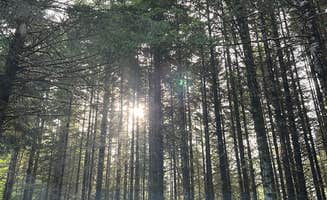
Primitive camping near Cannon Beach, Oregon occurs primarily in the Tillamook State Forest's eastern sections, where elevations range from 1,000 to 2,500 feet. This mountainous terrain features primarily second-growth Douglas fir forests with understory vegetation of sword ferns and salal. Winter months typically see 70-100 inches of rainfall annually, making roads impassable without four-wheel drive vehicles from November through April.
What to do
Fishing opportunities: South Lake, located about 45 minutes south of Cannon Beach, offers stocked trout fishing throughout summer months. "We caught trout every day we were there. Most are small but was fun nonetheless. There is an old boat without a motor tied up for anyone to use," notes a camper at South Lake.
Waterfall hikes: Access short trails to scenic falls within 30 minutes of most dispersed sites. At Beaver Falls Trailhead, one visitor reports, "The hike to the falls is to the far left of the pullout. Do NOT go down the super steep trails to the right. Beautiful waterfall after a short hike."
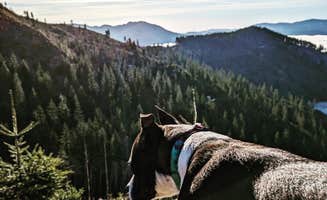
Mountain biking: Forest service roads throughout the region provide challenging terrain for intermediate to advanced riders. During weekdays, traffic is minimal, allowing for uninterrupted riding experiences. "The road was gravel, pretty well maintained. There's a lot of pull off roads," mentions a visitor to Cole Mt Ridge.
What campers like
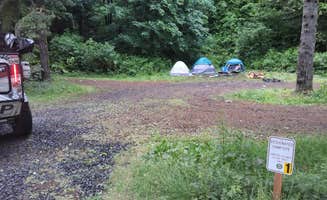
Solitude on weekdays: Most backcountry camping areas near Cannon Beach experience significantly lower usage Monday through Thursday. "We stayed at number 5 and it was great! When you go up there you will see them jumping clean out of the water," reports a camper at South Lake.
Evening wildlife viewing: Multiple sites report regular deer sightings at dawn and dusk. The dispersed sites in Tillamook State Forest offer particular advantages: "I had my 3 dogs with me & only one night did they make a fuss about something outside the tent, but I assumed it was due to the pack of coyotes howling in the distance (not close!)."
Cell service at higher elevations: While most forest roads lack coverage, campers find reliable signals at select elevated locations. "Snag Lake was good with great cell reception," notes one visitor to Road to Snag Lake, adding that despite "a long steep gravel road to get here" it offered "great spot with great cell reception."
What you should know
Limited turnaround space: Many forest service roads lack adequate turning areas for longer vehicles. "The road to the campsite is a bit washed out. They were small enough that I could manage them alright in a 2WD van that had normal clearance," writes a camper at Road to Snag Lake.
Active logging operations: Commercial timber harvesting occurs throughout Tillamook State Forest, affecting road access and morning noise levels. "It is currently an active logging area, so the truckers are out at 3am. The road up was a very narrow road," cautions a visitor to Tillamook Forest.
Gate closures: Several access roads may be locked seasonally or overnight. At Dispersed Camping Near Cannon Beach, a camper warns, "Right at the start of the road, sign that says 'gate ahead' and you'll be locked in. Not worth the risk."
Weather variability: Coastal proximity creates rapid weather changes, with fog and rain possible even during summer months. Temperature differences between coast and forest campsites typically range 10-15 degrees. "The spot we chose was the best as it is away from the towers and buildings, plus has a great view overlooking the valley and bay," reports a Road to Snag Lake visitor.
Tips for camping with families
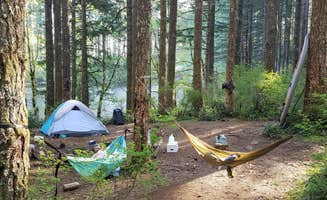
Vault toilet availability: For families with young children, select sites with basic facilities. "The vaulted toilet is on the NW side of the lake. It must've been checked often for toilet paper because we were there for 4 nights and it always had some in there," notes a camper at soapstone lake trail dispersed camping.
Safer swimming spots: South Lake provides a child-friendly alternative to ocean beaches with calmer water and gradual entry points. "The lake is small but very beautiful. We did bring our kayaks but didn't launch them. There is a launching area but it's pretty mucky," explains a South Lake visitor.
Noise considerations: Some dispersed sites experience weekend recreational vehicle traffic. "Heard some OHV noise at night, and target shooting in the distance at sunrise," reports a Tillamook State Forest camper, while another notes weekend visitors "felt the need to blast music until 6 o'clock in the morning so nobody in the camp area got any sleep."
Tips from RVers
Road width limitations: Forest roads typically accommodate vehicles under 25 feet in length. "Not friendly to large vehicles or RVs, roads are very thin and no place to park," warns a visitor to Dispersed Camping Near Cannon Beach.
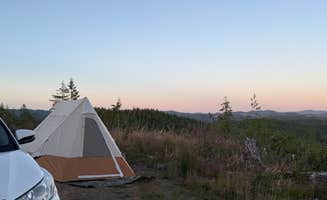
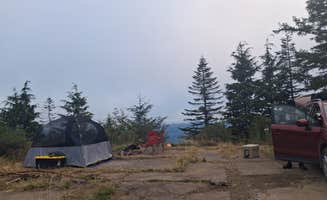
Alternative concrete pads: Several communication tower access roads provide flat parking spots suitable for small to medium RVs. "Cement pad makes a flat tent site," mentions a visitor to Road to Snag Lake, while another notes, "Concrete pads at multiple sites. Nobody drove by all night."
Cole Mountain access: This area offers better maintained roads suitable for small trailers. "Could possibly pull trailers or rvs on most of it," reports a Cole Mt Ridge camper, though another advises, "Some paths are less driven on so maybe avoid with a big RV or van, can also get a little hilly and tight."













 Traveler


