Tent camping near Clifton Forge, Virginia spans elevation ranges from 1,100 feet in the valleys to over 3,000 feet in the surrounding mountains, creating distinct microclimate zones that affect camping conditions throughout the year. Summer temperatures typically reach the mid-80s during daylight hours but can drop to the 50s at night, particularly at higher elevations. Many primitive sites require creek water filtering as potable water sources are limited throughout the national forest areas.
What to do
Creek exploration: Dispersed Camping Site off FR 812 provides direct access to stream exploration and nearby hiking trails. "Large open space with several flat areas for tents... easy access to the stream," notes David B.
Kayaking and paddleboarding: Water access sites allow for various paddling experiences. At Breeden Bottom Campground, campers appreciate the "crystal clear water" where "current wasn't too strong" and there was "a good, shallow walk-in into the water," according to Alison M.
Stargazing: Light pollution levels are minimal in certain areas, making for exceptional night sky viewing. One camper at Meadow Creek Camping Area explains there are "very few places in the Eastern United States that get dark enough to view the Milky Way" and recommends heading "to Spruce Knob on a clear night."
What campers like
Privacy between sites: Many campers value the spacing between tent areas. Kate V. remarked about Breeden Bottom Campground, "Sites are extremely private and spaced out; we couldn't see or hear anyone."
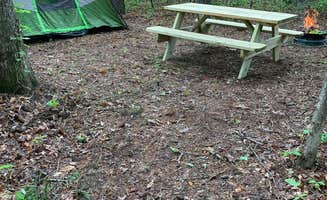
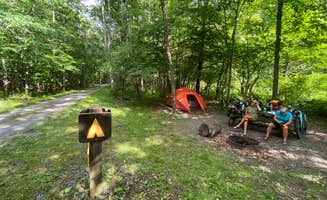
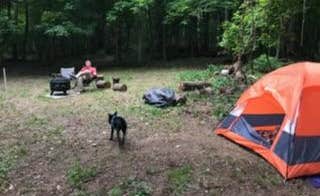
Multiple fire pits in group areas: Larger dispersed sites offer communal gathering spaces. Jon N. described one site as having "a giant fire circle in the middle and enough room to fit about 10 vehicles/groups if people don't mind being next to each other."
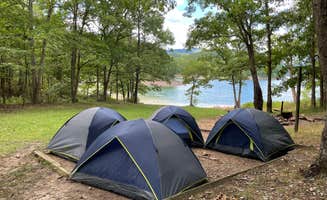
Water-based campsites: Sites directly on waterways rank highly among campers. McClintic Point Primitive Campground features select spots that "back up to the lake" and "access to the lake for canoes/kayaks," according to Josh P.
What you should know
Cell service limitations: Signal availability varies significantly by location and carrier. Clayton S. noted at Poor Farm Dispersed Recreation Area, "No signal, so make sure you have a map or know which way you came." Another camper mentioned at a different site, "No cell service (T-Mobile), but if I drove towards the main road, Route 501, I could get some service."
Vehicle access considerations: Some roads require appropriate vehicles. Mikaela K. reported about Poor Farm that it "wasn't too hard to get there and park in our van" but others note rocky access roads at certain sites that might challenge standard passenger cars.
Weather variability: Temperature fluctuations can be significant, especially in valley locations. Josh P. observed at McClintic Point that it was a "beautiful morning, but seems to stay chillier than the surrounding area. It's in a valley."
Train noise at riverside sites: Railroad tracks parallel some water-adjacent camping areas. Alison M. mentioned, "The train was loud at times, but we knew that would happen when we booked the site, so no surprises there."
Tips for camping with families
Look for shallow water access: When camping with children, prioritize sites with gradual water entry. At Breeden Bottom, campers note that "the James river is perfect for kayaking/SUP/canoeing and even swimming, nice and calm."
Wildlife precautions: Proper food storage is essential with children present. Emily T. at Greenwood Point Campground mentioned "lockers for wild animal protection of food" at her site.
Pack extra bug protection: Insect activity can be significant, especially near water. Lauren B. reminds campers, "Definitely bring bug spray!"
Consider gate access logistics: Some private campgrounds utilize security measures. Kate V. explained that at Breeden Bottom, "There's a gate and a lock code that you get in your confirmation email."
Tips from RVers
Limited RV accessibility: Most primitive tent camping areas have restricted RV access. At Poor Farm Dispersed Recreation Area, Jim M. found "a short ride off the highway and the road in was nice. Quiet spot with a nice grassy level area."
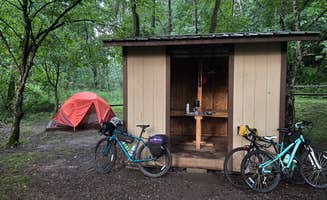
Self-sufficiency requirements: RVers must bring all needed supplies. One camper at Poor Farm emphasized that you "need to be self sufficient though, only convenience is a toilet house."
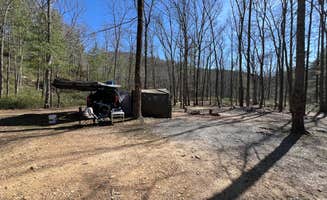
Multiple site options: Some forest roads contain several potential camping spots. Clayton S. detailed that at Poor Farm, "There is a large clearing off of Hidden Valley Rd just past Poor Farm Camp A Rd. that can easily accommodate multiple vehicles with 3 or 4 fire pits. If you follow the road further, about a quarter of a mile, is another spot for about two or three vehicles."






 Legend


