Camping near Big Thicket National Preserve spans across a lush ecosystem where East Texas pine forests meet wetlands and bayous. Summers bring high humidity with temperatures regularly exceeding 90°F, while water levels in camping areas fluctuate seasonally. Cypress knees and Spanish moss create distinctive landscapes throughout waterfront campsites.
What to do
Kayaking and canoeing: B.A. Steinhagen Lake offers multiple launch points for paddlers seeking to explore cypress-lined waterways. At Martin Dies, Jr. State Park Campground, campers can rent equipment on-site. "We did some canoeing, hiking and bird watching. A good park to get away from the city. The landscape is swampy but it was beautiful in its own way," notes Elizabeth N.
Fishing from shore: Many waterfront sites provide direct fishing access without needing a boat. "The fishing was great and this State Park is one of those hidden gems. There was no crowd, it was like we had the whole place to ourselves," reports Chris S. about Martin Dies State Park.
Wildlife observation: The region supports abundant wildlife viewing opportunities. At Magnolia Ridge, campers regularly spot alligators. "Tent camper, site #30. Deep into the piney woods and swampy outcrops of B.A. Steinhagen lake... Alligators are present all day and night near the water. They aren't a nuisance," explains Heidi R.
Trail exploration: Several campgrounds maintain well-marked trail systems through old-growth forests. "There are four well marked trails that meander through old growth hardwood forest. You will see huge southern magnolia and American beech trees. The trails are color coded," reports N I. from B.A. Steinhagen Lake Campground.
What campers like
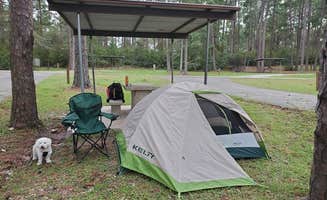
Spacious sites: Campers consistently praise the generous spacing between campsites. At Sandy Creek, "sites are paved and clean. The covered picnic tables are great especially when it's raining and windy," according to Chelsae K.
Waterfront locations: Many sites offer direct water access and views. "We tented here on a rainy weekend unfortunately. It was a nice site right near the water, and we saw a lot of wildlife like an armadillo, raccoon, and deer," shares Sierra K. about Martin Dies State Park.
Natural sounds: The region's swampy ecosystem creates a distinctive soundscape. "Lots of music from frogs, birds, etc.," mentions Heidi R. about camping at Magnolia Ridge.
Covered facilities: Many sites feature covered picnic tables that provide shade and rain protection. Robert E. notes that at Sandy Creek, "site 46 water and electricity, site was level with a nice cover over the picnic table. It adjoined the fishing pier."
What you should know
Insects are intense: The swampy environment supports significant mosquito populations. "It was hot and the mosquitos were in full force. We knew that was coming so we were prepared," shares Chris S. about camping at Martin Dies State Park.
Wildlife awareness: Alligators inhabit waters throughout the region. "We saw several alligators in the lake," reports Robert E. about Sandy Creek - Town Bluff Reservoir. Campers with pets should exercise caution near water.
Water fluctuations: Lake levels vary seasonally, affecting shorelines and access points. "Most of the sites at the far end loop were partially surrounded by standing water and some had muddy ruts along the RV site pad," notes Robert E. about Sandy Creek.
Limited supplies: Most campgrounds require bringing all necessities. "The closest town is Jasper, which I'll take you half an hour to get to so if you need groceries, bottled water, propane gas, get it before you get here," advises Alfred S. about the Town Bluff area.
Tips for camping with families
Kid-friendly water features: Boykin Springs Recreation Area offers graduated water experiences. "There is a beached swimming area. Behind it is a explorable water trail that goes forever. There is stoned created waterfall. Down from the waterfall stoned way leads to a small pool that families gather with little ones," describes Yasmin S.
Playground access: Some campgrounds provide play equipment for children. Chelsae K. mentions Sandy Creek has amenities children enjoy: "Our granddaughter loved the playground."
Educational opportunities: The region offers historical features worth exploring with children. At Boykin Springs, "you can hike to the famous sawmill or just ride bikes. Top it off there is a small cemetery with a civil war vet buried in it," shares Yasmin S.
Fishing for beginners: N I. notes about B.A. Steinhagen Lake, "There is a free fishing pond for the exclusive use of children and individuals with special needs. It is stocked with catfish and rainbow trout."
Tips from RVers
Power requirements: Different campgrounds offer varying electrical service. At COE Town Bluff Lake Sandy Creek Park, "We were right on the lake in a huge site. No sewer h/u, but a dump station in the park. Fishing & biking is good here. If you want R&R this place is it! We were in a 41ft class A with a toad," reports ErnieDebbie R.
Site selection for large rigs: Some sites accommodate larger RVs better than others. Jeff N. notes about Sandy Creek - Town Bluff Reservoir, "Great COE park. Spacious sites and great lake access. Can't beat the price compared to the State Park that's the next door neighbor to this park."
Leveling needs: Terrain varies across campgrounds. Brian C. suggests at one location to "bring lots of leveling blocks" due to uneven terrain.
Seasonal considerations: During wet seasons, access roads can become challenging. RVers should check conditions before arrival, especially after heavy rains when "the 2.5 mile old logging dirt road to get there was very nasty but doable," according to one camper.







 Guide
Guide


