The Hillsborough area offers convenient access to multiple camping options within a 30-mile radius, with most sites situated between 250-400 feet elevation. Falls Lake's 12,000 acres of water and Jordan Lake's 14,000 acres create diverse shoreline camping environments with typical summer highs around 90°F. Seasonal variations impact site availability, with most primitive areas operating year-round while developed campgrounds maintain limited winter schedules.
What to do
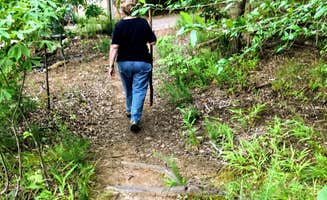
Hiking at varying difficulties: Umstead State Park provides multiple trails for different skill levels, with single-track paths connecting to larger sand and dirt routes. "There are multiple trails, for varying skill level. I have not yet camped here, but I've hiked on the trails," notes a visitor to William B. Umstead State Park Campground. Another camper adds, "The only bummer is the occasional airplane you will inevitably hear above you as the park is located right next to RDU international airport."
Swimming in natural quarries: Beyond river access, some parks offer unique swimming experiences in former quarries. "Great quarry for easy cliff jumping and swimming in the summertime. Campsites around also very solid," shares one visitor about Eno River State Park.
Long-distance trail hiking: The Mountains-to-Sea Trail passes through several camping areas, offering backpacking opportunities. A camper at MST Section 23 Falls Lake Camping describes it as "a hidden gem for a MST hiker. The campground is located on a private land, has a shelter, a fire pit, and a number of tent sites. It's a hike in only campground, approximately 1 mile from the roadside parking on Red Mill Road."
What campers like
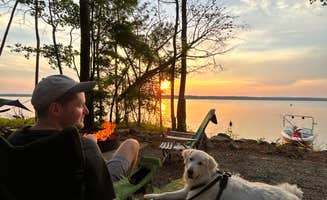
Private campsites with water views: Many sites at Jordan Lake offer excellent privacy despite being in developed campgrounds. "Amazing spots for RVs on the water! There are TONS of spots that are right on the lake yet have plenty of trees for privacy. Each has a nice fire pit/grill and picnic table," mentions a reviewer at Poplar Point Campground.
Clean facilities in state parks: Despite being rustic, many campgrounds maintain high-quality facilities. A visitor to Holly Point notes, "Bathhouses were super clean. And we were a short walk to the lake to fish and hang out near the water."
Varied terrain for different camping styles: From flat sites for easy tent setup to more rugged experiences, the area offers diversity. "We love the trails. The sites are always clean. The primitive sites are spaces far enough apart that it truly feels like solitude. Piper Creek is our favorite. Flat and easy 1.2 mile hike in along the river," says one Eno River camper.
What you should know
Seasonal flood risks: Some sites may experience drainage issues after rain. A camper at Crosswinds Campground reported, "Mud hole, the site we had was under water after a light rain and didn't dry."
Reservation requirements vary by season: Most sites require advance booking during peak periods (April-October), while off-season may offer more flexibility. "This park is divided into at least three sections, and to get to the primitive camping areas, you have to backpack in. The only facilities are pit toilets with no showers or running water," explains one Eno River camper about facility differences.
Limited cell service in primitive areas: While developed campgrounds typically have good coverage, backcountry sites may have spotty service. At Butner Lake WMA, a camper noted, "Very easy to get too, right off interstate. very primitive but you have a decent signal if you need to park and get work done."
Tips for camping with families
Beach access considerations: Some campgrounds offer direct beach access that's ideal for children. At Falls Lake, a visitor reports, "Loved having a double site with my parents. Close to the beach where we sat for hours. Clean bathrooms. Spacious sites. Plenty of privacy."
Educational opportunities: Several parks provide ranger-led programs. "We loved the educational experiences at this park. Very knowledgeable and clean," shares a visitor about their experience at Eno River State Park.
Wildlife viewing opportunities: Many sites offer chances to see local wildlife safely. "Deer walked right behind our site," mentions a camper at Rolling View, while another adds, "We love seeing the wildlife."
Tips from RVers
Site drainage matters: Choose elevated sites during rainy seasons. A visitor to Jordan Lake noted, "Like the way the campsites take advantage of the rolling terrain. Campsites are roomy. Lots of shade. We had a substantial deluge while there, and the water drained just fine."
Access road considerations: Some parks have challenging entrances for larger rigs. At Butner Lake WMA, a camper warns, "This is a small road and if you had a camper of any size it would take you a while to turn around. Very few places. This is a place to pitch a tent or to Car Camp."
Hookup availability varies widely: While most developed campgrounds offer water and electric, sewer connections are rare. "This was our very first full-time RV park. We loved being in the park and it easily accommodated our 39ft. Class A. Back-in site but with plenty of room to do so. Each site has water and electric hook-up. Sewer however is a dump station," explains a visitor to Crosswinds Campground.














 Legend


