Tent camping near Sharon, Connecticut connects hikers with several backcountry trail-accessible sites in the southern Berkshire Mountains region. This area sits at elevations ranging from 700 to 2,300 feet, creating varied terrain for campers willing to hike to more secluded spots. Winter temperatures often drop below freezing between November and March, requiring specialized cold-weather gear for off-season campers.
What to do
Explore mountain summits: Bear Mountain, Connecticut's highest peak, offers significant elevation gain and challenging terrain. "We began by making the hike up Mount Race. No matter where you start, you'll be hiking on some of the steepest parts of the Appalachian Trail in the northwestern Connecticut and southwestern Massachusetts," notes a Laurel Ridge camper.
Hike to waterfalls: Race Brook Falls provides a worthwhile detour when accessing backcountry sites. "On the way up you will see signs for Race Brook Falls; it's pretty beautiful and worth a day hike if you aren't camping or whatnot. The entire hike to the top is pretty hard, but worth it," shares a Laurel Ridge visitor.
View valley landscapes: Summit viewpoints reward hikers with expansive valley views. A Riga Lean-To camper recommends: "Make sure to hit the summit of Bear Mountain; incredible view!"
What campers like
Bear boxes for food safety: Wildlife protection is simpler at several sites with secure storage options. A camper at Brassie Brook Shelter reports, "There's also a bear box near by. Room to camp your tent on the ground too if you wanted to or had more people along."
Trail interconnectivity: Campsites provide access to extensive trail networks. "We stumbled on this campsite on our way to the Riga lean-to, which was a very happy surprise. We started our hike at the under-mountain trailhead, located right off route 41, and climbed up the mountain," notes a Brassie Brook visitor describing the trail connections.
Privacy between campsites: Most walk-in sites offer good separation between camping spots. At Alander Trail Campground, a camper found "quite a few sites to choose from and each offer quite a bit of privacy. It's completely free and it usually isn't too busy since most people don't like having to carry all their stuff in that far."
What you should know
Hiking distances to sites: Most primitive sites require significant walking with gear. An Alander Trail camper advises: "You have to park at the entrance and hike in about 1.5-2 miles with everything on your back to get to the spots."
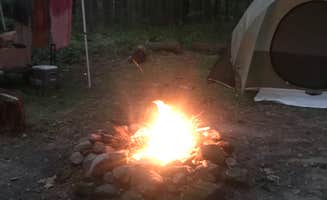
Fire regulations vary: Fire restrictions differ between locations and seasons. At Onion Mountain Park, fires are permitted in established rings: "We set up the tent and started a fire (very easy as there are sticks and wood everywhere)." However, other sites prohibit fires completely.
Weather preparation essential: Mountain weather changes rapidly in all seasons. A Brassie Brook camper shared: "Our trip was sadly cut short because we were freezing and it was raining a lot LOL but hey it's part of the experience. The fall views made it worth it."
Wildlife awareness important: Bears and other wildlife frequent the area. An Alander Trail Camper noted: "You will be in the heart of the forest/woods so definitely make sure to be prepared. We had some scares with coyotes and bears in the past but never anything crazy."
Tips for camping with families
Choose shorter access trails: For families with young children, sites with shorter hiking approaches work best. At Onion Mountain Park, a camper notes, "My BSA troop has been going here for years to help new scouts learn to camp. It is a very casual site and good for your first trip, you are close to your car and the road in case you need it."
Pack for unexpected conditions: Temperature swings can occur even in summer. A Brassie Brook camper advises bringing layers: "We were freezing and it was raining a lot... We did have some sun spots at least throughout the trip."
Consider established sites: Ward Pound Ridge Reservation offers more amenities for families newer to camping. A visitor reports, "The shelter sites are large and private with access to hiking trails and make for a unique experience. The staff is friendly as well."
Tips from RVers
Limited vehicle access: Nearly all camping near Sharon is tent-only with poor RV accessibility. Areas like Alander Trail Campground require parking at trailheads and hiking gear in: "You have to park at the entrance and hike in about 1.5-2 miles with everything on your back."
Nearest RV options distant: RVers need to travel 25+ miles from Sharon for suitable sites. The closest options have strict size limitations and few hookups, with most primitive sites accessible only by foot.
Consider alternative base camps: For RVers wanting to explore the area, staying at established campgrounds outside the immediate vicinity provides better access. "We stayed here on a rock climbing trip. Sites were relatively well spaced apart. The campground was well maintained overall," reports a visitor to Shawangunk Gateway Campground, located about 50 miles southwest.










 Guide
Guide


