Tent camping near Willow Creek, California ranges from remote dispersed sites to established campgrounds throughout Six Rivers National Forest and surrounding BLM lands. The Klamath Mountain region has elevations ranging from 600 to 4,000 feet with dramatic temperature variations between seasons. Access roads to most primitive camping areas require high-clearance vehicles and become particularly challenging during winter months when snow and mud can make travel hazardous.
What to do
Mountain biking at Lacks Creek: The BLM-managed Lacks Creek area offers several miles of dedicated mountain biking trails accessible from the main camping area. "There's a nice running/bike path right in the camp ground," notes one camper, though they caution about ticks in the area, particularly for those camping with pets.
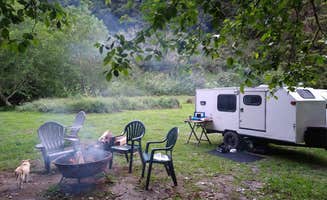
Wildlife viewing opportunities: Keep binoculars ready for diverse wildlife encounters throughout the region. At Groves Prairie Dispersed Camp, one camper reported, "We did have a few deer walking through our campsite through the middle of the night, and my dog loved chasing them away." Another visitor to Lacks Creek mentioned, "saw wild horses driving up!" providing a unique wildlife viewing opportunity.
River recreation access: Many camping locations provide access to the Trinity River system. At Slide Creek Campground, campers appreciate the proximity to water activities with one noting it has "the south for Trinity River running right through it plenty of hiking plenty of fishing and plenty of beautiful scenery."
What campers like
Exceptional seclusion: Many dispersed camping options provide remarkable privacy. One camper described Groves Prairie Dispersed Camp as "absolutely beautiful and spacious. It was a little hard to find, but granted we showed up in the middle of the night so I added to the struggle. There is a picnic table and a campfire pit to designate the camp spot, which was nice."
Natural features: Small creeks and meadows enhance many camping locations. A Groves Prairie camper noted, "There is a beautiful little creek right next to the campsite," providing both scenery and emergency water source that requires filtering or treatment.
Minimal development: The primitive nature of most sites appeals to those seeking authentic outdoor experiences. Many areas maintain basic infrastructure only, such as Big Bar Campground which one visitor described as "Pretty basic...can't camp here just a cool spot to park with a little bit of river access and some park benches."
What you should know
Access challenges: Many dispersed camping locations require significant travel on unpaved forest roads. For Groves Prairie, a camper noted, "The road to get up there is a bit overgrown and there's a lot of potholes so just keep that in mind." Another camper at Lacks Creek described it as a "Pretty far drive off a dirt road" noting specific directions: "Drive east on Highway 299 for 17.8 miles from Highway 101. Turn left at the Redwood Valley turn off(Bair Road) and travel 3.9 miles."
Communication limitations: Cell service is extremely limited or non-existent at most camping locations. One Lacks Creek visitor reported, "had no service for miles with Verizon. Not just spotty service, literally nothing until I drove back down 15 minutes and camped on a road turnout."
Wildlife concerns: Ticks are prevalent in many camping areas. A camper at Lacks Creek warned, "The Lacks Creek campground is just a gravel parking area. No creek water in early June but lots of ticks. Very hot too. We left after 30 minutes and 6 ticks."
Tips for camping with families
Junior Ranger programs: Several established campgrounds offer educational opportunities for children. At Penn Campground in nearby Sue-meg State Park, one family reported, "Our 11 year old daughter got to participate in the Junior Ranger Program, learning about the geology of the area. The Ranger helped us Ron identify some of the berries we'd seen along the path and which were edible."
Special activities: Look for campgrounds with specific family-friendly amenities. One Penn Campground visitor mentioned, "My family greatly enjoyed hiking to participate in the eduquest. I highly recommend it if you have kids!"
Site selection for privacy: When possible, choose sites that provide natural boundaries between neighbors. At Penn Campground, a camper noted, "Each site is tucked back in its own little green enclave, so even though the neighboring sites are close to you, you feel secluded."
Tips from RVers
Site verification: Several reported campgrounds may no longer exist or have limited facilities. One visitor to Grovers Gulch RV Park reported it was "No where to be found... don't plan on going here!"
Facility limitations: Most dispersed camping locations have no hookups or RV-specific amenities. Established RV sites at Sugar Pine Camp offer basic accommodations but limited services compared to full-service RV parks.
Road conditions: Many forest service roads leading to camping areas are unsuitable for large RVs or trailers. High-clearance vehicles are recommended for most dispersed camping locations, with tent camping being the primary accommodation type at remote sites.









 Legend


