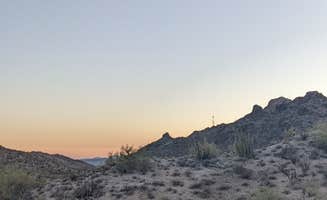
Desert terrain around Organ Pipe Cactus National Monument transitions from 1,600 feet at its eastern boundary to 330 feet at Quitobaquito Springs in the west. Winter temperatures range from 35°F at night to 65°F during daytime, creating prime conditions for desert camping from November through March. Most dispersed sites lack shade structures, requiring campers to create their own protection from the intense sun.
What to do
Desert hiking from camp: Twin Peaks Campground provides direct trail access with multiple trailheads surrounding the campground perimeter. According to camper Tyler D., "The campground is ringed by trailheads. A couple of roads give plenty of space for cyclers. It's a beautiful, beautiful spot."
Mountain biking nearby: Ajo BLM Dispersed areas include designated mountain bike trails alongside OHV routes. Reviewer Vanessa M. notes, "The Ajo MTB trails are here and there is OHV."
Mining history exploration: Sites near Darby Wells Road offer access to local copper mining history. One visitor mentioned, "Nice view nearby of the copper mine. The town of Ajo is very much worth a visit. Also make sure to visit the Ajo Museum."
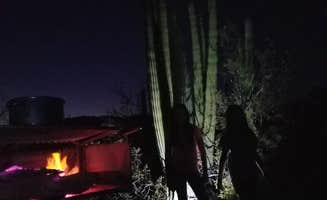
Night sky observation: Desert camping provides exceptional stargazing opportunities. Larry E. from Twin Peaks Campground stated, "Great place for stargazing," while another camper at a dispersed site described feeling "like the only person on earth or moon. Completely quiet."
What campers like
Desert solitude: Gunsight Wash BLM Dispersed camping area offers spacious sites with privacy. One camper noted, "Astonishing place in magnificent landscape! Plenty of sites, spacious and large distance to neighbors."
Desert wildlife: Pack rats are common visitors at several campgrounds. A camper at Twin Peaks mentioned, "Quirk: packrats are pretty rampant here, so folks keep their hoods open and anyone who spends more than a night or two lights their undercarriage to scare the little guys away."
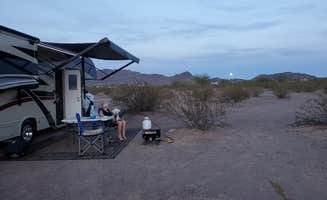
Solar efficiency: Sun exposure works well for solar panels at most sites. Ashley M. observed, "No hookups for RVs but the sites allow for good solar exposure and there are water spigots all over."
Sonoran Desert vegetation: Darby Wells Rd BLM Dispersed provides access to diverse desert plant communities. Greg L. commented, "Scenic Sonoran desert vegetation due to the cactus diversity but some areas have been trashed by past use during the mining days."
What you should know
Border Patrol activity: Several camping areas near the border have regular patrol presence. At Alamo Canyon Primitive Campground, one camper reported, "We were unable to camp due to high volume Border Patrol activity. Not sure if this is the norm but there were at least 15 border patrol vehicles parked throughout the small camping area."
Limited supplies: Stock up before arrival as services are minimal. Tyler D. advised, "You're pretty far from groceries, so you'll wanna stock up before you come in."
Road conditions: Alamo Canyon Primitive Campground requires navigating unpaved roads. Greg L. observed, "3 miles of graded gravel road from hwy. $16/$8 senior. Need to pay at visitor center or online but with no cell signal."
Safety hazards: Some dispersed areas contain remnants from mining operations. At Ajo BLM Dispersed, Laura M. warned, "Very quiet so much glass and old rusted tin cans, possibly from when mining was active here. Lots and lots of shards of broken glass, it's part of the landscape almost. There are open mine pits, some fenced off, some not so be careful especially if you let your pets run free."
Tips for camping with families
Try primitive camping with amenities: Coyote Howls East RV Park provides a middle ground between developed and dispersed camping. Rollie C. mentioned, "Stayed in the area without hookups, many spots to choose. Very quiet and peaceful. Could hear coyotes off in the distance."
Wildlife education opportunities: Some campground hosts offer educational programs. Kaylene H. at Sonoran Skies Campground shared, "Joyce showed the children some of Arizona's night creatures."
Seasonal considerations: Winter months provide most comfortable conditions for families. Monte W. noted his April experience at Gunsight Wash: "I arrived around 5:30 PM and was able to get set up and collect enough wood for a fire."
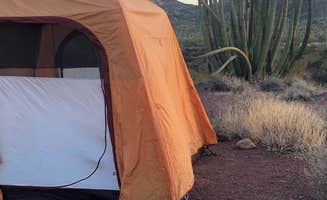
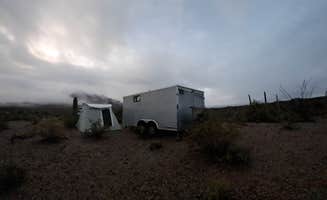
Private camping alternatives: When national park campgrounds are full, consider nearby options. One camper at Darby Wells Road reported, "Stayed here for three nights with the wife and kids in a tear drop type camper. It has a good amount of spots that are flat. We have never camped in the desert before, but it is still too cold for the woods."
Tips from RVers
High-clearance warnings: Sonoran Skies Campground provides better access for larger vehicles than most dispersed sites. Mev W. commented about a nearby park, "Not sure how really big rigs would do, but my little Casita snuggled in just fine with a decent amount of room around."
Navigating rough roads: Several Organ Pipe Cactus National Monument campsites require careful driving. Laura M. warned about Ajo BLM access, "Deep dip on Alley Rd coming in, about 1.8 miles from where the paved road ends, we scraped our bike hitch both coming and going. Any rigs longer than about 26ft probably can't make it further in than this spot."
Generator restrictions: Check campground policies as some restrict generator use. One camper noted, "The tent sites don't allow generators."
Long-term stay options: For extended desert camping, consider monthly rates. Meri F. shared, "2021-2022 rates are: $15 daily, $60 weekly, $175 monthly and after you stay for (3) months at the monthly rate, you can apply for the yearly rate at $635 annually."







 Scout
Scout


