Dispersed camping near Huntly, Virginia primarily centers on the George Washington National Forest and Shenandoah National Park regions, where elevation changes can create temperature differences of 10-15 degrees between valley floors and ridgelines. Most backcountry sites require hiking between 1-4 miles with elevation gains of 800-1,200 feet. Seasonal water availability varies dramatically, with typically abundant springs in April-May that may run completely dry by late summer.
What to do
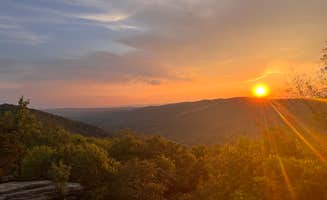
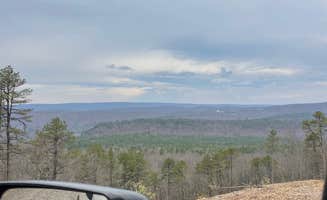
Hike to ridgeline views: At Veach Gap - GWNF - Backpacking Site, visitors trek approximately 4 miles with a 1,200-foot elevation gain. "I've both day hiked this and backpacked here several times. You will want to drive in and park at the Veach Gap Trailhead which is listed on Google Maps, then follow the trail and make the left when it comes to the intersection," notes Jon N.
Explore nearby waterfalls: Many dispersed camping areas connect to waterfall trails that flow strongest in spring. "I recently led a large group of Scouts to the Mathews Arm Campground in SNP. We had a lovely hike to a nearby waterfall that was gorgeous," explains Amanda D.
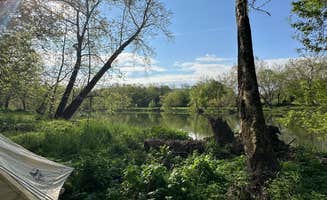
Try creek fishing: The South Fork Shenandoah River camping areas provide direct water access for anglers. "Our site was amazing! The very last car camping site on the road. We were right on the river, we swam and fished. There were plenty of walk-in sites beyond ours," reports Justine I.
What campers like
Primitive solitude on weekdays: South Fork Shenandoah River camping areas offer greater privacy mid-week. "The site was wonderful! Not too many spaces so it can fill up quick. There is a launch in the middle, so there is a bit of come and go," notes Heather.
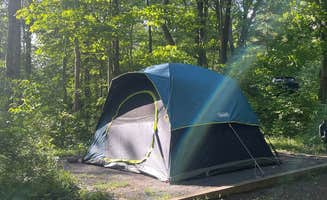
Easy site selection systems: At Little Fort Campground, campers appreciate the straightforward self-registration. "Nice established free campground! We got the last spot around 7pm. Site had a fire pit, table, parking spot, and tent platform. We used one of the sign in slips but many of the other campers did not," explains Sawyer B.
Wildlife viewing opportunities: Many backcountry sites offer regular wildlife encounters, especially in early morning and evening. "2 deers came to visit us at night. Killed a cottonmouth buried it since I didnt know how to properly cook and eat it. Saw Momma and two baby black bears," reports Ashley F.
What you should know
Limited cell service: Service varies dramatically by carrier and location. "Oh on this app it says T-Mobile access, I'm a T-Mobile customer, no reception at all but drive 5 minutes back down the mountain and you're good to go," notes A Dan.
Water availability concerns: Water sources require planning, especially for ridge campsites. At Veach Gap Backpacking Site, "there is no water after the first mile. I have seen a small trickle part way up the mountain, but don't count on it. Pack up all the water you will need for the day/evening/morning," warns Jon N.
Variable road conditions: Access roads to many dispersed sites can be challenging. "The road to get to the campsite was well maintained and easy to get to. Campsites themselves were a tad overgrown but it was the beginning of the season," reports Sumner C.
Tips for camping with families
Choose established sites: For easier family camping, select sites with more amenities. At Wolf Gap Recreation Area, "Most sites have a paved parking platform and then a second tier for the camp site. All sites are quite large and include picnic tables, fire rings and large tent platforms," explains Kevin C.
Consider bug protection: Insect activity varies seasonally but can be intense. "Yellow flies and mosquitos are bad out there," warns one camper, while another notes that some sites are "quiet and dark and a bit buggy."
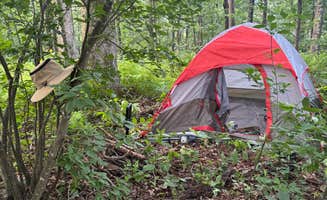
Look for flat tent platforms: Many dispersed sites feature established tent pads that provide better sleeping surfaces. "Nice flat camp site with picnic table and fire pit. Comes with tent pad but surface is too hard to use pegs," reports Zack B.
Tips for RVers
Choose appropriate access roads: Many dispersed camping areas near Huntly have limited RV access. At Squirrel Hollow Road Camping, "Sites are located less than a mile from the paved highway. We found 5 spots just off the road. All were easily accessible by car or with a small teardrop trailer," notes Kevin C.
Check parking pad levelness: Even at established sites, parking surfaces may not be level. "Many of the car parking pads are not level. But the tent pads appear to be," explains one camper.
Scout ahead when possible: Larger vehicles may have limited turning space at some sites. "The site at the end of the road is beautiful. We stayed right at the end of the road, since we have a 30 foot RV, but there are sites you can walk to all the way down the river," suggests Justine I.









 Guide
Guide


