Tent camping near Ascutney, Vermont centers around a network of Appalachian Trail facilities and dispersed sites across elevations ranging from 800 to 3,100 feet. Most backcountry campsites in the region become accessible after snowmelt in mid-May through mid-October. Water availability varies significantly by location and season, with many sources becoming unreliable during late summer drought conditions.
What to do
Explore swimming spots: Stony Brook Backcountry Shelter offers access to a small swimming hole just downstream from the campsite. According to one camper, "I only explored a bit offtrail down the brook but found a decent swimming hole (could just barely submerge myself) to clean off a bit." The water depth allows for partial submersion during summer months.
Enjoy elevated views: Moose Mountain Backcountry Shelter provides a bench overlooking a clearing with valley views. One backpacker noted the shelter "did stand out with a bench overlooking a clearing in the brush with a view which was a great place to enjoy my freeze dried dinner."
Access pond recreation: Little Rock Pond Group Camp & Shelters offers swimming and wildlife observation opportunities at higher elevations. A visitor observed "the pond is surprisingly warm for its altitude and it's home to two Common Loons," making it suitable for summer swimming despite the mountain location.
What campers like
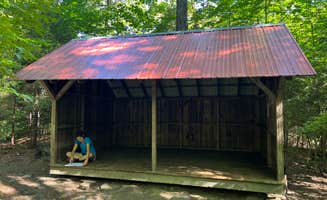
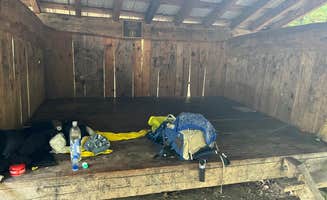
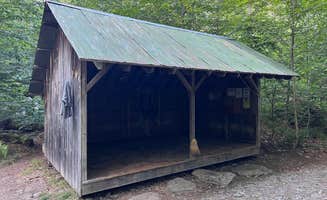
Multi-level shelters: Happy Hill Backcountry Shelter features an uncommon two-story design with sleeping options on both levels. A hiker described it as having "a ground floor and a loft but each floor could maybe fit 4-5 people comfortably," providing flexibility for group camping arrangements and separation between sleeping and common areas.
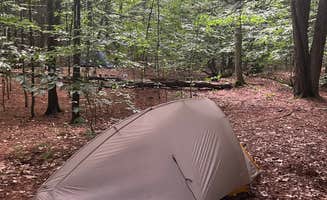
Large, flat tent sites: Stony Brook Backcountry Shelter stands out for its spacious tent camping areas. A reviewer mentioned "there were a few large tent areas where multiple tents could fit and which looked quite level," making it suitable for small groups traveling together.
New facilities: Several shelters in the region have recently upgraded facilities. At Moose Mountain Backcountry Shelter, a camper highlighted that "the privvy was also new and very spacious," while another noted Stony Brook's "brand new privvy, large tenting areas, and a swimming hole."
What you should know
Water source reliability: Water availability remains unpredictable throughout the region, especially in late summer. At Velvet Rocks Shelter, a hiker reported "the water source here was dry during my trip which was expected during the drought (August 2022)." Carrying extra water or planning alternate sources is essential.
Bear protection: Food storage options vary between sites. A camper at Stony Brook noted "there was also a bear box here, which I hadn't seen at other shelters along the AT in Vermont," while Velvet Rocks Shelter specifically lacks this amenity with one user reporting "there was no bear box onsite."
Limited reservation options: Most backcountry shelters operate on a first-come basis without reservations. Sites fill quickly during summer weekends and fall foliage season. Midweek visits offer greater site availability and solitude.
Tips for camping with families
Consider shelter proximity: Cardigan Campsites provides a good base for families wanting a short but rewarding summit hike. A visitor noted it's a "great spot to spend the night before a climb of Mt. Cardigan! The climb is challenging but shouldn't take too long."
Look for flat, grouped sites: When camping with children, prioritize locations with level tent areas. At Happy Hill Backcountry Shelter, a hiker reported "there were a bunch of level tent camp sites around the shelter" which allows families to set up multiple tents in close proximity.
Plan water carefully: Families require more water for cooking, cleaning, and drinking. Winturri Backcountry Shelter offers more reliable water sources in mid-summer. One camper confirmed "water was running when I was there in mid-August from a spring close to the shelter."
Tips from RVers
Limited RV options: True RV camping near Ascutney requires traveling to established campgrounds with hookups. Most backcountry shelters and primitive sites require hike-in access only.
Consider seasonal closures: Available RV campgrounds typically operate from Memorial Day weekend through Columbus Day weekend, with limited shoulder season availability based on weather conditions and spring road maintenance schedules.
Plan for minimal facilities: Even at drive-in locations, services may be limited. Check ahead for drinking water availability, dump station access, and generator restrictions at each location.








 Legend


