Dispersed camping opportunities near Spicewood, Texas provide primitive overnight options for outdoor enthusiasts seeking a more rugged experience. The terrain combines limestone outcroppings with cedar and oak woodlands at elevations ranging from 600-1000 feet. Summer temperatures regularly exceed 95°F with limited rainfall, making spring and fall the most comfortable seasons for backcountry camping in this region.
What to do
Night hiking opportunities: The San Gabriel River Trail offers sections suitable for night hiking during cooler months, allowing campers to avoid daytime heat. "In the summer be aware that the combination of the temperature and the exposure can make this trail uncomfortable to hike. Take precautions, drink lots of water and stay in the shade all that you can," advises one San Gabriel River Trail regular.
Wildlife observation: The lake shore areas attract numerous bird species and small mammals, particularly at dawn and dusk. Camping near water access points provides optimal viewing locations. When staying at Sawyer Park Primitive Campsites, one visitor noted the "water and views were beautiful, and it was a nice place to rest after the 6 miles in," highlighting the rewards after the hike.
Water filtration practice: Lake Georgetown offers practical opportunities to test water filtration systems before longer backcountry trips. Campers should bring at least 2 liters of water per person while hiking, with filtration equipment for resupply from the lake.
What campers like
Multiple access methods: The primitive sites can be reached through various approaches depending on fitness level and equipment. "This is possibly the easiest campgrounds on the good water trail to get to... Can be biked in from camp Tejas four miles away or can hiking from Russell Park 2 mi away," explains one Walnut Springs Primitive Campground camper.
Weekday solitude: Visitors seeking isolation tend to find greater success with midweek camping when traffic is minimal. "During the weekdays you may not see a single person," reports a frequent trail user, contrasting with busier weekend periods when scout troops often practice backpacking skills.
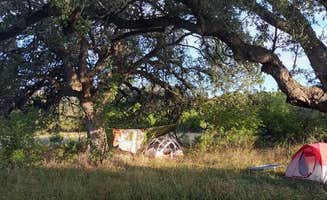
Storm shelter: The mature tree canopy at certain sites provides natural protection during inclement weather. One Walnut Springs visitor "Enjoyed our stay during a thunderstorm under the big trees," demonstrating how the natural features enhance camping even during challenging conditions.
What you should know
Limited shade coverage: Heat management becomes critical during warmer months with significant exposed sections. A frequent hiker points out, "While you may be hiking within site of Lake Georgetown and the water, it is not always convenient to access the water. So be sure to carry plenty of water - at least 2 liters."
Increasing popularity: Free camping near Spicewood, Texas has seen growing use in recent years, particularly on weekends. "The trail is getting more and more popular with backpackers, so it is likely that you may see others on the trail," notes a regular visitor, making advance planning more important.
Navigation challenges: Trail junctions can be confusing for first-time visitors without proper maps. One group "ended up not following our AllTrails after a fork in the road heading towards the campsite," resulting in camping at an unofficial site rather than their intended destination.
Tips for camping with families
Shorter access routes: For families with younger children, select sites with minimal hiking distances to reduce fatigue. The 2-mile approach to Walnut Springs from Russell Park provides a manageable distance for most elementary-age children.
Shelter considerations: The open grassy areas near water provide tent space while treed sections offer hammock options. "Large open area; for fire pits for lamp hangers for picnic tables trees closer the trail and grass sea areas closer to the water," describes one Walnut Springs Primitive Campground visitor, illustrating the layout options for family setups.
Pet protocols: While dogs are permitted on the trails and at campsites, trail etiquette suggests leashing pets. "Dogs are allowed on the trail, but it is nice to keep them on lease," recommends a trail user, helping maintain positive interactions with other campers.
Tips from RVers
Parking notifications: RV owners using trailhead parking should leave visible notes indicating overnight hiking plans. "It is good to advise one of the park attendants that you will be hiking or place a note inside your car that you are hiking," suggests a seasoned camper, helping avoid misunderstandings about vehicle abandonment.
Supply transfer strategies: Since these dispersed camping areas require hiking in, RVers must plan for transferring supplies from vehicles to backpacks. "Upon entering one of the access points, park your car for free near the trailhead," notes a visitor, emphasizing the separation between parking and camping areas for all no-fee camping near Spicewood.




 Legend

