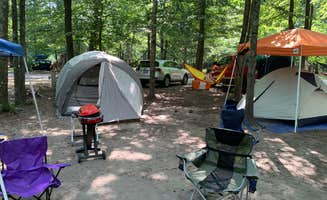
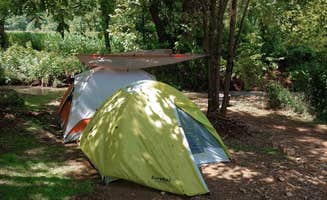
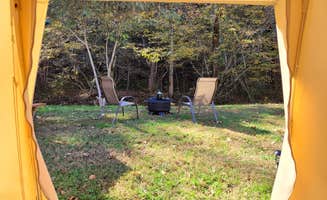
Cherokee National Forest offers diverse primitive tent camping options along river corridors and mountain ridges. Many campsites lack defined boundaries with multiple sites clustered in key areas rather than individual numbered spots. Seasonal restrictions apply from March to November when temperatures range from 40°F to 75°F, with higher elevation sites experiencing cooler nighttime temperatures.
What to do
Whitewater rafting: Launch directly from USA Raft Adventure Resort which provides riverfront camping and guided trips. "We whitewater rafted, the guides were excellent and it was an awesome trip. The AT meanders along the River and is easily accessible from the campground," notes a camper.
Mineral hot springs: Located near tent campsites in Hot Springs, NC. "Walking distance to trails and town. Spa with hot spring hot tubs across the street," shares one Hot Springs Campground visitor. Another adds, "Can play on the French broad river and then take a soak in the hot mineral tubs!"
Trout fishing: The cold mountain streams throughout Cherokee National Forest support excellent fishing. Rocky Fork State Park offers "excellent trout fishing in streams that are stocked weekly during summer" according to a review. Most fishing spots require a Tennessee fishing license available at local outfitters.
What campers like
Privacy in less-visited areas: While main campgrounds can fill quickly, smaller tent sites offer seclusion. "Cosby Campground is amazing! Most sites are walk up, so you don't need a reservation, and there are probably 100+ sites, so even during the busiest of times you can find a good site. Each site has plenty of space too, so you're not on top of the site next to you," explains a Cosby Campground visitor.
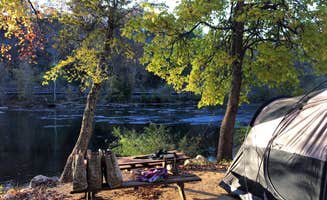
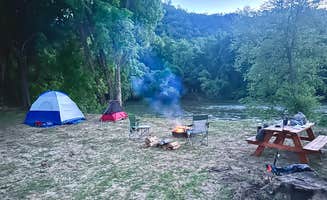
Direct water access: Many tent campsites sit alongside mountain streams. One camper at Creek Ridge Camping reports, "We had a bit of a climb down the mountain on a well kept path to the river. There was a nice shelter to put our tent and a fire pit on a small front. The river was calm and swimmable. You could hear the rush of the water at night while sleeping."
Trail connectivity: Tent camping areas often connect directly to hiking trails. "The AT is so close, love the Cammerer Fire Tower," notes one Cosby visitor. Another adds, "Several wonderful hikes right out of the campground."
What you should know
Variable road conditions: Forest Service roads leading to dispersed tent sites vary widely in quality. "I would suggest arriving during the day if you want to camp for free," advises a camper at Paint Creek Corridor, adding "There are parking and picnic areas along the road that have 'no camping' signs... There are dispersed camping sites throughout the corridor; however, I was only able to locate one and luckily it was vacant."
Limited facilities: Most primitive tent sites lack potable water. "Bathrooms were nice but the hot springs spa was the best," notes a Hot Springs Campground visitor about nearby amenities. Other areas have minimal infrastructure: "Shelter and picnic tables. Oh and a bathroom. The AT (Appalachian Trail) goes by it," describes a Round Knob visitor.
Site availability confusion: Forest boundaries and camping restrictions can be unclear. "There is a paid campground in the area which is $10 and offers vault toilets and nice sites. If you drive past that there are parking and picnic areas along the road that have 'no camping' signs," explains a Paint Creek Corridor camper.
Tips for camping with families
Accessible trails: Several forest areas offer family-friendly hiking. "The Fork River Trail offers one of the most picturesque locations in the Blue Ridge and is accessible (with assistance) for some jogging strollers and some wheelchairs," notes a Waystone Camping Collective visitor about nearby options.
Ranger programs: Educational activities run seasonally. "On Fridays they have special Ranger programs. We were lucky enough to learn about moon-shining from guys on the moonshiner TV show," shares a Cosby Campground visitor.
Varying difficulty levels: Match trails to your family's abilities. "There are trails of wide variety in length and difficulty from nearly flat to very difficult," notes a Rocky Fork camper, while another adds, "The trail is composed of very coarse gravel for the first .1-.3 miles before turning to dirt."
Tips from RVers
Limited hookup sites: RV camping options are concentrated in developed campgrounds rather than dispersed areas. "Only 3 fifty amp full hook up sites. Lots of 30 amp and tent camping. Right on the river," reports a Hot Springs visitor.
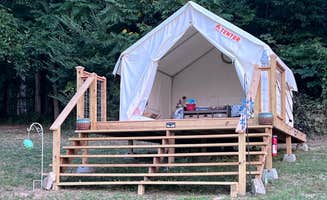
Size restrictions: Many forest roads cannot accommodate larger rigs. "Their reservation system leaves a lot to be desired, but it is a very laid back and enjoyable stay," notes a USA Raft Adventure Resort camper who observed various accommodation options including "van camped, a Bell Tent, Avion camper, Geodome, and mini house."
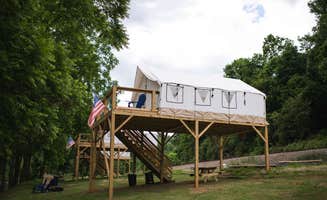
Alternative accommodations: Some campers opt for cabin rentals when RV access is difficult. "They have the most amazing cabins and glamping sites if you are not looking to pitch a tent," shares a Creek Ridge Camping visitor.










 Legend


