Equestrian camping options near Dayton, Oregon provide access to extensive trail systems throughout the region's forested parks. The area sits at elevations ranging from 200-1,200 feet in the western foothills of Oregon's Willamette Valley, with mild spring and fall temperatures typically between 50-75°F. Winter campers should prepare for frequent rainfall, with the wettest months averaging 6-8 inches of precipitation from November through February.
What to do
Trail exploration on horseback: The Hares Canyon Horse Camp offers direct access to miles of forest trails. "The horse camp comes complete with full hookups, a full bathroom with showers, and corrals for the horses. Friendly rangers patrol the camp regularly to make sure there are horses occupying each site," notes Tanya B.
Disc golf courses: Silver Falls State Park provides recreational options beyond trail riding. "What can I say? Silver Falls is a magical place and everyone should experience it. You can just get lost in the beauty of it all," shares Jeff K. The park maintains well-designed courses suitable for various skill levels.
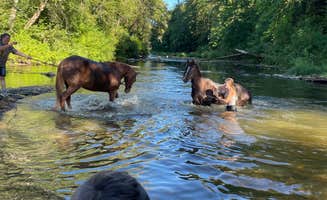
Fishing opportunities: Rivers near the horse campgrounds provide good fishing spots. "The park sits along the Clackamas river, offering water access for horses during warmer months," mentions a reviewer of Milo McIver State Park. Many equestrian-friendly campgrounds offer river access where both riders and horses can cool off after trail rides.
What campers like
Spacious equestrian sites: Milo McIver State Park Campground features large sites suitable for horse trailers. "LOTS of nice, wide horse trails for horse riding enthusiasts. We all made s'mores and sang campfire songs together in the evening after our day of hiking to the horse camp and up to the bat haven," says Melissa L.
Privacy between sites: Campers appreciate the natural screening at many equestrian campgrounds. "Campers report the sites are spacious and private, even when the campground is at full capacity during summer weekends," according to reviews. At Jones Creek Campground, "Campsites are spaced well apart with lots of room in each site," notes Autumn R.
Wildlife viewing: The forests surrounding equestrian campgrounds offer opportunities to spot local wildlife. "When we came back from the shower my wife and I observed a dark shadow... A bobcat to be exact," reports Patrick G. from his stay at Hares Canyon Horse Camp. Bird watching is particularly good along river trails in spring and early summer.
What you should know
Reservation requirements: Most horse campgrounds near Dayton require advance booking. "This year with covid it's been harder to find a spot last min and they would only let you reserve 30 days in advance so planning something in advance was impossible," explains Shane from L.L. Stub Stewart State Park.
Manure disposal protocols: Horse owners must follow specific waste management rules. "You must clean up after your own horse. Manure bin as well as shovels/brooms are provided onsite," notes Stephanie Z. about Hares Canyon Horse Camp. These requirements help maintain trail and campground cleanliness.
Seasonal accessibility: Many equestrian sites have limited seasonal availability. "The park floods every winter. I advise planning your trip for the spring or summer knowing that there is a lot of shaded trails to keep you cool," warns Kelly N. about Willamette Mission State Park.
Tips for camping with families
Playground accessibility: Oxbow Regional Park offers family-friendly amenities near horse trails. "The recent upgrades to playgrounds are awesome for the kids and the new welcome center makes check in a breeze," shares Finn M. Several equestrian campgrounds include play areas within walking distance of horse corrals.
Educational opportunities: Children can learn about forest ecology while camping. "We take elementary students to this site every spring to have a field science day. The largest Black Cottonwood tree resides at this park and is worth seeing!" reports Kelly N. about her experiences at Willamette Mission.
Water safety considerations: When camping with children near rivers, take proper precautions. "Next time we'd bring a better life vest for our non-swimmer, since the river can seem a little fast moving," suggests Corinna B. after her family's stay at Oxbow Regional Park.
Tips from RVers
Hookup availability: Willamette Mission State Park Horse Camp provides necessary connections for equestrian RVers. "This State Park has a hiker/biker area due to it's location on the Willamette Valley Bikeway. There is no potable water, so you must plan to pack enough water for the night and the next morning or filter Willamette River water," advises Jefferson S.
Parking specifications: RV sites at equestrian campgrounds typically accommodate larger vehicles. "Our spot was very spacious as the length was 45 feet deep on asphalt. It had a picnic table and a fire ring in a well-groomed gravel area about 30' x 30'. The back of our spot was against very high trees," describes Robert D. about his experience at L.L. Stub Stewart State Park.
Seasonal weather preparation: Winter camping requires additional planning. "The water pressure was not very good at around 35 psi," notes MickandKarla W. about their stay at L.L. Stub Stewart State Park. RVers should bring sufficient water supplies and prepare for potential freezing temperatures from November through February.






 Traveler


