North Carolina's Piedmont region surrounding New Hill offers camping areas situated at elevations between 350-400 feet, creating moderate terrain with gentle slopes leading to lakeshores. Most campsites near New Hill, North Carolina operate in the humid subtropical climate zone with nighttime temperatures dropping to the 50s°F even during summer months. Water levels at Jordan Lake and Falls Lake fluctuate seasonally, affecting shoreline campsite availability.
What to do
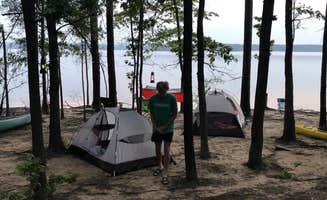
Kayaking and canoeing access: At Jordan Lake State Recreation Area Poplar Point, campers can launch directly from waterfront sites. "The sites are well spread out so you don't feel like you are on top of each other and it's very kid friendly," notes Bailey R. Some sites even allow visitors to "beach your boat right at your site" according to Betty B.
Fishing opportunities: The lakes support diverse fish populations with specific seasons for optimal catches. "We always catch a ton of fish!!" reports Dana M. about Rolling View — Falls Lake State Recreation Area. Anglers should bring tackle suitable for largemouth bass, crappie, and catfish.
Trail networks: Multiple interconnected trail systems allow for varied hiking experiences. At William B. Umstead State Park, trails connect with larger networks. "Great campground for biking," writes Martha S. about Poplar Point. For more remote hiking, Raven Rock State Park offers "long and short Trails for your enjoyment," as Christine J. mentions.
What campers like
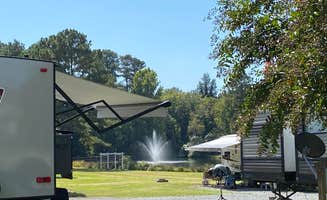
Waterfront camping: Lakefront sites at Parkers Creek Campground provide immediate water access. "Dry sites right on lake shore facing east. Quite lake with few powerboats so my partner could enjoy it with our dog in a blowup kayak," shares Joe Y. Waterfront sites typically cost the same as standard sites but book faster.
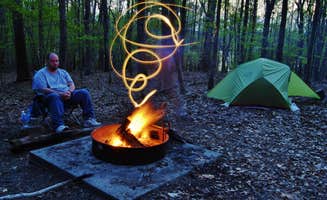
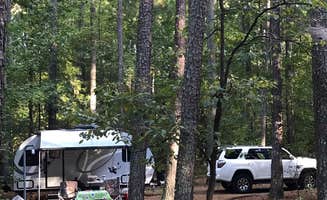
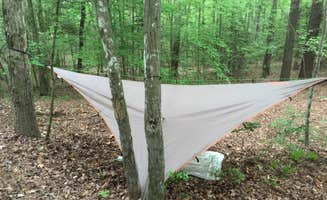
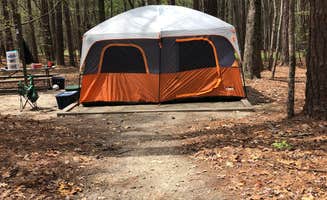
Privacy between sites: Many campgrounds maintain natural buffers between sites. At Moccasin Branch Campground, "The spots are well spread out with a hook to hang things on, a fire pit, and a picnic table at each site," according to Brett W. Campsites utilize the rolling terrain to create separation.
Dark skies for stargazing: The forested campsites reduce light pollution. "Love sitting by the campfire and staring up through the trees at the moon and stars," writes Becqui M. about Rolling View. Sites farther from metropolitan areas offer better night sky viewing, with weeknights providing the darkest conditions.
What you should know
No-alcohol policies: Many campgrounds strictly enforce no-alcohol rules. "Rangers can be very ticket-happy if you bring beer so be aware," warns Joanna R. about Poplar Point Campground. Rangers regularly patrol camping areas, particularly on weekends and holidays.
Seasonal campground closures: Operating seasons vary significantly between campgrounds. Holly Point — Falls Lake State Recreation Area operates "March 15 to October 31," while Crosswinds Campground runs "January 1 to October 2." Some primitive camping areas remain open year-round.
Variable cellular service: Connectivity differs between campgrounds and even between sites. "For those that care about working on laptop or streaming TV while camping, our cellphone hotspots worked great. We got anywhere from 30-55mbps with our Verizon cell coverage," reports Andrew S. about Poplar Point.
Tips for camping with families
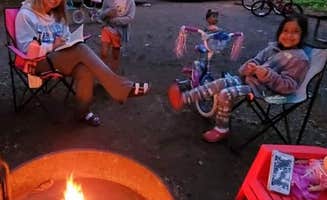
Beach access considerations: For families with children, campsite proximity to swimming areas matters. At Holly Point, one camper advises, "It's best if you can get a site near the beach if you have kids Otherwise you'll end up driving them back-and-forth."
Wildlife viewing opportunities: Morning and evening hours offer the best wildlife spotting. "Deer walked right behind our site," notes Wendy M. about Crosswinds Campground. Many campsites include wildlife corridors between them.
Bathroom facility quality: Bathhouse conditions vary between campgrounds and seasons. Glenn M. mentions Holly Point has "proximity to bath house and lake," while another camper notes Crosswinds "bathhouse has a lot to be desired." Most campgrounds clean facilities daily during peak season.
Tips from RVers
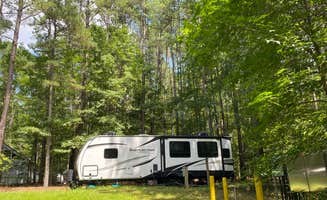
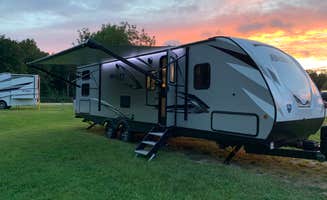
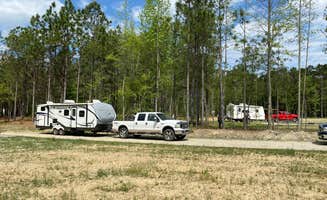
Site leveling requirements: RV sites vary in levelness across campgrounds. At North Carolina State Fairgrounds, sites are "large & level" where "I pulled in, and didn't have to adjust anything," according to Sheri K. Other campgrounds may require leveling blocks.
Dump station access: Most campgrounds offer dump stations rather than full hookups. At Crosswinds Campground, Paul H. notes, "Each site has water and electric hook-up. Sewer however is a dump station." Expect to find dump stations centrally located rather than at individual sites.
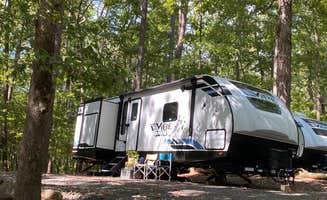
Site size variations: RV site dimensions differ between loops and campgrounds. At Poplar Point, "Site C-52 was very spacious, easy to back into, and level. This was a HUGE site, lots of space between neighbors," shares Martha S. Most campgrounds post maximum RV lengths for each site on reservation platforms.










 Guide
Guide


