Equestrian camping in Pisgah National Forest offers direct access to extensive trail systems designed for riders and horses. Elevation in this region ranges from 2,000 to over 6,000 feet, creating diverse riding conditions across seasons. Most horse campgrounds maintain primitive facilities with designated areas for trailer parking and basic amenities.
What to do
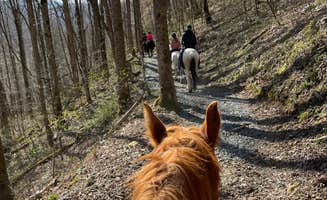
Trail riding from camp: Wolf Ford Horse Camp connects directly to multiple equestrian trails with varying difficulty levels. Access points begin at the campground entrance, allowing riders to start journeys without trailering. As one camper notes: "Love this place," with access to "awesome trails for u & ur horses."
Fishing after rides: North Mills River Campground offers excellent fishing opportunities for campers after trail rides. The river contains both stocked and native fish. "The river is stocked and also has native rainbow trout exceeding 20 inches. Some fly-fishermen showcased their trophy catches while we stayed here," reports a visitor.
Waterfall exploration: Multiple waterfall hikes exist within 15-minute walks of several campgrounds. At Upper Cove Creek - UCC1 Dispersed, campers report: "Beautiful waterfall (whaleback falls I think?) just a quick 15 minute walk across the river and up the trail (follow Daniel ridge trail loop from parking lot)."
What campers like
Creekside sites: Many campers prioritize water access after long rides. "Beautiful and quiet" creekfront sites at North Mills River provide natural white noise and convenient water access. The South Toe River flows through several camping areas, creating natural swimming holes.
Seasonal camping options: Paradise Ridge Permaculture offers unique equestrian camping experiences with additional farm elements. "Amber, the host, was very kind and accommodating. She showed us around the grounds which has horses, pigs, chickens, a natural spring, and fruits/vegetables/mushrooms growing around the property."
Off-grid solitude: Upper Cove Creek dispersed camping areas provide maximum privacy. "Beautiful free group camping area with large parkinglot. All dirt roads back here," notes one camper. Another adds: "The campsites are very secluded and quiet." These locations typically have zero cell reception.
What you should know
Early booking required: Horse camping sites fill quickly during peak seasons. At Wash Creek Horse Camp, sites accommodate both horses and camping equipment but remain limited. "This location was amazing. We couldn't have been happier with a spot. The host was extremely gracious," reports one visitor who secured an advance reservation.
Road conditions vary: Access to many horse camps requires navigating forest service roads. "Bit of a drive through the forest to get here, but great spots if you're looking to get away from civilization," notes one camper about Wash Creek. Another warns about Mills River dispersed areas: "The dirt road to get there as well as the pull off for the campsite are rough and a bit dangerous for low/regular cars."
Campground closures: Recent storm damage has affected several campgrounds. "FR 472 is closed at the Golf Course and there are hefty fines if you are caught walking beyond the gate," reports one visitor about Black Mountain. Always check current Forest Service alerts before planning trips.
Tips for camping with families
Kid-friendly water access: Lazy J Campground provides family amenities near horse trails. "They have a playground which is cool and the staff is very friendly," reports a camper. Another notes: "You can tube down and get out right at your site. Three Falls waterfall is just up the road."
Farm animal experiences: Some campgrounds offer additional animal interactions beyond horses. "Chickens and horses on site. Playground and lots of fun," notes a Lazy J visitor. These interactive elements keep children engaged between trail rides.
Safety considerations: Plan for limited emergency access and cell coverage. "Zero phone connection whatsoever (T Mobile 5g / LTE). Greater earth love connection a thousandfold," reports a camper at Upper Cove Creek, highlighting the need for advance planning with children.
Tips from RVers
Site dimensions: Most horse camps accommodate modest-sized trailers with living quarters rather than large motorhomes. At Bent River Equestrian, "While there is a RV hookup/platform/table it wasn't available at this time so more field camping which was perfect for us!" This reflects the primitive nature of most equestrian sites.
Water access points: RVers should note limitations on water hookups at most horse camps. "Campsite was clean and well maintained. My family enjoyed being so close to the river and exploring a new area," notes a camper who appreciated the proximity to natural water sources when hookups weren't available.
Off-season advantages: Winter camping offers increased availability and reduced rates. "We were the only campers there. It was very quiet. The stream ran right by the campsite so listening to the stream as we went to bed was wonderful," reports a winter visitor to North Mills River.




 Guide
Guide


