Horse camping in southwestern Virginia offers several trail riding options with varying facilities for equestrians. The Mount Rogers National Recreation Area provides expansive trail systems connecting to high-elevation terrain in the Jefferson National Forest. Most campgrounds in this region are accessible from April through October, with some extending into November during mild weather years.
What to do
Trail riding on the Virginia Highlands Horse Trail: The 68-mile trail system traverses sections of Jefferson National Forest with numerous side trails. "Lots of wildlife! We camped at an equestrian campgrounds, chestnut ridge perhaps? Saw a Family of black bear about a mile from camp then a bobcat in camp later that day!" shared Kelly C. at Chestnut Hollow Horse Campground.
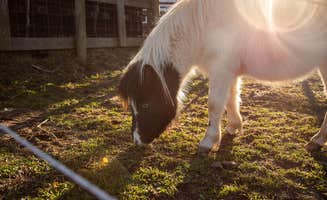
Visit wild ponies: Several trail systems connect to areas where semi-wild ponies roam freely. "Wild ponies, endless blueberries, spectacular view of wildflowers make this on of my go to spots to introduce someone to backpacking," notes Michael B. about the terrain near Chestnut Hollow Horse Campground.
Explore Mount Mitchell trails: The highest peak east of the Mississippi offers challenging elevation for experienced riders. "From here you can climb 4000ft to the summit of Mt Mitchell. It's a great, challenging hike with many rewards along the way," explains David M. about Black Mountain Campground, which serves as a trailhead for many routes.
What campers like
Multi-day rides: The extensive trail network supports longer expeditions with overnight stops. "With a wide network of multi-use trails in this area, Fox Creek Horse Camp provides a nice base for exploring on horseback. Sites have a gravel/grass pads, picnic table, and fire ring," explains Jean C. about Fox Creek Horse Camp.
Creek access: Many sites offer water access for horses. "We stayed at site #6 on the river and a much larger site with trees for hammocking...and great views of the river below," notes Dave V. about Black Mountain Campground, which provides direct water access from several sites.
Seasonal flexibility: Some equestrian areas maintain longer seasons than expected. "Even though the official season runs May - October, it is open for primitive camping March, April, and November," reports Jean C. about Chestnut Hollow Horse Campground.
What you should know
Trailer parking limitations: Most equestrian campgrounds have specific requirements for trailer parking. "The campsites are back-in along a single spur with turn-around at the end," notes Jean C. about Chestnut Hollow Horse Campground.
Self-containment systems required: Equestrians must bring their own corrals or high-line systems. "Sites have a gravel/grass pads, picnic table, and fire ring. Portable toilets available. Bring your own water. No hookups provided. Hitching posts at sites," explains Jean C. about Fox Creek Horse Camp.
Weather preparation: Mountain weather changes quickly in this region. "This place is by far the windiest place I've ever camped in. We couldn't get a proper fire started due to the wind! The windchill was a serious issue for some in our group so bring lots of layers and gloves," warns Scott B. about Stone Mountain State Park Campground.
Tips for camping with families
Dual-purpose campgrounds: Some facilities accommodate both riders and non-riders. "Lots of nice spot, tons of wildlife and deer. Plenary of hiking and mice shower house. A must do," says Von B. about Stone Mountain State Park Campground, which offers both equestrian and standard camping areas.
Swimming options: Creek access provides cooling options after rides. "Great campground! It is about a 15 minute drive to 3 great wineries and walkable to the trail head for the Stone Mountain loop. Great amenities, and everything was very clean," reports Kristin F. about Stone Mountain State Park.
Playground facilities: Some campgrounds offer additional activities. "Our group had both an RV and a large tent. The room allowed for both was very generous. The kids enjoyed playing in the creek and on the playground," shares Ann H. about Sandy Creek Family Campground.
Tips from RVers
Water and electric access: Limited full hookups are available at select facilities. "Campsites have good privacy and is quiet most hours. All have easy access, but bathrooms are small for number of campers. The view of the lake is one of the best parts. More campgrounds should separate rv and primitive like they do," suggests Ethan H. about Julian Price Park Campground.
Dump station considerations: Plan waste management carefully. "We had the campground all to ourselves when we went which was really nice! The biggest negative I would say was the dump station. It was on the hill so you had to back up to it and it wasn't easy location to do so," warns Becca C. about Sandy Creek Family Campground.
Site selection: Research specific sites before booking. "I chose a site that had water and electric hook-ups. The bathrooms were heated, clean and the men's bathroom had two showers," notes David B. about Stone Mountain State Park Campground.






 Legend


