

J
Joshua M. Traveler
TravelerRivers Edge Family Campground
Great place everyone here makes you feel right at home and the views are great. Fishing is also great and plenty of bait fish to catch from the dock
66 campgrounds · Check availability for any dates.
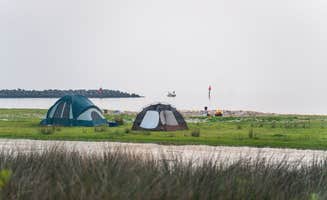
Gloucester, North Carolina provides outdoor enthusiasts with both island and mainland camping options spread across multiple public and private properties. Cape Lookout National Seashore stands out with its Great Island Cabin Camp and South Core Banks Beach Camping, accessible only by boat and offering rustic cabins on barrier islands facing the Atlantic Ocean. Croatan National Forest's Oyster Point Campground provides tent and RV sites with water access on the mainland, while private operations like Cedar Creek Campground & Marina accommodate various camping styles including cabin rentals. Several campgrounds feature waterfront positioning along sounds, rivers, or ocean beaches.
Access to camping areas varies significantly based on location, with Cape Lookout's barrier island sites requiring ferry transportation and often 4WD vehicles for beach navigation. Most mainland campgrounds maintain year-round operation, while island facilities typically operate seasonally from spring through fall due to weather conditions and accessibility challenges. Campers headed to barrier islands must be entirely self-sufficient, bringing all necessary supplies including drinking water in some locations. Reservations are strongly recommended for cabins on Cape Lookout and for ferry transportation during peak seasons. A visitor to South Core Banks noted, "Take plenty of bug spray. View is stunning. Just be sure you know it's on an island, and read the tide tables so you aren't surprised."
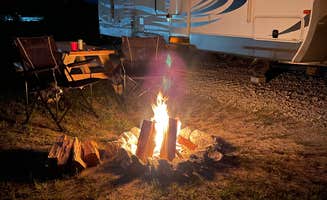
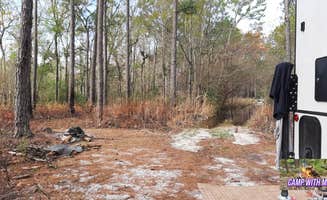
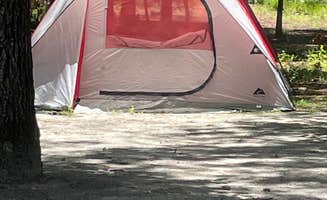
The camping experience in the Gloucester area centers primarily around water access and natural coastal settings. Public lands at Cape Lookout National Seashore receive consistently high ratings from visitors seeking primitive beach camping with minimal infrastructure. As described in feedback on The Dyrt, the barrier islands offer "endless stretches of white sandy beaches" where campers can find solitude away from crowds. Mainland campgrounds like Oyster Point provide wooded sites with nearby water access at more affordable rates, typically $10 per night. Croatan National Forest campsites feature tent pads and basic facilities including toilets and drinking water. Mixed-use campgrounds catering to both tent and RV campers are primarily found on the mainland, while island locations focus more on primitive tent camping or rustic cabin accommodations with limited amenities.
"Fun place to camp, water close by, picnic table and fire ring. Tent pads are pretty big. Host is very nice and cheap."
"We found a few paths to the river but the river access was very small. There is a Mountain-to-Sea path nearby as well."
from $10 - $20 / night
Check Availability"They even walked close by our campsite. The last night had the most amazing sunset that lit up the lighthouse and the clouds above with beautiful pinks, purple and blues."
"Start your adventure on a ferry, cross an inlet watching all the wildlife play right in front of you, then get off and drive immediately to endless stretches of white sandy beaches."
"The 24 hour campground park ranger stays on the first site of the right side entrance. There is a oyster fishery nearby."
"Great location off the beaten path on a dirt road. Campsite 9 backs up to the marsh andhas a great area for watching the sunset. You can also kayak or canoe here."
"But they are situated directly behind the dunes from miles and miles of totally prestine beaches. The only on-island supplies are ice and gasoline, so you must pack in everything."
"There are several boardwalks that meander around the island and numerous sandy paths connecting the sound side to the ocean side."
from $80 - $180 / night
Check Availabilityfrom $25 - $100 / night
Check Availability"Close to the Morris Marina, Davis, and Ocracoke ferry. Easy access to the Outer and Core banks."
from $85 / night
Check Availability"Plenty of hiking trails, boat access and woods all right here in this park. The boat access and pier are just a brief walk away from the campground."
"The one redeeming factor was that it was close to the bath house. The facilities were fairly new. For example, the bath house looked as if it had been built recently, and the concrete looked fresh."
from $27 - $54 / night
Check Availability"Clean bathrooms, friendly staff, small and quiet location that’s close to many activities and restaurants. The water front is very nice as well. I’ll definitely be back."
"We loved walking to the dock on the property where you could see the sunrise and sunset. We enjoyed visiting Fort Macon, Patsys pond national Forest, Shackleford Banks and the beach."
"Luckily, North Carolina has some amazing beaches on the Outer Banks, and Long Point Cabin area should definitely be on your list of spots to check out."
"I sailed over while the group brought their 4 wheel drive vehicle on the ferry. Feels like a world away from populated beaches."
from $112 - $145 / night
Check Availability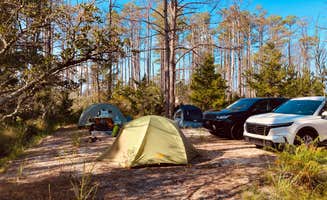

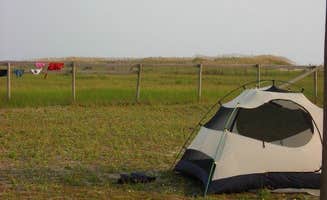

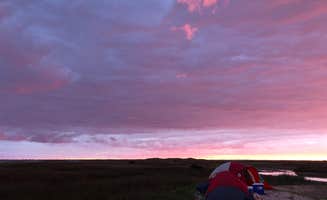

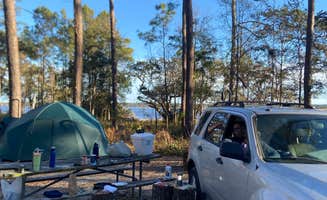







 Traveler
Great place everyone here makes you feel right at home and the views are great. Fishing is also great and plenty of bait fish to catch from the dock


 Guide
GuideQuit cute spot, definitely a popular spot as we had many people try to drive in while we were setting up and during the night while we sleep, people before left trash, nails and liquor bottles, our dogs had a good time exploring
GuideDifficult to find( use SR1154 rt to 181 follow brown sign for campground 1 mi down dirt rd Rec.gov instructions wrong This is reservation or FF no scan to pay you have to go to host to scanQR but then pull out this orange ticket hidden in a green metal stand No Instructions! Then tear off back and put it back in this covered silver slot on stand. Before that you have to go to rec.gov, scan the qr code the host has get the confirmation no and put on the orange ticket you fill out and put in the mystery slot. Only the host knows what is available cant go by reserved on the site posts
 Traveler
Me and my family love camping, we try to go 15 to 20 times a year, we have been patronizing a very reputable campground for the last 15 years, due to management issues, we decided to seek out other campgrounds. We found magnolia lane and tried it for one weekend. Fell in love with it. Very peaceful. Very friendly and everything in the campground is what met our standards, we have now made magnolia Lanes are permanent campsite. We try to come here every chance we get! We enjoy the natural scenery, swim in the lake, and enjoy the friendly atmosphere of campers and management. We don't slander this campground due to the extent of they are a family-owned campground. They are small but they do everything they possibly can to make you feel at home. The rates are amazing compared to other campgrounds, the only thing that I wish for is that I was retired and can come every single weekend. Other than that, there's nothing else I could ask for and everything is spot on. Thank you magnolia campgrounds for what you do for us as a family, and what you put forth to make us feel at home!
 Traveler
We continue to book here for the convenience of being near all that the island offers. Full hook up sites are available and being here for more than 3 days is always a great idea. No honey wagon needed.
TravelerGreat fishing spot we really enjoyed our stay the management team went out of there way to help us even in the late hours as we spur of the moment rented a spot here.
 Guide
GuideI love this spot. Easily accessible and you basically have your own personal little beach here.
GuideSo the spot for the actual coordinates, you will need a 4x4 to get to. I do so it was no problem getting there. The vegetation on the trail is pretty tall so take your time and there are about 5 muddy spots you will go through apparently even when it is dry everywhere else. The “recreation area” is a joke. It’s pretty much completely overgrown except a spot just big enough to drop your boat in. Overall for those of us that like out of the way places it’s pretty good here though. I’m not sure if you can camp in the rec area. I don’t see any signs but there’s a boat ramp here and usually you can’t camp next to those. Oh and my video is of me coming back out of the woods to the rec area. The road getting to there is actually gravel.

 Scout
ScoutClean and well-maintained. It has a small lake with a swimming beach and some nice walking trails. Great for the crowd that is interested in the more natural style of camping as opposed to places like KOA.
Camping spots near Gloucester, North Carolina span across mainland and barrier islands with varied water access. The Core Sound region receives 50-55 inches of rainfall annually, creating lush maritime forests and active marshlands. Weather patterns shift dramatically from mainland to barrier islands, with stronger winds and more extreme temperature fluctuations on the outer banks campsites.
Beach exploration and shell collecting: South Core Banks offers miles of undeveloped shoreline for beachcombing. "Prettiest water I've seen in NC, can be compared to the Caribbean! Fresh water and restrooms on island. Camp anywhere 100ft from buildings," notes Trey H. at South Core Banks Beach Camping.
Fishing in varied waters: Cedar Creek Campground provides boat launch facilities and access to prime fishing spots. "Fish were hitting 2 Klicks north of the marina," reports David B., highlighting the productive waters near this Sea Level campground.
Wildlife observation: Paddle through marshes and estuaries to spot native species. "We befriended our neighbors who took us to the lighthouse at the southern end of the island, which was beautiful!" shares Katie B. about her South Core Banks experience, where wildlife sightings are common along the shoreline.
Hiking coastal trails: Cedar Point Campground connects to the Tideland Trail system. "There is a Mountain-to-Sea path nearby as well," mentions Tiffany L. at Oyster Point Campground, where riverside paths provide forest-to-water transitions.
Solitude and seclusion: Many campers seek out barrier island locations for their isolation. "One of my favorite trips to date. Everything was amazing," shares David B. about South Core Banks, where dispersed camping allows visitors to find private spots away from other campers.
Water proximity: Waterfront sites are highly valued across campgrounds. "It's a nice little campsite by the river, the campsite was very clean, and there are a few trees providing cover," reports Jenna L. about her Oyster Point experience where direct water access enhances the camping experience.
Rustic cabin experiences: Great Island Cabin Camp offers basic but functional accommodations with coastal views. "Cabins are clean but very rustic - bathroom, bunkbeds (with clean and comfy mattresses), gas stove, stink, plastic table and chairs," explains Sarah G., noting the simplicity many visitors appreciate.
Affordable camping options: Basic sites with good amenities are available at reasonable prices. "Quiet, beautiful, cheap, great cell service. Love this place!" reports Lucy P. about Oyster Point Campground, where sites cost around $10 per night or $5 with interagency passes.
Weather preparation required: Barrier island camping means exposure to stronger elements. "We got by without 4wd, but we didn't explore beyond finding a spot not too far from the ferry drop off," explains Katie B. about South Core Banks Beach Camping, where wind and sand conditions change rapidly.
Supply limitations: Island campgrounds require bringing all necessities. "You should also prepare everything in advance - food, water, essentials. There ain't no corner market here," warns Vince Z. about South Core Banks, emphasizing self-sufficiency.
Insect considerations: Bugs can be intense in warmer months. "We loved this campground! It was so easy to access, the roads were well maintained and it was right on the coast. Only complaint is nature related and that's the bugs! The flys are insane but you'll quickly learn to ignore them," advises Hannah F. about Oyster Point.
Transportation logistics: Ferry schedules dictate access to barrier islands. "The ferry is $135+ for vehicles, plus $20 per person roundtrip. The beach driving permit is $75 unless you buy it by March," notes Katie B., highlighting the additional costs for barrier island access.
Space selection: Look for sites with natural barriers and distance from facilities. "Campground sits along a body of water, but no water access from any sites. At the entrance to campground there are hiking trails," explains Tracy R. about Oyster Point Camp, noting the need to choose sites strategically for family comfort.
Wildlife education opportunities: Incorporate natural learning experiences. "We had site 11 which was on the water side with a path to the water. It was shady for the later part of the day," shares Jody B., describing how proximity to natural features creates educational moments for children.
Alternative accommodations: Consider cabins for less-experienced family campers. "Took our ORVs on the ferry to the island and stayed in a cabin. The cabins come in different sizes but none have power. They have huts for generators to sit in to help with the noise," suggests Charli R. about Great Island Cabin Camp.
Beach safety planning: Research tide patterns before beach camping with children. "We were able to launch kayaks almost directly from campsite #11. Tent pads are big enough for 1 large tent or 2 small tents," notes Laura F., highlighting the importance of understanding water access points.
Site selection for larger rigs: Identify leveled, accessible spots before arrival. "Dirt road in and gravel on site drives. Water spigots spread out between the campsites," reports Jody B. about Oyster Point, noting the varying site conditions that affect RV placement.
Utility management: Plan for limited hookups at many locations. "Our site would fit a large rig," confirms Roger W. about Oyster Point Campground, but warns about limited utilities, adding "Maybe too forested in some spots. In site #5 at 9:00 AM we had some solar charge happening."
Local service availability: Research support services before arrival. "Not a lot in the immediate area. Town was 25-30 minutes away, but had all the types of stores," notes Jody B., emphasizing the need to plan for service needs while camping near Gloucester.
Seasonal considerations: Weather impacts RV accessibility significantly. "Great-sized RV site with plenty of additional parking. The boat launch went smoothly," shares David B. about Cedar Creek Campground & Marina, highlighting the importance of seasonal timing for water access and site conditions.
Frequently Asked Questions
What camping is available near Gloucester, NC?
According to TheDyrt.com, Gloucester, NC offers a wide range of camping options, with 66 campgrounds and RV parks near Gloucester, NC and 10 free dispersed camping spots.
Which is the most popular campground near Gloucester, NC?
According to TheDyrt.com, the most popular campground near Gloucester, NC is Oyster Point Campground with a 4.4-star rating from 25 reviews.
Where can I find free dispersed camping near Gloucester, NC?
According to TheDyrt.com, there are 10 free dispersed camping spots near Gloucester, NC.
Keep Exploring