Shinleaf Campground at Falls Lake offers primitive camping with varying levels of privacy between sites. Sites at the end of the "leaf" spurs provide more solitude than those along the main path. Each campsite includes a fire ring, picnic table, and bear-proof garbage hangers. The campground connects directly to Falls Lake via an on-site kayak and canoe launch on the property's eastern side. Several fishing varieties can be caught including walleye, crappie, bass and catfish.
What to do
Fishing opportunities: Falls Lake Recreation Area offers multiple fishing access points. According to one visitor at Rolling View — Falls Lake State Recreation Area, "Nice, big sites and plenty of good areas for swimming, hiking, and fishing. We always catch a ton of fish!!" The lake provides habitat for multiple species including bass, catfish and crappie.
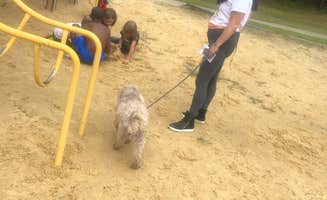
Swimming beaches: Several campgrounds maintain designated swimming areas with sandy beaches. A camper at Holly Point — Falls Lake State Recreation Area noted, "Very Family-friendly. It's best if you can get a site near the beach if you have kids Otherwise you'll end up driving them back-and-forth." Many swimming areas include adjacent playgrounds and bathroom facilities.
Quarry exploration: Beyond traditional lake swimming, the area offers unique water features. One visitor to Eno River State Park Campground shared, "Great quarry for easy cliff jumping and swimming in the summertime. Campsites around also very solid." This alternative swimming spot provides a different experience from the typical lake beaches.
What campers like
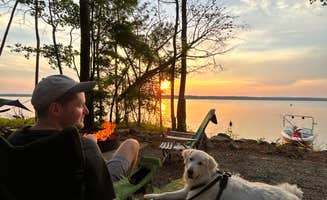
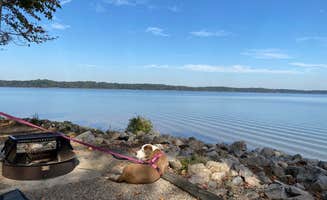
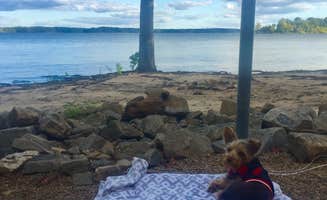
Waterfront access: Many campsites offer direct lake access for easy boat launching. At Poplar Point Campground, "Sites F36 and F40 are situated so the awning side of the camper has a direct, unobstructed view of the water." Some waterfront sites allow campers to beach personal watercraft directly at their campsite.
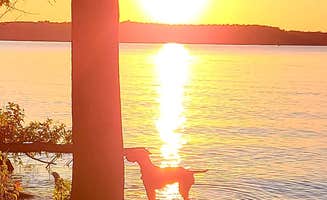
Wildlife viewing: The lakes and rivers attract diverse bird species and wildlife. A visitor to Poplar Point Campground described "Bald eagles overhead, herons by the water, and fiery sunsets" that made their stay memorable. Another camper at Rolling View mentioned the wildlife observation opportunities: "The dogs love it, the camp sites are beautiful and clean... The lake is gorgeous."
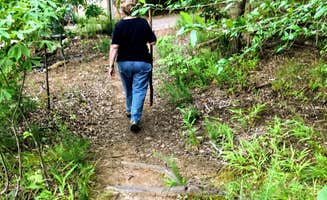
Hiking network: The extensive trail systems connect multiple recreation areas. One camper at William B. Umstead State Park Campground shared, "Primitive camping has drive in, picnic table, fire ring, tent spot, and trails starting at your back door." This connectivity allows for extended hiking adventures directly from campsites.
What you should know
Seasonal availability: Not all campgrounds operate year-round. Holly Point operates from March 15 to October 31, while B.W. Wells Campground is open March 15 to November 30. For those seeking free dispersed camping, Butner Lake WMA has specific seasonal restrictions with one camper warning, "Only open Sept 1 to Feb 28th and March 31 to May 14."
Permit requirements: Some areas require specific licenses for camping. At Butner Lake WMA, a camper advised, "All Campers MUST have a fishers/hunters license. Rangers wrote us a warning ticket for not having our own, but we are headed to Walmart to get one for about $30."
Bathroom variations: Facility quality varies significantly between campgrounds and even between loops in the same campground. A camper at Poplar Point noted, "some loops have cleaner bathhouses than others." Butner Lake WMA has no bathroom facilities, while others offer modern shower houses with hot water.
Tips for camping with families
Look for playground access: Several campgrounds feature play areas near campsites. A visitor to B.W. Wells Campground shared, "Loved that there was a playground near the site. The site itself was gravelly and not super private but it was great- the hikes around were stunning."
Consider hike-in difficulty: For tent campers with children, some primitive sites require significant hiking. At Eno River State Park, one camper noted their experience: "This camp ground requires a bit of a hike to get to (3.5 miles). Packing everything in and out was fun but there was no running drinking water at the site."
Scout swimming areas: Water access points vary in quality and safety. At Holly Point, a camper advised, "Very Family-friendly. It's best if you can get a site near the beach if you have kids Otherwise you'll end up driving them back-and-forth. lots of sites. If you're willing to not be near the beach there are some pretty sites with the lake just steps away."
Tips from RVers
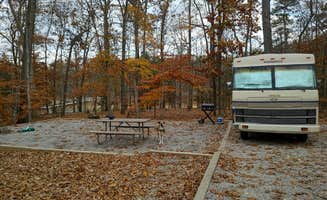
Consider site terrain: Many campgrounds feature sloped or uneven sites that require leveling. A camper at Holly Point mentioned, "Large park with a hodgepodge of level sites and not so much. Boat ramp, swim beach and a small amphitheater. No water sites with electric."
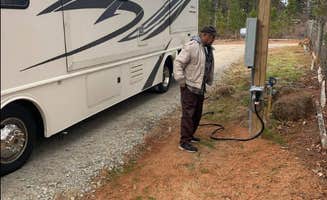
Full hookup limitations: While many campgrounds offer water and electric, sewer hookups at individual sites are limited. At Jordan Lake's Crosswinds Campground, one visitor noted, "this campground is pretty great except for two things. there is no septic on your site, and they lock the gate after a certain hour. if you need something or arrive after hours you are out of luck."
Urban alternative: For those seeking convenient access to Raleigh with full hookups, the North Carolina State Fairgrounds offers an urban camping option. "This is a very large campground that can accommodate any size RV. They do not allow tents. All sites are gravel, but are quite level. I pulled in, and didn't have to adjust anything."











 Legend


