





Roger V. Traveler
Allaben Primitive Campsites
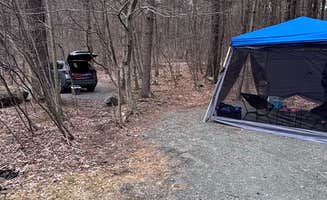
only a handful of spots but very nice
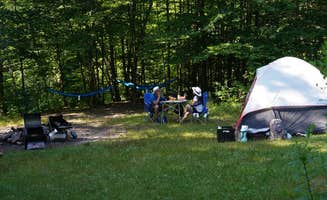
beautiful quiet space, great home base for the Catskills and small towns around here. note there's only a few spots. road conditions were fine.
16 campgrounds · Check availability for any dates.
The Catskill region of New York features a diverse array of primitive camping options, with most sites concentrated in state forests and along waterways. Echo Lake stands out as a highly-rated backpacking destination with tent sites circling the water and a lean-to at the trailhead. Nearby, Allaben Primitive Campsites and Denning Trailhead offer dispersed camping opportunities for those seeking a more remote experience. Most camping areas maintain a rustic character, with limited or no facilities, making them ideal for self-sufficient campers prepared for primitive conditions. The region's mix of drive-in, walk-in, and hike-in access points accommodates various camping styles, though RV options remain limited to smaller vehicles at select locations.
Road conditions vary significantly throughout the area, with many sites accessible only via unpaved forest roads that can become challenging after rain. As one camper at Duck Pond Campsite noted, "The road in was pretty rough... the years taken off the life of my truck was not worth it. Intermittent cell service was frightening while driving on these rough roads." Winter camping is possible at some locations, with a visitor to Burnt Rossman State Forest reporting it was "a great location for winter camping. Site easily accessible from road." Most dispersed sites follow the standard 150-foot rule, requiring campers to set up at least 150 feet from trails, roads, and water sources. Bug pressure can be significant, especially near lakes and in low-lying areas during warmer months.
Waterfront camping receives consistently high ratings from visitors, with Echo Lake earning praise for its "tent sites around the whole lake with fire pits." However, crowding can be an issue at popular water-adjacent sites, with one camper noting, "It does get a little crowded later in the day so you may have to share space with others and it can be a little noisy at night." More remote options like Betty Brook Camp offer streamside camping with fewer crowds, where "sometimes you never see anyone." Fire rings are common at established sites, though amenities are minimal. Leave No Trace principles are emphasized throughout the region, with most areas requiring pack-in, pack-out practices for all waste. The combination of accessibility and remoteness makes the Catskill camping experience appealing to those seeking nature immersion without traveling far from urban centers.
"There are tent sites around the whole lake with fire pits and 1 lean-to site at the end of the trail when you first arrive at the lake. The sites are relatively flat and well shaded with trees. "
"Lake is surrounded by hills and there is a small lean two with a few campfire spots."
"Lean-to is right on the overlook trail so a lot of hikers passing by."
"Lean-to is just off the Mink Hollow trail near the Devil's Path there is an outhouse near lean-to. A reliable piped spring is a quarter mile away."
"Between Sage's Ravine and Jug End Road there are five backcountry campsites on the Appalachian Trail."
"Trash cans, but carry out is preferable."
"Near non-potable stream, no fires allowed, bathroom is fine, bear boxes available. 50 feet between platforms. Right over the border of CT into MA on the Appalachian Trail."
"beautiful quiet space, great home base for the Catskills and small towns around here. note there's only a few spots. road conditions were fine."
"Nice spot right off the main road and close to town. Small pond-don’t think there are any fish. Picnic table. Fire pit with cooking griddle. Trails to the fishing access across the road."
"99% off people don't even know this area exists. If you want a quiet piece of beautiful forest to truly rough it and go camping for a few days, then this is what you have been looking for."
"This spot is easy to find and access, and had decent ATT service. There's only a few spots, and the road is narrow with not much turnaround room, I wouldn't recommend for trailers or RVs."
"Great camping spots about 1.5 mile hike in from Denning Trailhead. A lot of spots right by the river. Great spot to camp and then wake up to hike to tabletop/ peekamoose mountain."
"Was a great location for winter camping. Site easily accessible from road. Beautiful, peaceful, great time!"
"Entrance is soft"
"After driving unpaved dirt road for a while, we arrived a surprisingly well maintained beautiful campsites. The pond is small so the mosquitos were not too bad."
"Intermittent cell service which was frightening while driving on these rough roads"
Travelerbeautiful quiet space, great home base for the Catskills and small towns around here. note there's only a few spots. road conditions were fine.
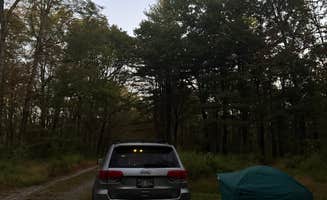
TravelerArrived at night on a weekday to find two other vehicles parked in the lot, srilll was able to find a fire ring with a level area relatively easy. Very quiet, just the sounds of owls hooting at night. Very nice mixed forest, seems managed well. It is somewhat buggy. But doesn’t seem to be overly infested with ticks at least.

 Ranger
Between Sage's Ravine and Jug End Road there are five backcountry campsites on the Appalachian Trail. Sage's Ravine Laurel Ridge Race Brook Falls (with a shelter) The Hemlocks (with a shelter) Glen Brook (with a shelter) After descending Mt. Everett, you descend to Guilder Pond State Park. It is a day use park with trash cans and in season it also has a porta potty and a few picnic tables. No camping besides those already mentioned, which are all A.T. campsites. Jug End Road allows overnight parking (often used by folks hiking the A.T.) but I wouldn't classify that as dispersed camping unless you just need a place to pull over and sleep for a night. Each site mentioned, with the exception of Race Brook, is no more than .2 off the A.T.
 Scout
Lean-to is just off the Mink Hollow trail near the Devil's Path there is an outhouse near lean-to. A reliable piped spring is a quarter mile away.
ScoutLean-to is right on the overlook trail so a lot of hikers passing by.
 Guide
Cool spot next to a pond. There are a few others that aren’t next to a pond, and therefore not as cool… but still pretty cool bc it’s free and you can walk up a little to a pond.
GuideThere was a bunch of signs that said no parking so we parked at the entrance to the trailhead. The area itself is beautiful but I believe it is more for tent camping versus cars, overlanding vehicles and RVs.
GuideThis spot is easy to find and access, and had decent ATT service. There's only a few spots, and the road is narrow with not much turnaround room, I wouldn't recommend for trailers or RVs.
 Traveler
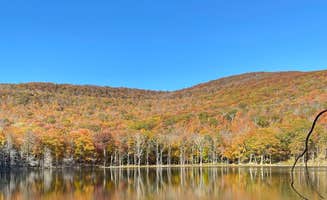
Lake is surrounded by hills and there is a small lean two with a few campfire spots. Other campsites are scattered and require navigating through small overgrown trails (wear pants) We camped on the hill with a beautiful view of the whole lake and breeze.
Dispersed camping near Catskill, New York offers numerous backcountry sites located in state forests at elevations ranging from 1,000 to 3,000 feet. Most primitive campsites follow the New York State Department of Environmental Conservation regulations which permit camping on state land below 3,500 feet and at least 150 feet from any road, trail, or water source. Winter temperatures in the region regularly drop below freezing from November through March, requiring specialized cold-weather gear.
Hiking to mountain summits: Denning Trailhead provides access to challenging trails leading to Catskill peaks. "Great camping spots about 1.5 mile hike in from Denning Trailhead. A lot of spots right by the river. Great spot to camp and then wake up to hike to tabletop/ peekamoose mountain," explains Ali B., who notes that additional shelter is available near the summit.
Stream fishing: Betty Brook Camp offers streamside camping with easy access to fishing spots. Robert B. describes it as "Remote. Sometimes you never see anyone. Sometimes you see some people. You camp on the stream. There is a couple of spots." The brook contains native brook trout and is stocked seasonally.
Trail exploration: Taconic Hereford Multiple Use Park features extensive trail networks through protected forests. "There is plenty of trails to explore and wildlife to enjoy, especially since these over 900 acres also back up to another huge plot of protected forests," shares Doc B., highlighting the extensive opportunities for day hiking.
Wildlife observation: Morning hours at Duck Pond Campsite provide opportunities for birdwatching and spotting local wildlife. "The pond is small so the mosquitos were not too bad. So few people passed by and very unknown quite and we just loved the experience," reports Yae U., describing the peaceful setting conducive to wildlife viewing.
Privacy between sites: Betty Brook Camp receives praise for its seclusion and quiet setting. Peter notes, "It is rather remote, but it is right along West kill road. There's a stream alongside it, a fire pit, and a town about 8 mi away. It's a small town, with just a gas station store."
Year-round accessibility: Burnt Rossman State Forest provides camping options during colder months. "Was a great location for winter camping. Site easily accessible from road. Beautiful, peaceful, great time!" reports felix R., confirming the area remains usable during winter months when many developed campgrounds close.
Stream sounds: Streamside camping sites provide natural white noise that enhances sleep quality. "You camp on the stream," states Robert B. about Betty Brook Camp, highlighting how the proximity to moving water creates a natural soundscape that masks other noises and enhances the camping experience.
Cell service in remote areas: Despite the wilderness feel, several sites maintain basic connectivity. At Taconic Hereford Multiple Use Park, Doc B. notes, "Less then 10 min drive from town, but hiking in and finding a suitable place to make camp has the feeling of the wild, with the safety of having full cell service."
Road condition challenges: Access to many dispersed camping areas involves unpaved forest roads that can deteriorate in wet conditions. Yae U. advises about Duck Pond Campsite: "After driving unpaved dirt road for a while, we arrived a surprisingly well maintained beautiful campsites... Just be careful driving in the sometimes rough conditions."
Vehicle size limitations: Many dispersed sites cannot accommodate larger vehicles. Tim M. warns about Taconic Hereford Multiple Use Park: "There's only a few spots, and the road is narrow with not much turnaround room, I wouldn't recommend for trailers or RVs."
Limited amenities: Most sites have fire rings but few other facilities. At Allaben Primitive Campsites, Breanne H. found "Nice spot right off the main road and close to town. Small pond-don't think there are any fish. Picnic table. Fire pit with cooking griddle."
Seasonal bug pressure: Insect activity varies by location and season. Kate notes about Echo Lake: "it can get swampy near the edge of the lake so you may want to bring bug spray." This reflects the typical conditions around water sources throughout the Catskills.
Shorter access options: Allaben Primitive Campsites offers easier access for families with young children. "Nice spot right off the main road and close to town," notes Breanne H., mentioning "Trails to the fishing access across the road" that provide recreation without lengthy hikes.
Safety considerations: Cell service reliability varies throughout the region. The L. cautions about Duck Pond Campsite: "Intermittent cell service which was frightening while driving on these rough roads," highlighting the importance of emergency preparedness when camping with children.
Water access: Sites near gentle streams or small ponds provide natural play areas. Betty Brook Camp includes stream access that allows for shallow water exploration, while Allaben features a small pond suitable for young visitors.
Weather preparedness: Mountain weather can change rapidly at higher elevations. Temperature differences between valleys and ridges can exceed 15°F, requiring families to pack additional layers even for summer camping trips.
Clearance requirements: The L. advises about Duck Pond Campsite: "The road in on old cemetery rd was pretty rough, so we decided to go out the other way, which was way worse... the years taken off the life of my truck was not worth it." This highlights the importance of high-clearance vehicles for many dispersed sites.
Smaller rigs only: Compact RVs and truck campers have more options in the area. Tim M. observes about Taconic Hereford: "This spot is easy to find and access... There's only a few spots, and the road is narrow with not much turnaround room, I wouldn't recommend for trailers or RVs."
Limited turnaround space: Many forest roads lack suitable areas to turn larger vehicles. At Betty Brook Camp, Peter advises, "I would not recommend this for large trailers. The site is fairly small, but it's in state park, and there's tons of walking that can be done."
Seasonal road conditions: Winter and spring can make access more challenging. The Burnt Rossman State Forest campsite review from felix R. mentions it being "easily accessible from road" during winter, but notes that conditions vary seasonally.
Frequently Asked Questions
What permits or regulations are required for dispersed camping in the Catskills?
Dispersed camping in the Catskills generally follows New York State DEC regulations. At Taconic Hereford Multiple Use Park, primitive camping is allowed without permits for stays under 3 nights and groups under 10 people. For longer stays or larger groups, a free permit from the forest ranger is required. Standard regulations include camping at least 150 feet from water sources, roads, or trails. Duck Pond Campsite and similar areas require adherence to Leave No Trace principles. Fire restrictions may apply seasonally, especially during dry periods. Always check with the local DEC office before your trip, as regulations can change. Some areas prohibit camping entirely, like Jug End in Massachusetts, so verify before setting up.
What is the best season for dispersed camping in the Catskills?
Late spring through early fall offers the best conditions for dispersed camping in the Catskills. Summer provides full access to areas like Burnt Rossman State Forest - Westkill Camp, though some sites can become buggy and swampy after rainfall. Fall brings spectacular foliage and fewer insects. Winter camping is possible for experienced campers, as noted at Burnt Rossman, but requires proper cold-weather gear and preparation. Spring can be beautiful but often muddy with difficult access roads. Betty Brook Camp and similar remote sites may have challenging road conditions in wet seasons. Always check weather forecasts and road conditions before heading out, particularly for sites accessed via unpaved roads that can deteriorate quickly in adverse weather.
Where are the legal dispersed camping areas in the Catskills?
Legal dispersed camping in the Catskills can be found in several designated areas. Echo Lake offers primitive sites around the lake with fire pits and a lean-to at the trail entrance. The sites are relatively flat and well-shaded. Another option is Hemlock Ridge MUA Dispersed, which provides 80 acres of forest where camping is permitted 150 feet from the trail. Following Leave No Trace principles is essential at all dispersed sites. Other legal areas include Burnt Rossman State Forest, Betty Brook Camp, and Duck Pond Campsite. State forests throughout the Catskills generally allow primitive camping at least 150 feet from water sources, roads, or trails, unless otherwise posted.
Keep Exploring