The elevation around Incline Village-Crystal Bay ranges from 6,350 to 9,700 feet, creating variable camping conditions throughout the year. Winter camping options remain limited due to heavy snowfall averaging 125 inches annually at lake level. Most campgrounds near Lake Tahoe operate seasonally from May through October with closures during colder months.
What to do
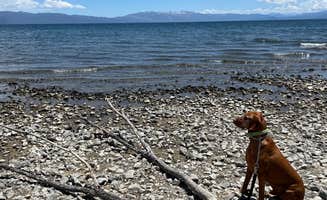
Waterfront activities at Lake Tahoe: Zephyr Cove Resort offers direct access to Lake Tahoe beaches with opportunities for swimming, boating, and fishing. A camper notes, "Crossing the highway to the lake you'll find the lodge with great bloody Mary's and full service restaurant. The beach boasts great views and ferry rides with jet ski rentals."
Hiking Mount Rose: Several trails start near the Mount Rose Campground at 8,900 feet elevation. "Super friendly camp hosts. You can float from one end of the campground down to the other end or keep going if you can find a ride (Uber) back to the campground," mentions one camper who enjoyed the nearby river activities.
Winter camping options: Some areas offer year-round access despite seasonal closures elsewhere. At Washoe Lake State Park, "Winter camping is available on Loop A with full power hookups on a first come, first serve basis. Bathrooms are open all winter. Hiking is nice right from the campground and wild horses graze not far away."
Alpine lakes exploration: Beyond the main lake, smaller alpine lakes provide quieter experiences. "The lake, oh my, maybe the most beautiful lake in the entire Tahoe region. It isn't as big, but it is flat like glass, deep, and crystal clear," writes a visitor about Fallen Leaf Campground's adjacent lake.
What campers like
Wildlife viewing opportunities: Many campgrounds offer chances to see native wildlife. At Washoe Lake State Park, visitors report, "Beautiful spot 1/2 mile walk to lake, wild horses roaming camp, quiet & clean." Bear sightings are also common in the region.
Spacious campsites: General Creek Campground at Sugar Pine Point State Park provides well-spaced sites. One camper noted, "Lots of space and privacy between campsites. Close to Lake Tahoe. About 1 mile walk to the beach. We like taking our bikes."
Access to bike paths: Several campgrounds connect to regional bike trails. A camper at William Kent Campground shares, "Conveniently located within walking distance of a lot of different places. Beautiful campground. Only enough parking for one car per a spot."
Clean facilities: Campers frequently mention well-maintained restrooms and showers. "The whole campground is just so clean... I give this campground 5 stars. It's just impeccable," reports one visitor about their experience at Washoe Lake State Park.
What you should know
Highway noise impacts: Several campgrounds sit close to major roads. At Granite Flat Campground, "The Highway is loud during the day, that's the only downfall from this beautiful spot." Another reviewer adds, "This is a nice little campground to stay in while passing through. For longer stays I prefer sites that are off the beaten path and not right on the highway."
Winter closures and seasonal limitations: Most campgrounds close during winter months. William Kent Campground operates from "May 5 - Oct 11" according to information from the campground.
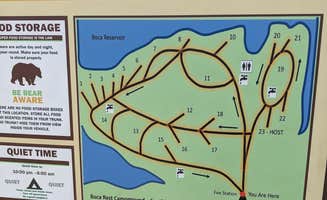
Bear-safe food storage requirements: All campgrounds in the region require proper food storage. "We were lucky enough to see a mama and two cubs across the river from us," notes one camper, emphasizing the importance of using provided bear boxes.
Limited availability during peak season: Advanced reservations are essential. "It is hard to get a site. Be ready. Set alerts," advises a camper about popular locations like Fallen Leaf Campground.
Tips for camping with families
Best swimming areas for children: Look for campgrounds with shallow, protected swimming areas. D.L. Bliss State Park Campground offers "Beautiful sandy shores with glacier clear water at the lake," though a reviewer warns that the water is "Cold as an icicle–colder."
Family-friendly hikes: Several short trails accommodate younger hikers. "Hiking trails right out of camp. Rushing river to the west," notes a Fallen Leaf Campground visitor, describing accessible nature exploration options.
Sites with natural play areas: Some campgrounds provide more space for children to explore safely. "The sites have bear boxes and even though they are very close to each other with little separation, they are big sites with lots of tall trees," reports a reviewer about D.L. Bliss State Park Campground.
Educational opportunities: Certain campgrounds offer wildlife viewing and learning experiences. At Olde LYFE Alpacas, "Stacey, the owner of the alpacas ranch, was very welcoming and friendly! There were so many alpacas, all very cute and friendly!"
Tips from RVers
Hookup availability: Only select campgrounds offer full hookups. At Washoe Lake State Park, "Large sites with water and electricity (loop A). Beautiful views of the mountains. Lots to do in the area."
Leveling considerations: Uneven terrain requires preparation. "The sites are a good size but kinda close to one another. Rangers are friendly and often stop by just to see how things are going," notes a visitor to Davis Creek Regional Park.
Dump station locations: Not all campgrounds have onsite facilities. "Dump station? - yes. Water fill? - yes. Clean site? - yes, impeccable and level," confirms a reviewer about facilities at Washoe Lake State Park.
Winter camping for RVs: Limited options exist for cold weather camping. A camper reports, "We paid $25 instead of the full $30 required for an out-of-state vehicle at a hookup site. I think $5 was taken off since the water at the sites was still shut off."








 Ranger


