Tent camping near Caliente, Nevada offers rugged backcountry experiences at elevations ranging from 4,400-6,000 feet in the high desert terrain of Lincoln County. The region experiences significant seasonal temperature variations with summer highs frequently exceeding 95°F and winter overnight temperatures dropping below freezing. Most dispersed camping areas require campers to be fully self-sufficient with food, water, and waste management.
What to do
Rock climbing opportunities: Veyo Pool and Crawdad Canyon, located about 90 minutes from Caliente, provides unique camping with climbing walls directly beside camp spots. "Camp almost directly at the base of your climb," notes Christina S., who adds that the location features "a fully finished spring-fed pool, concession area, flushable toilets and hot showers."
Spelunking adventures: Whipple Cave offers underground exploration for experienced adventurers. "You can enter the cave by rappelling down 70 feet. Once at the bottom, you can embark on a 2 mile spelunking adventure," explains Alex B. The cave requires technical equipment including "a 165 ft rope and headlamps" plus rope-climbing skills.
Off-road exploration: Many campers use the dispersed sites as starting points for backcountry vehicle trips. At Chief Mountain West, Jake C. notes it's "a perfect spot" if "you bike or have an off-road vehicle." The area contains numerous unmaintained dirt roads requiring appropriate vehicles.
What campers like
Wildlife viewing: The public lands around Caliente support diverse wildlife populations. Chief Mountain West provides opportunities to observe wild horses in their natural habitat. Joel C. reports, "We saw quite a few wild horses too! There is a lot of stuff to explore in this area, especially if you have a 4x4 or SxS."
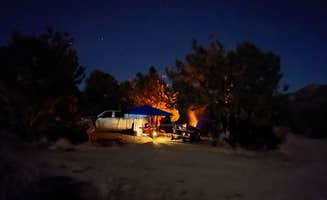
Star gazing conditions: The remote location creates exceptional night sky viewing due to minimal light pollution. The area around Chief Mountain West offers "very dark area so lots of stars," according to Joel C., making it ideal for astrophotography and constellation observation.
Solitude and isolation: Big Rocks North provides genuine backcountry camping with minimal development. Michael H. explains, "It's a great place for isolation, we encountered a couple hunters scouting the area." Most dispersed sites offer significant distance from other campers.
What you should know
Seasonal temperature considerations: The high desert climate creates extreme temperature swings even within a single day. Michael H. warns about Big Rocks North: "If you are going in winter the shade from the canyon starts at 3pm and the temperature drops real fast once you are in the shade."
No cell service: Most camping areas have zero connectivity. Michael H. notes at Big Rocks North there is "no water or toilets and zero cell reception." Prepare for complete digital disconnection and bring necessary navigation tools.
Campfire restrictions: Fire regulations vary seasonally and by location. While fires are permitted at some sites, summer fire bans frequently restrict open flames during peak dry season. Check current BLM fire restrictions before your trip.
Tips for camping with families
Swimming options: Veyo Pool and Crawdad Canyon offers developed water recreation for families. Aaron W. calls it "kids favorite camp spot. Plenty of things to do," though he cautions about limited privacy as "people walked through our camp constantly."
Family-friendly state park: Ranch Camp at Spring Valley State Park provides more structured camping opportunities for families with children. Brittney C. endorses it as "Family-friendly camping for sure and the rangers come by regularly."
Wildlife viewing for children: Multiple camping areas offer opportunities for supervised wildlife observation. Brittney C. describes Spring Valley as having "Bird watching at its finest and deer running through," providing educational opportunities for young campers.
Tips from RVers
Site selection for larger vehicles: Many dispersed camping areas have limited space for larger recreational vehicles. Chief Mountain West accommodates larger vehicles but requires careful site selection on level ground.
Supply planning: The remote nature of most camping areas requires complete self-sufficiency. Jake C. advises about Chief Mountain West: "It's operated by BLM so it off grid and dispersed. Make sure you bring supplies."
Weather preparation: RV campers should prepare for significant temperature fluctuations and potential wind. Secure loose items around campsites as afternoon winds frequently increase in strength, particularly in open valley locations.






 Legend


