St. Croix River valley camping offers travelers multiple options for equestrian and general camping within 30 minutes of Taylors Falls. The area sits at approximately 900 feet elevation in Minnesota's hardwood transition zone, where northern coniferous forests blend with southern deciduous woodlands. Summer temperatures average 70-85°F, making it ideal for camping from May through October, though mosquitoes can be significant in June.
What to do
Explore riverside trails: Wild River State Park Campground connects visitors with diverse terrain for hiking and wildlife viewing. "We spent an entire day hiking and it was decent hiking along the river, some of the trails where a little confusing and trying to figure out where we at, but we made it just hiked a little further than we wanted to," reports Kate H.
Canoe the St. Croix: Experienced paddlers can access multiple waterways. "Watching the sun rise over the river and fog roll over th water and evaporate while eagles soared was truly magical. Having an easy backpack in site surrounded by water on two sides and with views of the sunrise and sunset like this was so incredible," shares Sarah D. about the Deer Creek site.
Visit scenic viewpoints: The region offers elevated vantage points. "We snowshoed and skied. I really enjoyed the snowshoe hike along the St Croix River and watched the full moon rise," notes Joanna B., who visited St. Croix State Park during winter.
What campers like
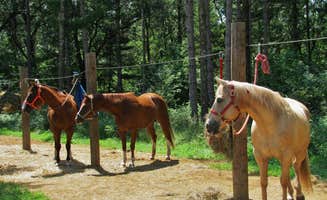
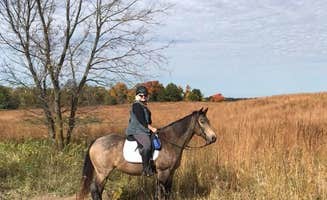
Spacious equestrian accommodations: Horse-friendly campgrounds near Taylors Falls provide room for trailers and animals. "There are a bunch of things to do including hiking, horseback riding, swimming in their filtered pond, boating and an insane playground," explains Steph H. about Lake Elmo County Park Reserve.
Privacy between sites: Many campers appreciate the secluded nature of camping in this region. "The campground was very nice. The sites are private, couldn't see any neighbors as there are a lot of trees. The park rangers were very helpful and informative," remarks Stephanie H. about her experience at Wild River State Park.
Year-round access: Several parks maintain winter camping options. "We planned on attending their candlelight ski and decided to camp. The campground was fully reserved but was empty, the low was 10 so people must have bowed out," shares Joanna B., who enjoyed winter camping despite cold temperatures.
What you should know
Insect preparation essential: Mosquitoes and ticks are prevalent in warmer months. At St. Croix State Park, one visitor noted: "We camped with our in laws and 3 kids this past weekend... There were HOARDS OF MOSQUITOS. We used 40% deet spray and fogged our campsite 3x over the 3 days so we could reduce the bites."
Water access varies: Not all campsites provide direct water access. "The beach is nice and private, but it's a bit of a hike from the campsites. I'd recommend just hopping in the car and driving over if you've got young kids with you," advises Emily H. about Ann Lake in Sand Dunes State Forest.
Reservation strategies: Peak season requires advance planning. "We went on a busy summer weekend. Beautiful rustic campsites but even sites that you can't drive directly up to were still too close to all of the RVers with loud generators," notes Chris D. when describing Ann Lake's popularity during summer months.
Tips for camping with families
Look for educational programs: Many parks offer nature activities. "We DID have fun doing some of the activities like hunting for insects/animals in the pond with the ranger, hiking to the ranger tower, playing at the playground, and trying to catch butterflies with the ranger," shares Sara P. about her family visit to Riverview Campground.
Consider recreation amenities: Some campgrounds feature special facilities for children. "If you simply look at the list of amenities this park has, nature lovers would be quick to turn their nose up at it as an overly-commercialized playground. It has a golf course, a restaurant is on the grounds, there is a stable with horses/ponies that you can take guided trail rides on, a water park..." describes Krista T. about Bunker Hills Regional Park.
Choose sites based on season: Family camping comfort depends on weather conditions. "There is an automated self-service station that accepts cards, or you can put cash in the drop box, a daily pass in 2021 is $6 and an annual pass is $30. It truly felt like a state park, and it's definitely bigger than some of them," explains Krista T. when detailing access procedures.
Tips from RVers
Equestrian sites may accommodate non-horse RVs: When main campgrounds are full, consider alternative areas. "There is an equestrian campground about a half mile before the main campground entrance. You may camp in the equestrian area (E1-E10) without a horse if the main area is full," explains Mary S. about Highland Ridge.
Plan for varying hookup availability: Electrical service varies by site. "We accidentally selected a site without electric, but if we had taken more time to use the website and enter search criteria, we could have found one with electric," shares a reviewer named Laurel who stayed at Highland Ridge.
Check site accessibility: Terrain challenges affect larger vehicles. "30' class C motor home. Some overhanging branches on the road in scrape the top and sides. Campsites are nice, mowed, gravel parking," notes Andy L. about site conditions at Ann Lake.





 Legend


