Shawnee National Forest spans 280,000 acres of southern Illinois between the Ohio and Mississippi Rivers. The region features sandstone bluffs, limestone formations, and dense hardwood forests with elevations ranging from 350 to 1,064 feet. Spring and fall offer moderate temperatures with nighttime lows dropping into the 40s, making proper bedding essential for campers.
What to do
**Fishing access: **Many campgrounds near Shawnee provide lake access with productive fishing opportunities. Dutchman Lake Camp offers "plenty of dispersed camping on a well maintained dirt road" with "decent fishing" according to Jonathan H., who spent a weekend at the lake. The small lake provides a peaceful setting for anglers seeking crappie and catfish.
Trail exploration: Shawnee Forest Campground features "paved trails around the large CG area" that connect to forest routes. According to Scott B., the campground has "a great paved walking trail to stretch our legs and walk the dog." These trails provide less challenging options for casual hikers compared to the more rugged forest paths.
Wildlife viewing: Ferne Clyffe State Park offers excellent birding and wildlife observation. As Bill M. notes, visitors can enjoy "beautiful area...hiking, birding, nature!!" The park's limestone cliffs and seasonal waterfalls create diverse habitats for woodland species. Evening visits often reward patient observers with firefly displays, as Stephanie S. reports: "Once darkness hit the fireflies in the forest were magnificent!"
What campers like
Clean facilities: Deer Ridge Campground maintains well-kept bathroom facilities despite its rustic setting. As Robert W. notes, the campground is "convenient, clean" with "trails from Campground." The shower facilities receive regular maintenance, and water pumps throughout the campground provide reliable access to drinking water.
Quiet atmosphere: Despite its proximity to Interstate 24, Shawnee Forest Campground offers a relatively peaceful environment. Jessica T. describes it as feeling "pretty secure and tranquil" with only "a little noisy at night with the interstate in the distance." The campground's layout and mature trees help buffer highway noise.
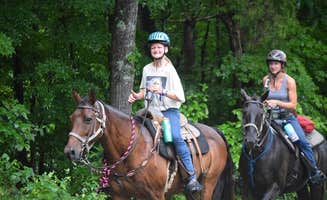
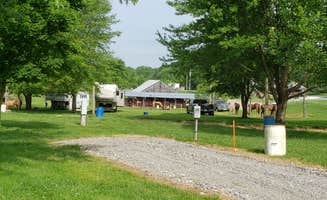
Equestrian facilities: For horse owners, Little Lusk Trail Lodge provides specialized equestrian accommodations. Dana W. describes it as "the most Spacious and beautiful equestrian campground in southern IL" where visitors can "bring your horses, or just come and camp and stay in the lodge." The property includes an arena and event barn that can be reserved for special functions.
What you should know
Site conditions vary: Campsites at Shawnee Forest Campground have inconsistent leveling. MickandKarla W. report that "our site was not level and with all the rain we had, there were water puddles at the steps" and advise "there are some nice sites in this CG but we were not offered one of the better ones...If we come back, we'll know where to ask for a site."
Reservation systems: Many campgrounds operate on first-come, first-served basis with limited online booking options. At Crab Orchard National Wildlife Refuge, Tracie E. notes that "all sites are FC/FS" and "appears many locals take spots on the weekends & then hold onto them during the week." Planning midweek arrivals improves site selection chances.
Primitive camping options: For those seeking more remote experiences, dispersed camping areas require minimal preparations. Katie B. describes Dutchman Lake Camp: "We pulled in around midnight and left at 8 am. There's a large turnaround that could fit many vehicles...very peaceful! No bugs." These areas lack amenities but provide direct forest access.
Tips for camping with families
Lake activities: Crab Orchard Lake provides family-friendly water access and spacious campsites. Joel R. describes it as a "great family campground" with "nice campground, right on Crab Orchard Lake. Large sites, lots of room." The shoreline access allows for swimming and water play during summer months.
Trail difficulty: When hiking with children, consider trail ratings carefully. At Giant City State Park, Shana D. recommends "The Giant City Nature Trail and Devils Standtable were really pretty, easy strolls. The Trillium Trail is a little more rugged for those who prefer less crowded, slightly tougher trails." These easier options accommodate younger hikers while still showcasing unique rock formations.
Wildlife education: Ferne Clyffe State Park offers educational opportunities through natural features. According to Anton T., the area "is situated on a limestone bluff which is cut by a small rivulet and some seasonal small waterfalls" that can serve as hands-on geology lessons. Children particularly enjoy exploring the natural canyon with its distinctive formations.
Tips from RVers
Hookup placement: At Shawnee Forest Campground, hookup locations require planning. MickandKarla W. note that "The water and electric(50/30/20 AMP) are at the back of the gravel pad. There are two sewer hookups, which was nice." Bringing extension cords and longer hoses ensures proper connections regardless of site layout.
Internet access: Connectivity varies throughout the region. At Shawnee Forest Campground, MickandKarla W. report that "Their WiFi was very good. We got two bars on Verizon." However, other campgrounds have limited or no service, so download maps and information before arrival.
Size restrictions: Not all campgrounds accommodate larger RVs. For instance, at Deer Ridge Campground, Brennan M. observed it was "very RV heavy" but cautions about site sizes and terrain. For big rig owners, calling ahead to verify turning radius and pad dimensions prevents arrival complications.




 Traveler


