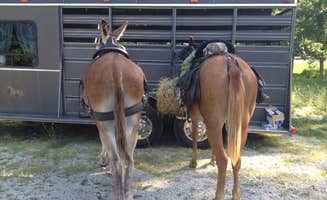
Carlyle Lake offers several options for equestrian camping within driving distance. This 26,000-acre reservoir is Illinois' largest manmade lake, created by the U.S. Army Corps of Engineers. Located about 50 miles east of St. Louis, the region has a humid continental climate with warm summers and cold winters, making spring and fall ideal for horse camping trips.
What to do
Fishing spots: South Sandusky Campground provides excellent access to Rend Lake. "There is a dump station, flush toilets, showers, a sand beach, boat ramp, 2 picnic shelters, a paved bike trail, and playgrounds," notes Joel R., making it convenient for anglers.
Trail riding: While horse facilities are limited directly at Carlyle Lake, equestrian enthusiasts can find trails within a short drive. Stephen A. Forbes State Recreation Area offers trail connections worth exploring. "Main trail was nice but could be better marked. Lost our way a few times but still a good hike," reports Tracie E., highlighting the need for careful navigation.
Wildlife viewing: The conservation areas around Carlyle Lake support diverse animal populations. "Never been to a CG with such abundant wildlife! Can sit at your spot and watch deer throughout the day," writes Lucas T. about Wayne Fitzgerrell State Park Campground, located about an hour from Carlyle Lake.
What campers like
Spacious campsites: Many campgrounds near Carlyle Lake provide ample room between sites. "Big, spacious campsites with really pretty, big trees for lots of shade," writes Heather S. about Dam West Spillway, adding that "bathroom and shower facilities are FABULOUS, and super clean."
Clean facilities: Gun Creek maintains well-kept amenities. "We've Camped At Gun A Few Times Now And Have Had A Great Experience Every Time!!" says Dave S., reflecting the consistent quality that keeps campers returning.
Lake views: Water access is a major draw for the region's campgrounds. One camper at South Sandusky described their experience: "Had a lake front site with beachfront access. It was flat ground, everyone was so nice and it was so clean and the area was lovely."
What you should know
Seasonal operations: Most campgrounds have specific operating schedules. South Sandusky Campground runs from March 28 to November 2, while Gun Creek operates from March 14 to November 30.
Reservation systems: Some campgrounds have complex booking processes. At Wayne Fitzgerrell State Park Campground, "people show up and throw a cooler or tent onto a site to claim it and then leave. They have to pay for the spot by 8pm," explains Blake M., noting the confusion this can cause for first-time visitors.
Site conditions: Campsite levelness varies significantly between locations. "Many sites are over 4 inch incline, which seems ok for Smaller rigs," cautions a reviewer at Gun Creek, suggesting careful site selection especially for larger vehicles.
Tips for camping with families
Playground access: Several campgrounds feature play areas for children. "The campsite is very clean and safe for young children," notes Chris B. about Dam West Spillway, adding they have "outdoor informational presentations about plants and animals geared toward children."
Beach activities: Rend Lake offers multiple swimming areas. "Large spacious sites, close to swimming beaches, although not walking distance," says Debra G., suggesting families should plan transportation to water activities.
Educational opportunities: Children can learn about local ecology and wildlife. "Anything you'd ever want to enjoy on the water is all at your finger tips!" states J K. about Rend Lake, highlighting the varied outdoor experiences available for young explorers.
Tips from RVers
Hookup availability: Ramsey Lake State Recreation Area offers electric hookups but RVers should check specific site amenities. "Clean and very nice campsites," mentions Lon K., though some areas lack full services.
Leveling challenges: Many campsites require equipment for leveling. "CHECK carefully," warns Kennon H. about Wayne Fitzgerrell State Park Campground, emphasizing that "Many sites are very off level."
Dump station locations: Most campgrounds provide waste disposal facilities, but locations vary. At Sam Dale Lake State Conservation Area, one RVer noted: "They had a water hookup that you could pull up to for more water if needed. Dump station right outside the campground."


 Traveler


