Dispersed camping near Sunrise, Florida centers primarily around the wetland ecosystems of Big Cypress National Preserve. This subtropical area experiences distinct wet and dry seasons, with summer temperatures averaging 90°F and high humidity levels. Winter months (November-April) offer more comfortable camping conditions with temperatures between 50-75°F and significantly reduced mosquito activity.
What to do
Wildlife viewing opportunities: The primitive campsites within Big Cypress National Preserve provide excellent wildlife observation platforms. At Ivy Primitive Camp, campers can access the Florida National Scenic Trail for hiking and birdwatching. Bring binoculars for spotting wading birds, deer, and possibly Florida panthers.
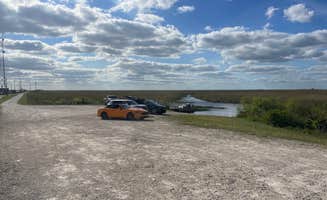
Fishing access: Several primitive camping locations offer fishing opportunities. L-31 Boat Ramp provides "bank fishing, no water, no services," according to Scott O. This site serves primarily as an access point rather than a designated camping area.
Stargazing during winter months: The remote locations of Big Cypress campsites can offer excellent night sky viewing when weather conditions permit. Light pollution becomes a factor at certain locations, as Scott O. notes about L-31: "the lights from the canal crossing and water pump building are extremely bright."
What campers like
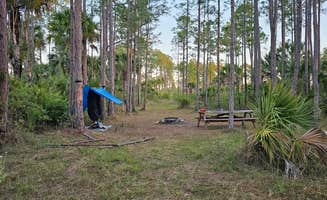
Solitude and disconnect: Many campers value the remote nature of these sites. J.R. describes Panther Camp as a "great spot to disconnect. Primitive. Free." This campsite offers substantial space, with J.R. noting it has "a tree grove with a picnic table and firepit. Large and maintained by the FTA, space for 10+ tents and hammocks."
No reservation requirements: Several dispersed camping locations near Sunrise operate on a first-come basis without formal reservation systems. J.R. mentions regarding Panther Camp, "There is no cost to stay, no reservations needed."
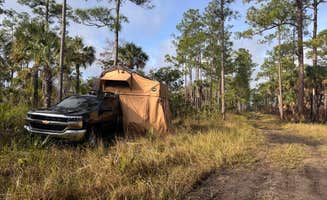
Old Florida experience: The primitive nature of these sites appeals to those seeking authentic Florida wilderness. Trevor G. describes Nobles Primitive Camp as a "great remote drive out to the primitive site 'old Florida'" where "the paved road turns to dirt/gravel."
What you should know
Access challenges: Many primitive camping locations near Sunrise become difficult to reach during wet periods. J.R. notes about Panther Camp that "the trail in can be muddy depending on the time of year." For Nobles Primitive Camp, Trevor G. mentions, "Luckily the access road was drivable with two wheel drive," suggesting this isn't always the case.
Water considerations: Potable water is not available at dispersed sites. J.R. advises regarding Panther Camp: "There is a water hole in the back of the camp which can be filtered. However a gator generally lives there. Better to pack your water in."
Permit requirements: Carpenter Primitive Camp and other sites within Big Cypress National Preserve technically require permits, though enforcement varies. J.R. reports, "You can fill out a permit from the website. However I have never been asked for it."
Tips for camping with families
Cell coverage for emergencies: Despite remote locations, some primitive sites maintain reasonable communication options. At Panther Camp, J.R. notes there is "strong cell signal due to cell towers at the rest stop," providing peace of mind for families needing emergency contact options.
Pack insect protection: The wetland environment supports significant mosquito populations, especially during warmer months. Long-sleeved clothing, enclosed tents, and EPA-approved repellents are essential for comfort and health safety.
Consider hike-in distances: Most dispersed camping near Sunrise requires hiking to reach sites. Panther Camp requires a "5 miles from the entrance on the Blue trail" hike according to J.R., which may prove challenging for families with very young children.
Tips from RVers
Urban proximity concerns: Some campsites are affected by nearby infrastructure. Stephanie E. advises against L-31 Boat Ramp: "There is a detention center across the highway... there is a huge lit up casino about 1/4 mile away." For RVers seeking more isolation, sites deeper in the preserve offer better experiences.
Access road limitations: For RVers considering primitive sites, road conditions present significant challenges. Trevor G. notes about Nobles Primitive Camp, "One way in one way out. It is located next to marsh land," which can create difficulties for larger vehicles, particularly during wet periods.
Limited vehicle-accessible options: Most true dispersed camping near Sunrise requires hiking in, with limited vehicle access points. Non-hiking alternatives typically require driving 90+ minutes to reach established campgrounds with RV accommodations outside the Sunrise area.




 Guide
Guide
