Dispersed camping near Big Cypress National Preserve offers access to unique Florida backcountry environments where paddling trails and hiking opportunities intersect with cypress domes and sawgrass prairies. The preserve sits at near sea level elevation, creating flat terrain that floods seasonally. Most primitive sites remain accessible from November through April when water levels recede, though summer visitors face additional challenges including limited shade in some areas.
What to do
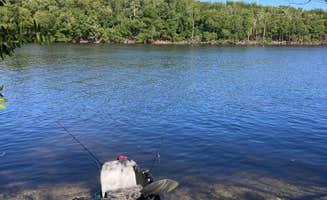
Paddling expeditions: Navigate the waterways near Crooked Creek Chickee for exceptional fishing directly from the platform. "Fishing is epic, even from the chickee. Stay quiet and look under the platform, tarpon, snook and drum were always around," reports one camper who found success during their overnight stay.
Wildlife viewing: Dawn and dusk offer prime opportunities to spot native species throughout the preserve, though these times also bring increased insect activity. Alligators frequently inhabit water holes near campsites, requiring vigilance when filtering water or approaching shorelines.
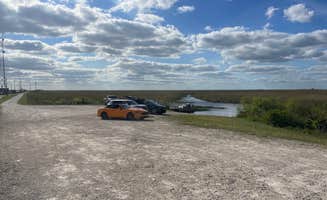
Bank fishing: Try your luck at L-31 Boat Ramp which provides access for anglers without boats. According to a visitor, this area offers "Bank fishing, no water, no services" - making it suitable for day trips rather than overnight camping.
What campers like
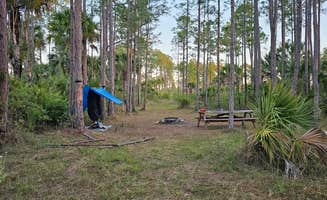
Remote accessibility: Panther Camp provides a genuine wilderness experience with room for multiple setups. One camper describes it as "a tree grove with a picnic table and firepit. Large and maintained by the FTA, space for 10+ tents and hammocks," making it suitable for groups seeking seclusion.
Cell connectivity: Despite the remote locations, some primitive sites maintain unexpected connectivity. At Panther Camp, campers report "Strong cell signal due to cell towers at the rest stop," allowing limited communication even while disconnecting from other amenities.
Traditional camping environment: Dispersed sites near Big Cypress offer traditional camping with fire pits at select locations. Sites like Nobles Primitive Camp provide what one visitor called a "Great remote drive out to the primitive site 'old florida'" experience with access to adjacent marsh lands.
What you should know
Water logistics: Natural water sources require extensive filtration and often harbor wildlife. One Panther Camp visitor warns there's "a water hole in the back of the camp which can be filtered. However a gator generally lives there. Better to pack your water in."
Tidal awareness: When camping at chickee platforms or paddling near the gulf, tidal currents significantly impact travel. A Crooked Creek visitor cautions: "Make sure you go with the tide, it was moving 3-4 [knots] during my paddle."
Permit requirements: Most backcountry sites require permits, though enforcement varies seasonally and by location. Some campsites allow self-registration while others require advance planning.
Light pollution concerns: Some camping areas experience unexpected light intrusion. A visitor to L-31 Boat Ramp noted significant disruptions: "There is a detention center across the highway, the lights from the canal crossing and water pump building are extremely bright, there is a huge lit up casino about 1/4 mile away."
Tips for camping with families
Shared platform awareness: When reserving chickee platforms, understand that multiple parties may share the space. As one Crooked Creek camper explains, "this is actually 2 bookable sites. Both nights I stayed, another group showed up late afternoon."
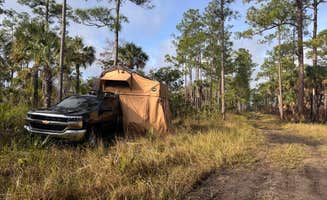
Access road conditions: Road conditions to primitive sites vary seasonally with water levels. At Nobles Primitive Camp, a visitor reports, "Luckily the access road was drivable with two wheel drive," but conditions change frequently based on recent rainfall.
Hammock options: Several sites accommodate hammock camping, which can provide comfortable alternatives to ground sleeping during wet seasons when the ground may be saturated or muddy.
Tips from RVers
Limited accommodations: Big Cypress dispersed camping areas generally don't accommodate large recreational vehicles. Most primitive sites require hiking in or have limited vehicle access on rough roads unsuitable for trailers or motorhomes.
Alternative locations: RVers seeking nearby camping should consider developed campgrounds within Big Cypress National Preserve that offer designated sites rather than attempting to access the primitive backcountry locations.





 Guide
Guide
